


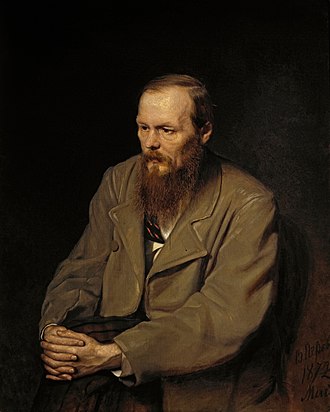
Chernyshevsky in Three Ideas
the essentialsRational egoism
People always act from self-interest; once they understand their true interest, enlightened egoism will coincide with the good of all.
The Crystal Palace
In Vera Pavlovna’s fourth dream, the future society lives in a vast glass-and-iron palace — an image Dostoevsky turned into a symbol of rationalist tyranny.
The new people
Rakhmetov, the ascetic revolutionary who sleeps on nails to steel himself, became a model for a generation of radicals.
Chernyshevsky wrote What Is to Be Done? (1863) in the Peter and Paul Fortress. Through a lapse of the censors it was published — and became the bible of Russian radicalism. Lenin said it “ploughed him over completely”. Dostoevsky answered it the next year with Notes from Underground.
Curiosities
did you know?- He wrote What Is to Be Done? in prison; the censors let it through by mistake.
Questions to Argue About
debate club →- Do people always act in their own self-interest?
Sententiae
phrases in the originalChto delat?
Origin. Title of Chernyshevsky’s 1863 novel, then of Tolstoy’s 1886 treatise and Lenin’s 1902 pamphlet — the great Russian question. — Nikolai Chernyshevsky, What Is to Be Done?
⚠ Its partner question, “Kto vinovat?” (Who is to blame?), is the title of Herzen’s 1846 novel.
For moving from diagnosis to action.
Explore Next
related by shared connections
Notes from Underground
A spiteful, hyper-conscious ex-official rants from his “mousehole” against reason, progress and the Crystal Palace — often called the first existentialist novel.
The Underground Man
Dostoevsky’s nameless, spiteful, hyper-conscious narrator who rebels against reason, progress and his own interests to prove he is free.

Anton Chekhov
Russian doctor, short-story writer and playwright who revolutionised both forms — stories without neat plots or morals, plays where the drama happens beneath ordinary talk — and became the great artist of wasted lives, quiet longing and compassion.

Demons
Dostoevsky’s prophetic political novel — a provincial town possessed by revolutionary nihilists, the murder of one of their own, and the hollow charisma of Stavrogin.
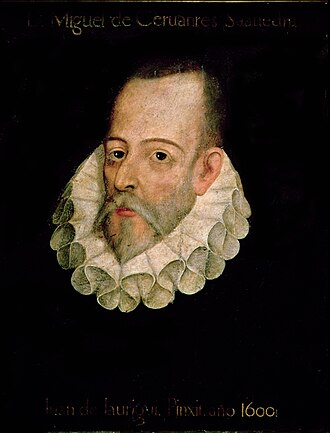
Miguel de Cervantes
Soldier, captive, tax collector and the father of the modern novel — whose Don Quixote made a deluded old knight and his earthy squire the most famous pair in literature.
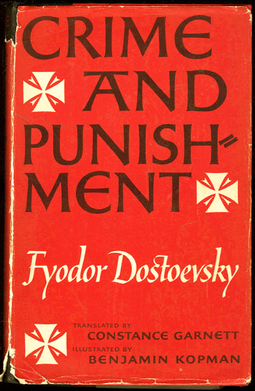
Crime and Punishment
A poor ex-student in St Petersburg murders an old pawnbroker to prove he is an “extraordinary man” — and is undone not by the police but by his own conscience and by Sonya’s love.