In this introduction
Between about 1450 and 1750, European philosophy was transformed three times over. The Renaissance recovered the classics and put the human being at the centre (Niccolò Machiavelli, Michel de Montaigne). The Reformation shattered the unity of Christendom and set off a century of religious war. And the Scientific Revolution — Copernicus, Galileo, Kepler, Newton — destroyed Aristotle’s cosmos and replaced it with a mathematical universe of matter in motion.
Philosophy’s response was to start again, from the individual mind. René Descartes doubted everything and found certainty in “I think, therefore I am”. The question “how do I know?” became the centre of philosophy.
Two camps — and a quarrel
- Continental Rationalism: Descartes, Baruch Spinoza, Gottfried Wilhelm Leibniz — reason alone can know necessary truths about God, mind and world.
- British Empiricism: John Locke, Berkeley, David Hume — all knowledge comes from experience.
See Rationalism vs. Empiricism — the quarrel that Immanuel Kant tried to end.
Politics
Machiavelli wrote of power as it is; Hobbes (Leviathan, 1651) argued that without a sovereign, life is “solitary, poor, nasty, brutish, and short”; Locke grounded government on consent and natural rights; Spinoza defended freedom of thought (“in a free state everyone may think what he likes and say what he thinks”).
Where to begin
- Montaigne, “Of Cannibals” and “Of Experience”.
- Descartes, Meditations I and II.
- Hume, Enquiry, Sections IV–V.
Map of Influence
who answered whom, inside this roomThinkers & Authors
14
Niccolò Machiavelli
Florentine diplomat and political theorist whose Prince told rulers how power is actually won and kept — separating politics from conventional morality and giving the world the adjective “Machiavellian”.

Michel de Montaigne
The inventor of the essay, who made himself the subject of his book — sceptical, curious, tolerant, candid — and asked, “Que sais-je?” — What do I know?
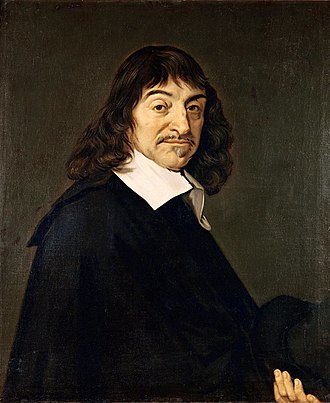
René Descartes
The father of modern philosophy, who doubted everything that could be doubted and found one thing that could not — that he himself was thinking.
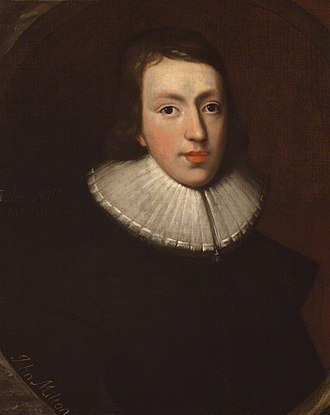
John Milton
English poet, polemicist and revolutionary whose Paradise Lost — written blind, after the defeat of his cause — retells the Fall of Man to “justify the ways of God to men”, and gave literature its most magnificent rebel, Satan.

Blaise Pascal
Mathematician, physicist, inventor and Christian apologist whose fragmentary Pensées confront the misery and greatness of the human being — the thinking reed — and propose the Wager.

John Locke
Father of British empiricism and of liberalism — the mind begins as a blank slate, and government rests on the consent of the governed.

Baruch Spinoza
The excommunicated lens-grinder of Amsterdam who identified God with Nature, wrote ethics in the form of geometry, and found freedom in understanding necessity.

Gottfried Wilhelm Leibniz
Universal genius — co-inventor of calculus, philosopher of monads and pre-established harmony — who argued that ours is the best of all possible worlds.

Voltaire
The wittiest man of the Enlightenment — playwright, historian, satirist and campaigner against intolerance — whose Candide demolished Leibnizian optimism and whose cry was “Écrasez l’infâme!”

David Hume
The great Scottish sceptic who showed that causation, the self, and induction cannot be justified by reason — and that reason is, and ought only to be, the slave of the passions.

Jean-Jacques Rousseau
The Genevan philosopher of nature, freedom and feeling — “Man is born free, and everywhere he is in chains” — whose Social Contract inspired revolutionaries and whose Confessions invented modern autobiography.

Immanuel Kant
The philosopher who tried to end the war between rationalism and empiricism by asking what the mind itself contributes to experience — the “Copernican revolution” in philosophy.

Friedrich Heinrich Jacobi
German critic of the Enlightenment who sparked the Pantheism Controversy and gave philosophy the word “nihilism”.
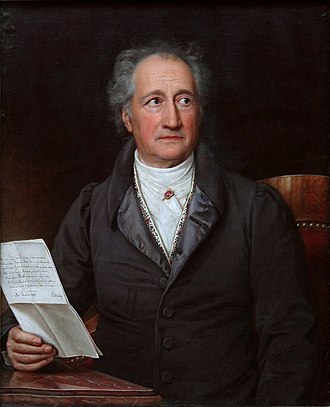
Johann Wolfgang von Goethe
Germany’s greatest writer — poet, novelist, dramatist, scientist and statesman — whose Faust is the modern myth of the striving soul, and whose life was itself treated as a work of art.
Works
2
The Prince
Machiavelli’s short, scandalous handbook on gaining and keeping power — the founding text of political realism.

Pensées
Pascal’s unfinished defence of Christianity, left as nearly a thousand fragments — on the thinking reed, diversion, the infinite spaces, and the Wager.
Ideas
3Cogito, ergo sum
I think, therefore I am — the one certainty Descartes found after doubting everything else.
The Problem of Induction
No non-circular argument shows that the future will resemble the past — yet all science and daily life depend on it.
Hume's Fork
Every meaningful claim is either a relation of ideas (certain but empty) or a matter of fact (informative but uncertain) — metaphysics is neither.
Schools & Movements
2Continental Rationalism
The seventeenth-century conviction that reason alone, unaided by the senses, can reach certain knowledge of the deepest truths.
British Empiricism
The view that all knowledge comes from experience — the mind begins as a blank slate on which the senses write.
Coming to the Library
12 pages being writtenVoices
quotations from this traditionTwo things fill the mind with ever new and increasing admiration and awe, the more often and steadily we reflect upon them: the starry heavens above me and the moral law within me.
Zwei Dinge erfüllen das Gemüt mit immer neuer und zunehmender Bewunderung und Ehrfurcht, je öfter und anhaltender sich das Nachdenken damit beschäftigt: der bestirnte Himmel über mir und das moralische Gesetz in mir.
I freely admit that it was the remembrance of David Hume which, many years ago, first interrupted my dogmatic slumber.
Out of the crooked timber of humanity no straight thing was ever made.
Aus so krummem Holze, als woraus der Mensch gemacht ist, kann nichts ganz Gerades gezimmert werden.
I had to deny knowledge in order to make room for faith.
Ich musste also das Wissen aufheben, um zum Glauben Platz zu bekommen.
Thoughts without content are empty, intuitions without concepts are blind.
Gedanken ohne Inhalt sind leer, Anschauungen ohne Begriffe sind blind.
I think, therefore I am.
Je pense, donc je suis.
If you would be a real seeker after truth, it is necessary that at least once in your life you doubt, as far as possible, all things.
Reason is, and ought only to be the slave of the passions, and can never pretend to any other office than to serve and obey them.
Commit it then to the flames, for it can contain nothing but sophistry and illusion.
A wise man proportions his belief to the evidence.
When I enter most intimately into what I call myself, I always stumble on some particular perception or other… I never can catch myself at any time without a perception.
I dine, I play a game of back-gammon, I converse, and am merry with my friends; and when after three or four hours’ amusement, I would return to these speculations, they appear so cold, and strained, and ridiculous.