Contents · 7 sections · 9 min
Milton in Six Ideas
the essentialsJustify the ways of God
Paradise Lost sets out to explain why a good, omnipotent God permitted the Fall — through the gift of free will.
The heroic Satan
“Better to reign in Hell than serve in Heaven.” Milton’s Satan is so compelling that Blake said Milton was “of the Devil’s party without knowing it”.
Free will
God made humans “sufficient to have stood, though free to fall” — love and obedience are worthless unless freely chosen.
Freedom of the press
In Areopagitica (1644): “Who kills a man kills a reasonable creature… but he who destroys a good book, kills reason itself.”
Regicide and republic
He defended the execution of Charles I and argued that power derives from the people.
The fortunate fall
Felix culpa — from the Fall comes the greater good of redemption; Adam and Eve leave Eden with “a paradise within thee, happier far”.
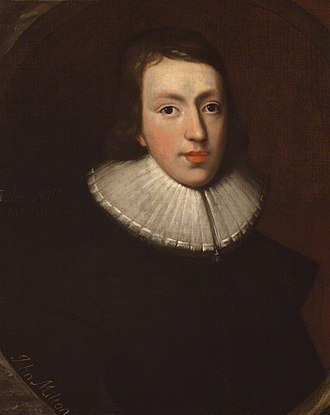
John Milton was the greatest English poet after William Shakespeare and the most learned, ambitious and politically radical. For twenty years he set poetry aside to serve the English Revolution as a pamphleteer — defending divorce, freedom of the press, the execution of King Charles I and the republic — and as Latin Secretary to Oliver Cromwell’s government. Blind, disgraced, and nearly executed after the restoration of the monarchy in 1660, he dictated Paradise Lost (1667), an epic in twelve books of blank verse on the rebellion of Satan and the Fall of Adam and Eve, intended to “justify the ways of God to men”. Its Satan — proud, eloquent, defiant, tragically self-destroying — became one of literature’s great characters, and for the Romantics its true hero. Milton also wrote Paradise Regained, the verse tragedy Samson Agonistes, the elegy Lycidas and the sonnet “On His Blindness” (“They also serve who only stand and wait”).
Life
The Lady of Christ’s
Milton was born on 9 December 1608 in Bread Street, London, the son of a prosperous scrivener (a moneylender and notary) and composer of church music, who had been disinherited by his Catholic father for turning Protestant. He was educated at St Paul’s School and at Christ’s College, Cambridge (1625–32), where his fair looks and fastidiousness earned him the nickname “the Lady of Christ’s”. He wrote poetry in Latin, Italian and English — the ode “On the Morning of Christ’s Nativity” (1629) and the companion poems “L’Allegro” and “Il Penseroso”.
Study and Italy
Instead of becoming a clergyman, Milton spent six years of private study at his father’s houses in Hammersmith and Horton, reading through the whole of classical and modern learning, preparing to be a great poet. He wrote the masque Comus (1634), about a virtuous lady resisting a seducer, and Lycidas (1637), a pastoral elegy for a drowned college friend, Edward King, with an attack on corrupt clergy (“The hungry sheep look up, and are not fed”).
In 1638–39 he toured Italy — Florence, Rome, Naples — meeting scholars and visiting Galileo, then under house arrest by the Inquisition, an encounter he recalled in Areopagitica and Paradise Lost. News of the coming civil war called him home.
The pamphlet wars
From 1641, Milton threw himself into politics, writing prose pamphlets “with my left hand”. He attacked the bishops of the Church of England. In 1642 he married Mary Powell, seventeen, from a Royalist family; within weeks she went home to her parents and did not return for three years. Milton promptly wrote The Doctrine and Discipline of Divorce (1643), arguing that incompatibility of mind, not just adultery, justified divorce — a scandalous position.
When Parliament tried to license publications, he wrote Areopagitica (1644), the classic defence of freedom of the press:
As good almost kill a man as kill a good book: who kills a man kills a reasonable creature, God’s image; but he that destroys a good book, kills reason itself.
Let her and Falsehood grapple; who ever knew Truth put to the worse, in a free and open encounter?
He defended a free exchange of ideas — though he excluded Catholics (“popery”) from toleration.
Regicide and Cromwell
When Charles I was tried and executed in January 1649, Milton published The Tenure of Kings and Magistrates, arguing that the people have the right to depose and execute a tyrant, since power derives from them. He was appointed Secretary for Foreign Tongues to the Council of State, writing Latin diplomatic letters for the republic. He answered the royalist Eikon Basilike (the king’s supposed meditations) with Eikonoklastes (“image-breaker”, 1649), and defended the regicide to Europe in Latin in his Defence of the English People (1651).
His eyesight was failing; he went completely blind by 1652. That year his wife Mary died after childbirth, and soon after his only son. His second wife, Katherine Woodcock, died in 1658. The sonnet “On His Blindness” (“When I consider how my light is spent”) ends: “They also serve who only stand and wait.” Another sonnet, “Methought I saw my late espoused saint”, is about a dead wife seen in a dream.
Restoration
In 1660, as the republic collapsed, Milton published The Ready and Easy Way to Establish a Free Commonwealth, defying the return of the monarchy. After Charles II’s restoration, his books were burned by the hangman; he went into hiding, was arrested, briefly imprisoned, and released, probably through the intervention of the poet Andrew Marvell and others. Several of his fellow revolutionaries were hanged, drawn and quartered.
In poverty, blind and isolated, he dictated Paradise Lost, published in ten books in 1667 (expanded to twelve in 1674). He married a third time, Elizabeth Minshull, in 1663. Paradise Regained and Samson Agonistes appeared in 1671; Samson, blind and captive among the Philistines, pulling down the temple on his enemies, has often been read as Milton’s self-portrait. He also wrote a heterodox Latin theology, De Doctrina Christiana (discovered in 1823), which denied the Trinity (he was an Arian) and creation from nothing.
He died of gout on 8 November 1674 and was buried at St Giles Cripplegate.
Paradise Lost
The plan
Milton had long planned an epic — at first on King Arthur — and settled on the Fall of Man, the greatest theme he could imagine, surpassing the wars of Homer and Virgil. He wrote in blank verse (unrhymed iambic pentameter), defending it against “the troublesome and modern bondage of rhyming”. The epic opens:
Of Man’s first disobedience, and the fruit Of that forbidden tree whose mortal taste Brought death into the world, and all our woe, With loss of Eden, till one greater Man Restore us, and regain the blissful seat, Sing, Heavenly Muse…
His purpose: “That to the height of this great argument / I may assert Eternal Providence, / And justify the ways of God to men.”
Plot summary
The poem begins, in classical fashion, in medias res. Satan and his rebel angels, defeated in a war in Heaven, lie stunned on a burning lake in Hell — “a dungeon horrible, on all sides round / As one great furnace flamed, yet from those flames / No light, but rather darkness visible”. Satan rises and rallies his followers, including Beelzebub, his second-in-command:
The mind is its own place, and in itself Can make a Heaven of Hell, a Hell of Heaven… Better to reign in Hell, than serve in Heaven.
The devils build a palace, Pandæmonium (“all demons”), and hold a council. Moloch urges open war; Belial argues for passive endurance; Mammon for building a kingdom in Hell; Beelzebub (prompted by Satan) proposes a subtler revenge: to corrupt God’s new creation, Man. Satan volunteers to go alone. At the gates of Hell he meets Sin, his daughter, born from his head, and Death, his son by incest with her; they open the gates, and he journeys through Chaos.
In Heaven, God the Father, seeing Satan approach the new world, foretells that Man will fall, and explains that he will not be to blame, for he made Man free:
I made him just and right, Sufficient to have stood, though free to fall.
The Son offers himself to die for Man’s redemption; the angels sing.
Satan, disguised as a cherub, reaches Eden on Earth. Seeing the Sun, he gives a soliloquy of torment and envy: “Which way I fly is Hell; myself am Hell… Evil, be thou my good.” He sees Adam and Eve, naked and innocent, walking hand in hand, and is moved — almost — to pity them. Disguised as a cormorant, a toad, he whispers into sleeping Eve’s ear a troubling dream.
God sends the archangel Raphael to warn Adam. Over a meal, Raphael tells the story of the War in Heaven: how Satan, envious when God proclaimed the Son his vice-regent, led a third of the angels in revolt; how the angels fought with mountains and Satan invented cannon; and how on the third day the Son drove the rebels out of Heaven in his chariot. Raphael then tells of the Creation of the world in six days. Adam tells Raphael his own memories — his first awakening, his request for a companion, the creation of Eve from his rib, his overwhelming love for her. Raphael warns him not to let passion overrule reason.
The next morning, Eve proposes that they work apart in the garden to get more done. Adam resists, then lets her go. Satan, entering a serpent, finds her alone. He flatters her beauty, and claims that eating the fruit of the Tree of Knowledge gave him, a mere beast, the power of speech and reason; God forbids it, he argues, to keep humans low. Eve eats:
So saying, her rash hand in evil hour Forth reaching to the fruit, she plucked, she ate: Earth felt the wound, and Nature from her seat Sighing through all her works gave signs of woe, That all was lost.
Eve brings the fruit to Adam. He sees at once that she is lost — and chooses to fall with her, out of love: “How can I live without thee… Flesh of flesh, / Bone of my bone thou art, and from thy state / Mine never shall be parted, bliss or woe.” He eats, “not deceived, / But fondly overcome with female charm”. They make love lustfully, then wake to shame and quarrel bitterly.
The Son descends to judge them. Sin and Death build a bridge from Hell to Earth. Satan returns triumphant to Pandæmonium — and he and all his followers are turned into hissing serpents.
Adam despairs, and turns on Eve. Eve, in humility, offers to take all the blame; their reconciliation, as she falls at his feet, is the poem’s human turning point. They repent.
God sends the archangel Michael to expel them from Paradise. First Michael shows Adam a vision of the future: Cain and Abel, the Flood, Nimrod and Babel, Abraham, Moses, and finally the coming of Christ, who will redeem humanity. Adam, overjoyed, exclaims that his sin was a happy one, bringing about so much good (the doctrine of the felix culpa, “fortunate fall”). Michael tells him he will find “a paradise within thee, happier far”.
The poem ends:
Some natural tears they dropped, but wiped them soon; The world was all before them, where to choose Their place of rest, and Providence their guide: They hand in hand, with wandering steps and slow, Through Eden took their solitary way.
Satan and the critics
Is Satan the hero? William Blake wrote: “The reason Milton wrote in fetters when he wrote of Angels & God, and at liberty when of Devils & Hell, is because he was a true Poet and of the Devil’s party without knowing it.” Shelley thought Satan morally superior to God. C. S. Lewis, in A Preface to Paradise Lost (1942), answered that Satan’s career shows the degeneration of egoism: from archangel to general, to politician, to spy, to toad, to snake. Stanley Fish, in Surprised by Sin (1967), argued that the poem deliberately seduces the reader with Satan’s rhetoric in order to make them recognise their own fallenness.
Influence
- Romanticism: Blake (Milton), Wordsworth (“Milton! thou shouldst be living at this hour”), Shelley, Byron, Keats.
- Mary Shelley’s Frankenstein (1818): the creature reads Paradise Lost and identifies with Satan and Adam; its epigraph is Adam’s “Did I request thee, Maker, from my clay / To mould me Man?”
- Political thought: Areopagitica is cited in debates on free speech worldwide; it influenced the US First Amendment.
- Language: “pandemonium”, “all hell broke loose”, “darkness visible”, “the mind is its own place”.
- Philip Pullman’s His Dark Materials takes its title from Paradise Lost (Book II).
Critics
- Samuel Johnson (1779): “Paradise Lost is one of the books which the reader admires and lays down, and forgets to take up again. None ever wished it longer than it is.”
- T. S. Eliot (1936) attacked his influence on English verse, before partly recanting.
- Feminists criticise the hierarchy “He for God only, she for God in him”; others find Eve the poem’s most complex human figure.
Key terms
- Blank verse
- Unrhymed iambic pentameter.
- Felix culpa
- "Happy fault" — the Fall that made redemption possible.
- Theodicy
- Justifying God's goodness in the face of evil.
- In medias res
- Beginning a story in the middle.
- Pandæmonium
- The capital of Hell — Milton's coinage.
Using Milton in conversation
- On ambition: “Better to reign in Hell than serve in Heaven.”
- On the mind: “The mind is its own place, and in itself / Can make a Heaven of Hell, a Hell of Heaven.”
- On free speech: “He that destroys a good book, kills reason itself.”
- On free will: “Sufficient to have stood, though free to fall.”
John Milton in two minutes
English poet, polemicist and revolutionary whose Paradise Lost — written blind, after the defeat of his cause — retells the Fall of Man to “justify the ways of God to men”, and gave literature its most magnificent rebel, Satan.
- Justify the ways of God. Paradise Lost sets out to explain why a good, omnipotent God permitted the Fall — through the gift of free will.
- The heroic Satan. “Better to reign in Hell than serve in Heaven.” Milton’s Satan is so compelling that Blake said Milton was “of the Devil’s party without knowing it”.
- Free will. God made humans “sufficient to have stood, though free to fall” — love and obedience are worthless unless freely chosen.
- Freedom of the press. In Areopagitica (1644): “Who kills a man kills a reasonable creature… but he who destroys a good book, kills reason itself.”
- Regicide and republic. He defended the execution of Charles I and argued that power derives from the people.
- The fortunate fall. Felix culpa — from the Fall comes the greater good of redemption; Adam and Eve leave Eden with “a paradise within thee, happier far”.
“Better to reign in Hell, than serve in Heaven.” — Paradise Lost I.263
Curiosities
did you know?- At Cambridge he was nicknamed ‘the Lady of Christ’s’ for his delicacy and long hair.
- He went totally blind by 1652 and dictated Paradise Lost to daughters, nephews and amanuenses, composing up to forty lines at night and ‘waiting to be milked’ in the morning.
- He was sold the copyright of Paradise Lost for £5 down, plus £5 more for each of the next two editions.
- After the Restoration he was arrested and briefly imprisoned; his friend Andrew Marvell likely helped save him from execution.
- He uses about 630 words never recorded before him — including ‘pandemonium’, ‘space travel’ (as ‘space’), ‘all hell broke loose’, ‘terrific’ and ‘sensuous’.
Questions to Argue About
debate club →- Is Satan the hero of Paradise Lost?
- Can free will explain why a good God allows evil?
- Was the Fall a disaster — or a fortunate fall?
- Should any book be censored?
In Their Own Words
5 quotationsBetter to reign in Hell, than serve in Heaven.
Context & when to use it
For pride, ambition, refusal to submit.
The mind is its own place, and in itself / Can make a Heaven of Hell, a Hell of Heaven.
Context & when to use it
For the power of attitude — and its limits.
⚠ Spoken by Satan — and the poem shows him unable to escape his own Hell.
I made him just and right, / Sufficient to have stood, though free to fall.
Context & when to use it
For the free-will theodicy.
Who kills a man kills a reasonable creature, God’s image; but he who destroys a good book, kills reason itself.
Context & when to use it
Against censorship and book-burning.
They also serve who only stand and wait.
Context & when to use it
Milton, gone blind, wonders how he can serve God.
For patience, disability, and unseen contributions.
Explore Next
related by shared connections
The Divine Comedy
Dante’s journey through Hell, Purgatory and Paradise — the summa of medieval thought in a hundred cantos, and one of the greatest poems ever written.
The Grand Inquisitor
Ivan Karamazov’s prose-poem — Christ returns to sixteenth-century Seville, and the aged Cardinal Inquisitor imprisons him, explaining that humanity cannot bear the freedom He offered.

Faust
Goethe’s two-part dramatic poem of the scholar who wagers his soul with Mephistopheles that no moment of pleasure will ever satisfy him — the defining myth of modern restless striving.

Macbeth
Shakespeare’s shortest tragedy — a brave soldier, prompted by witches and his wife, murders his king and wades so deep in blood that life becomes “a tale told by an idiot”.
Johann Wolfgang von Goethe
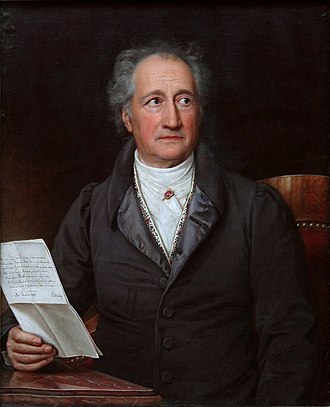
Germany’s greatest writer — poet, novelist, dramatist, scientist and statesman — whose Faust is the modern myth of the striving soul, and whose life was itself treated as a work of art.
Miguel de Cervantes
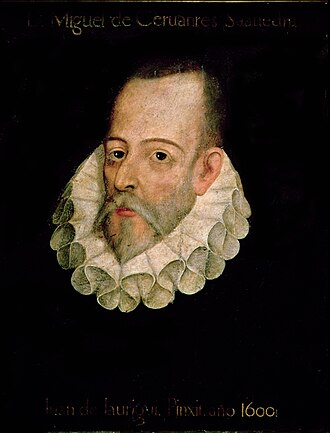
Soldier, captive, tax collector and the father of the modern novel — whose Don Quixote made a deluded old knight and his earthy squire the most famous pair in literature.