
Key Ideas
Fair is foul, and foul is fair — moral inversion.
Prophecy and free will — did the witches cause anything?
Lady Macbeth — “unsex me here” — and her sleepwalking guilt.
Sleep murdered — “Macbeth does murder sleep.”
“Tomorrow, and tomorrow, and tomorrow” — the nihilist’s soliloquy.
Actors traditionally call it “the Scottish play” to avoid the curse. Freud wrote on Lady Macbeth; Dostoevsky’s murderers dream Macbeth’s dreams. See Tomorrow, and Tomorrow, and Tomorrow.
Great Scenes
1Lines to Remember
4 quotationsLife’s but a walking shadow, a poor player That struts and frets his hour upon the stage And then is heard no more. It is a tale Told by an idiot, full of sound and fury, Signifying nothing.
Context & when to use it
On hearing of his wife’s death, near his own end.
The definitive line for nihilism and meaninglessness — the absurd before Camus.
Fair is foul, and foul is fair.
Context & when to use it
The witches’ chant — the moral world turned upside down.
For moral inversion, propaganda, a transvaluation of values.
Out, damned spot! Out, I say!
Context & when to use it
Sleepwalking, she tries to wash imagined blood from her hands.
For guilt that cannot be washed away.
I have no spur to prick the sides of my intent, but only vaulting ambition, which o’erleaps itself and falls on th’ other.
Context & when to use it
Macbeth admits he has no reason to kill Duncan except ambition.
For overreach, hubris, the will to power without justification.
Explore Next
related by shared connections
Hamlet
Shakespeare’s longest play — a prince ordered by his father’s ghost to avenge a murder thinks, doubts, delays, feigns madness, and dies in the act.
Zarathustra
Nietzsche’s prophet who, after ten years in mountain solitude, descends to teach mankind the Übermensch — and finds no one ready to listen.
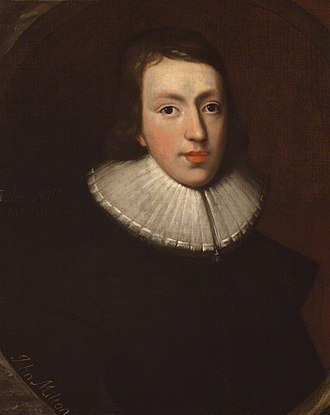
John Milton
English poet, polemicist and revolutionary whose Paradise Lost — written blind, after the defeat of his cause — retells the Fall of Man to “justify the ways of God to men”, and gave literature its most magnificent rebel, Satan.
Thus Spoke Zarathustra
Nietzsche’s prophetic prose-poem — Zarathustra descends from his mountain to teach the Übermensch, the will to power and eternal recurrence.

Dante Alighieri
The Florentine poet of the Divine Comedy — the journey through Hell, Purgatory and Paradise that summed up medieval thought and created the Italian language.

Homer
The legendary blind poet of Greece to whom the Iliad and the Odyssey are attributed — the founding works of Western literature, and for the Greeks the “educator of Hellas”.