
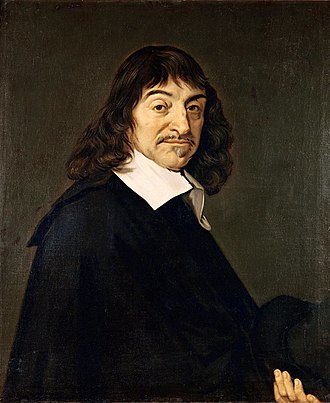


Locke in Five Ideas
the essentialsTabula rasa
There are no innate ideas. The mind is at first “white paper, void of all characters”; experience writes on it.
Primary and secondary qualities
Shape, size and motion are really in objects; colour, taste and sound are powers in objects to produce sensations in us.
Personal identity is memory
You are the same person as far back as your consciousness — your memory — can reach.
Natural rights
Life, liberty and property belong to us by nature; government exists to protect them and loses legitimacy when it violates them.
Toleration
The state cannot compel belief; true religion is a matter of inward persuasion.
Locke’s Essay Concerning Human Understanding (1689) aimed modestly to be “an under-labourer in clearing the ground a little, and removing some of the rubbish that lies in the way to knowledge.” It set the programme of British Empiricism. His Two Treatises of Government in the same year shaped the American Declaration of Independence.
Berkeley then asked: if all we know are ideas, why posit matter at all? And David Hume asked where the impression of “substance” or “self” comes from — and found none.
Curiosities
did you know?- His Two Treatises shaped the American Declaration of Independence.
- He trained and practised as a physician.
Questions to Argue About
debate club →- Is the mind a blank slate at birth?
- When may a people overthrow its government?
In Their Own Words
1 quotationsLet us then suppose the mind to be, as we say, white paper, void of all characters, without any ideas. How comes it to be furnished?… To this I answer, in one word, from experience.
Context & when to use it
For empiricism and nurture over nature.
Sententiae
phrases in the originalTabula rasa
Origin. Roman wax tablets were scraped smooth to be reused. The image of the mind as a blank tablet goes back to Aristotle (De Anima III.4); Locke’s “white paper” made it the emblem of empiricism. — John Locke
⚠ Locke himself does not use the Latin phrase in the Essay; he says “white paper”.
For nurture versus nature, fresh starts, empiricism.
Explore Next
related by shared connections
Jean-Jacques Rousseau
The Genevan philosopher of nature, freedom and feeling — “Man is born free, and everywhere he is in chains” — whose Social Contract inspired revolutionaries and whose Confessions invented modern autobiography.

Immanuel Kant
The philosopher who tried to end the war between rationalism and empiricism by asking what the mind itself contributes to experience — the “Copernican revolution” in philosophy.
Continental Rationalism
The seventeenth-century conviction that reason alone, unaided by the senses, can reach certain knowledge of the deepest truths.
Cogito, ergo sum
I think, therefore I am — the one certainty Descartes found after doubting everything else.

Al-Ghazālī
Theologian, jurist and mystic whose Incoherence of the Philosophers attacked Avicenna’s Aristotelianism, anticipated Hume on causation, and whose spiritual autobiography records a crisis of doubt.
How Is the Mind Related to the Body?
Witness-consciousness and matter, the soul as form, two substances, one substance, Dasein — the mind–body problem across civilizations.