

Contents · 5 sections · 4 min
Pascal in Five Ideas
the essentialsThe Wager
If God exists and you believe, you gain infinite happiness; if not, you lose little. A rational gambler bets on God.
The thinking reed
Man is the feeblest reed in nature, but a thinking reed — the universe crushes him, but he knows he dies.
The heart has its reasons
“The heart has its reasons which reason does not know.” We know first principles by the heart, not by argument.
Diversion
All human misery comes from one thing — not knowing how to sit quietly in a room. We divert ourselves to avoid thinking of our condition.
Wretchedness and greatness
Man is neither angel nor beast; the greatness of man is that he knows himself to be wretched.
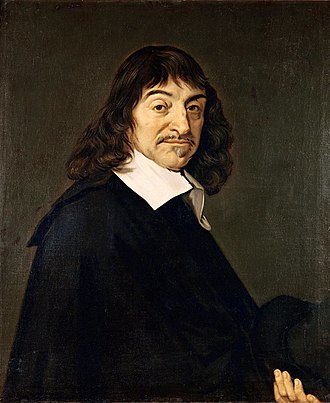
Blaise Pascal was born in 1623 in Clermont, Auvergne. His mother died when he was three; his father Étienne, a tax official and amateur mathematician, educated him at home — and, wanting him to master languages first, forbade mathematics. The boy, according to his sister Gilberte, rediscovered Euclid’s first thirty-two propositions by himself, drawing with charcoal on the floor. At sixteen he wrote a treatise on conic sections that impressed Descartes; at nineteen he invented the Pascaline, a mechanical calculator; his experiments on the vacuum and atmospheric pressure (having his brother-in-law carry a barometer up the Puy de Dôme in 1648) refuted the Aristotelian horror of the vacuum; with Fermat he founded the mathematics of probability (1654), prompted by a gambler’s question.
The night of fire
On the night of 23 November 1654, from about half past ten until half past midnight, Pascal had an overwhelming religious experience. He recorded it on a parchment — the Memorial — which he sewed into the lining of his coat and carried until his death:
FIRE. God of Abraham, God of Isaac, God of Jacob, not of the philosophers and scholars. Certitude. Certitude. Feeling. Joy. Peace… Joy, joy, joy, tears of joy.
He associated himself with Port-Royal, the convent at the centre of Jansenism — a rigorous Augustinian movement emphasizing grace and human corruption, in conflict with the Jesuits. His Provincial Letters (1656–57), satirical letters attacking Jesuit casuistry (the art of finding excuses for sin), are masterpieces of French prose.
He spent his last years planning an Apology for the Christian Religion, aimed at sceptics and libertines, but grew ever sicker; he died in 1662 at thirty-nine. The notes he left — some thousand fragments, on scraps of paper cut and threaded together — were published as the Pensées (“Thoughts”, 1670). See Pensées.
The human condition
Pascal’s portrait of human beings is one of the most penetrating ever written. We are suspended between two infinities — the infinitely large and the infinitely small: “The eternal silence of these infinite spaces terrifies me.” We are a paradox:
What a chimera, then, is man! What a novelty, what a monster, what a chaos, what a contradiction, what a prodigy! Judge of all things, feeble earthworm; repository of truth, sewer of uncertainty and error; the glory and the refuse of the universe!
The thinking reed
Man is only a reed, the weakest in nature, but he is a thinking reed. It does not take the whole universe in arms to crush him; a vapour, a drop of water, is enough to kill him. But even if the universe were to crush him, man would still be nobler than what kills him, because he knows that he is dying… All our dignity consists, then, in thought.
Diversion
I have often said that the sole cause of man’s unhappiness is that he does not know how to stay quietly in his room.
Kings, hunters, gamblers, soldiers all seek diversion (divertissement) — not the hare, but the chase — to avoid thinking about their mortality and misery. Pascal’s analysis of distraction has never seemed more modern.
The Wager
Pascal addresses the sceptic who says reason cannot decide whether God exists. Very well — but you must bet; you are already embarked. Weigh the outcomes:
| God exists | God does not exist | |
|---|---|---|
| Wager for God | Infinite gain (eternal life) | Finite loss (some pleasures) |
| Wager against | Infinite loss | Finite gain |
“If you win, you win everything; if you lose, you lose nothing. Wager, then, without hesitation that He is.” And if you cannot make yourself believe? Act as believers do — take holy water, have Masses said: “this will make you believe naturally, and stupefy you” (vous abêtira).
The Wager is the first application of decision theory. Objections: the “many gods” problem (which God should you bet on?), the impossibility of believing at will, and the suspicion that a God who rewards self-interested belief is not worth worshipping. See the argument in the Argument Library.
The heart
The heart has its reasons which reason does not know. (Le cœur a ses raisons que la raison ne connaît point.)
The “heart” for Pascal is not emotion but intuitive knowledge — we know first principles (space, time, motion, number) by the heart, not by demonstration. Reason’s last step is to recognize that there are infinitely many things beyond it.
Influence
Pascal stands at the source of Christian existentialism: Søren Kierkegaard, Dostoevsky, Unamuno, Gabriel Marcel. Nietzsche admired him as the most instructive victim of Christianity. T. S. Eliot called the Pensées the work of “a man of the world among ascetics, and an ascetic among men of the world”. Every modern discussion of decision under uncertainty passes through his wager.
Curiosities
did you know?- At nineteen he invented a mechanical calculator, the Pascaline, to help his father with tax calculations.
- After his death, a note was found sewn into his coat recording a mystical experience: ‘FIRE. God of Abraham, God of Isaac, God of Jacob, not of the philosophers and scholars.’
- Pascal’s triangle, Pascal’s law of fluid pressure, and the SI unit of pressure are named after him.
Questions to Argue About
debate club →- Is it rational to bet on God?
- Why can’t we sit quietly in a room?
- Does the heart know things reason cannot?
Explore Next
related by shared connections
Ludwig Wittgenstein
The Viennese-Cambridge philosopher who twice transformed philosophy — first by mapping the limits of what language can say (Tractatus), then by showing that meaning is use in the countless “language games” of ordinary life (Philosophical Investigations).
Faith vs. Reason
Can God be reached by argument — or does faith begin exactly where reason fails? From Tertullian’s Athens and Jerusalem to Kierkegaard’s leap and Camus’s refusal.

Al-Ghazālī
Theologian, jurist and mystic whose Incoherence of the Philosophers attacked Avicenna’s Aristotelianism, anticipated Hume on causation, and whose spiritual autobiography records a crisis of doubt.
Socrates
The Athenian gadfly who wrote nothing, claimed to know nothing, questioned everyone — and was put to death for it, becoming philosophy’s martyr.

Thomas Aquinas
Dominican friar and the greatest of the scholastics, who wove Aristotle’s philosophy and Christian theology into a single vast system — the Summa Theologiae — with five ways to prove God.
What Is the Self?
From ātman to anattā, from the cogito to the bundle, from Kierkegaard’s task of becoming oneself to Sartre’s nothingness.