Contents · 6 sections · 10 min
Ambedkar in Six Ideas
the essentialsAnnihilate caste
Caste cannot be reformed; it rests on the authority of the Śāstras, which must themselves be rejected.
Graded inequality
Caste is not just division but a ladder — each caste looks down on those below, so the oppressed never unite.
Liberty, equality, fraternity
Not from the French Revolution, he said, but from the Buddha — and fraternity is the hardest of the three.
Constitutional morality
Democracy is not only a form of government but a mode of associated living; it requires a moral culture India did not yet have.
Educate, agitate, organise
His three-word programme for the oppressed.
Navayāna
A rational, ethical, socially engaged Buddhism — the Dhamma as a religion of liberation in this world.
Bhimrao Ramji Ambedkar (14 April 1891 – 6 December 1956), revered as Bābāsāheb, was an Indian jurist, economist, social reformer, political leader and philosopher, born into the Mahār caste, then classed as “untouchable”. Against every obstacle that caste society could put in his way, he became one of the most educated men of his time, with doctorates from Columbia University and the London School of Economics; led the movement of India’s untouchables — now known as Dalits (“the broken”, “the oppressed”) — for dignity, rights and political power; became independent India’s first Law Minister; and, as chairman of the Drafting Committee, was the principal architect of the Constitution of India, which abolished untouchability and guaranteed equality before the law. He was the most radical critic of the caste system and of the Hindu scriptures that sanctioned it — publicly burning the The Manusmṛti in 1927 and arguing in Annihilation of Caste (1936) that caste could not be reformed but only destroyed, by destroying the religious authority of the Śāstras. He clashed repeatedly with Mahatma Gandhi, whose defence of Hinduism he regarded as a defence of caste. And in 1956, weeks before his death, he converted to Buddhism with some half a million followers, founding a modern, socially engaged Buddhism that has become the faith of millions of Dalits. Once marginalised in official history, he is today perhaps the most revered figure in Indian public life after Gandhi — and, for the Dalit movement, far more.
Life
Childhood under untouchability
Ambedkar was born at Mhow, a British military cantonment in central India, the fourteenth child of Ramji Sakpal, a subedar (non-commissioned officer) in the British Indian Army, and Bhimābāī. The family were Mahārs from Ambadawe in the Ratnagiri district of Maharashtra, a caste of village servants, labourers and soldiers, treated as untouchable. His father was a devout follower of Kabīr and a disciplined man who insisted on education.
Ambedkar’s childhood was a schooling in humiliation. At school he and his brother had to sit apart on a gunny sack they carried from home; they could not touch the water tap, and could drink only if a peon poured water into their cupped hands — “no peon, no water”. Teachers would not touch their notebooks. A famous episode: travelling with his siblings to visit their father, the children were thrown out of a bullock cart when the driver learned they were Mahārs, and spent a day without water because no one would give them any. Later, in Baroda, as a highly educated officer of the state, he could not find lodging; when Parsi landlords discovered his caste, he was thrown out of an inn by a mob. “Untouchability,” he wrote, “is not a simple matter; it is the mother of all our poverty and lowliness.”
Education
The family moved to Bombay, and Ambedkar became the first untouchable to enter Elphinstone High School and then Elphinstone College, graduating in economics and political science in 1912. A scholarship from the progressive Maharaja Sayajirao Gaekwad III of Baroda took him to Columbia University in New York (1913–16), where he studied economics, history, sociology and philosophy, was taught by the philosopher John Dewey — whose ideas of democracy as “a mode of associated living” deeply influenced him — and wrote a paper, Castes in India: Their Mechanism, Genesis and Development (1916). He went on to the London School of Economics and Gray’s Inn; after a forced return to India, he completed an MSc (1921) and DSc (1923) in economics at LSE — his thesis was The Problem of the Rupee — and a PhD from Columbia (1927). He was called to the bar in 1922.
The movement
Back in Bombay, he began the struggle for the rights of the “depressed classes”. He founded newspapers — Mooknayak (“Leader of the Voiceless”, 1920), Bahishkrit Bharat (“Excluded India”, 1927) — and organisations, and gave evidence to British commissions demanding political representation.
In March 1927 he led the Mahad Satyagraha, in which thousands of untouchables marched to drink water from the public Chavdar tank at Mahad, from which they were barred despite a legal resolution opening it to all. Caste Hindus attacked them and then “purified” the tank with cow dung and cow urine. In December 1927, at a second conference at Mahad, Ambedkar and his followers ceremonially burned the Manusmṛti, as the code of caste oppression. In 1930 he led the Kalaram Temple entry satyāgraha at Nashik.
He coined the slogan “Educate, agitate, organise” (śikṣit bano, saṅgharṣ karo, saṅgaṭhit raho) and founded schools, hostels, colleges (the People’s Education Society, 1945) and political parties — the Independent Labour Party (1936), the Scheduled Castes Federation (1942).
The clash with Gandhi
At the Round Table Conferences in London (1930–32), Ambedkar demanded separate electorates for the depressed classes — that they should elect their own representatives — arguing that otherwise caste Hindu voters would choose compliant untouchable candidates. The British granted this in the Communal Award (1932). Gandhi, in Yerwada prison, began a fast unto death against it, arguing that it would permanently separate untouchables from Hinduism. As Gandhi weakened, the pressure on Ambedkar became immense — he was warned that if Gandhi died, untouchables would be massacred. He signed the Poona Pact (September 1932), accepting a larger number of reserved seats within a joint electorate instead. He regarded it as coercion and never forgave Gandhi. His book What Congress and Gandhi Have Done to the Untouchables (1945) is a bitter indictment.
“I will not die a Hindu”
In 1935, at Yeola, Ambedkar declared: “I was born a Hindu because I had no control over this, but I solemnly assure you that I will not die a Hindu.” He studied the religions of the world for twenty years before choosing.
In 1936 he wrote Annihilation of Caste as the presidential address for the Jat-Pat Todak Mandal, a Hindu reform society in Lahore; when the organisers saw the text and asked him to remove the attack on the Hindu scriptures, he refused, and the conference was cancelled. He published it himself. Gandhi replied in his journal Harijan; Ambedkar answered in later editions. See Annihilation of Caste.
The Constitution
In 1947, despite his long opposition to Congress, Ambedkar was invited by Nehru to become independent India’s first Minister of Law and was elected chairman of the Drafting Committee of the Constituent Assembly. The Constitution of India, adopted on 26 November 1949 and in force from 26 January 1950, bears his stamp: it abolishes untouchability (Article 17) and makes its practice an offence; guarantees equality before the law and prohibits discrimination on grounds of religion, race, caste, sex or place of birth; provides reservations (affirmative action) in education, government jobs and legislatures for Scheduled Castes and Tribes; establishes universal adult suffrage; and creates a framework of fundamental rights and an independent judiciary.
In his final speech to the Constituent Assembly (25 November 1949), he warned:
On the 26th of January 1950, we are going to enter into a life of contradictions. In politics we will have equality and in social and economic life we will have inequality… How long shall we continue to live this life of contradictions? … If we continue to deny it for long, we will do so only by putting our political democracy in peril.
He also warned against hero-worship in politics — “Bhakti in religion may be a road to the salvation of the soul. But in politics, bhakti or hero-worship is a sure road to degradation and to eventual dictatorship” — and against the “grammar of anarchy”, including civil disobedience and satyāgraha, once constitutional methods were available.
He resigned from the cabinet in 1951 when his Hindu Code Bill — which would have given Hindu women rights of inheritance, divorce and property — was stalled by conservative opposition. (Its provisions were passed in separate acts in 1955–56.)
Conversion
On 14 October 1956, at Nagpur, Ambedkar and his wife Savita took the Three Refuges and Five Precepts from the senior Burmese monk Chandramani, and then Ambedkar himself administered conversion to some half a million followers — one of the largest mass conversions in history. He prescribed twenty-two vows, including: “I shall have no faith in Brahmā, Viṣṇu and Maheśa, nor shall I worship them”; “I do not believe that the Buddha was an incarnation of Viṣṇu”; “I shall believe in the equality of man”; “I renounce Hinduism, which is harmful to humanity and impedes the advancement of humanity because it is based on inequality”. He died in his sleep in Delhi seven weeks later, on 6 December 1956, having just completed The Buddha and His Dhamma. Millions attended his funeral in Bombay.
Thought
The anatomy of caste
Ambedkar was a sociologist of caste. In Castes in India (1916) he argued that caste is fundamentally a system of endogamy — marriage only within the group — maintained by customs that controlled women (child marriage, enforced widowhood, satī). In Annihilation of Caste he argued that caste is not a division of labour but a division of labourers, and not a natural division but an artificial, hereditary hierarchy that prevents individuals from choosing their occupation according to their capacities. Its most insidious feature is graded inequality: each caste looks down on those below it while being looked down upon by those above, so the oppressed are divided and can never unite against the system — unlike a simple two-class system, where the oppressed form a solidarity. Caste “has killed public spirit, destroyed the sense of public charity, made public opinion impossible”.
The scriptures
Why does caste persist? Because, Ambedkar argued, it is not merely a social custom but a religious duty, sanctified by the Śāstras — the Vedas, the Smṛtis, the Gītā. Hindus observe caste “not because they are inhuman or wrong-headed… but because they are deeply religious”. Therefore the reform of caste requires destroying the authority of the Śāstras: “You must not only discard the Shastras, you must deny their authority, as did Buddha and Nanak… You must have courage to tell the Hindus that what is wrong with them is their religion.” He also wrote historical studies, Who Were the Shudras? (1946) and The Untouchables (1948), arguing that the Śūdras were originally Kṣatriyas degraded by Brahmin hostility, and that untouchability arose among “broken men” who remained Buddhists and ate beef after the Brahmins gave it up.
Democracy
For Ambedkar, democracy was not merely majority rule or elections but, following Dewey, “a mode of associated living, of conjoint communicated experience… essentially an attitude of respect and reverence towards fellow men”. It requires liberty, equality and fraternity together — and he insisted that he took these ideals not from the French Revolution but from the Buddha. Fraternity — fellow-feeling across castes — was the hardest, and without it, liberty and equality would be “no deeper than coats of paint”. He coined the phrase constitutional morality: respect for the forms and limits of the constitution, which he said “is not a natural sentiment; it has to be cultivated”.
Economics
Ambedkar was a trained economist who wrote on public finance, the rupee, land and labour. He advocated state socialism in agriculture and key industries, the rights of workers, and the independence of the central bank; his evidence to the Hilton Young Commission influenced the creation of the Reserve Bank of India (1935).
Women
He argued that “I measure the progress of a community by the degree of progress which women have achieved”, campaigned for women’s rights, and fought for the Hindu Code Bill.
The Buddha and his Dhamma
Ambedkar’s Buddhism — sometimes called Navayāna, “the new vehicle” — is a radical reinterpretation. In The Buddha and His Dhamma (1957), he presented the Buddha as a social reformer and rationalist who taught a religion of morality, reason and equality, not of supernatural belief. He rejected the traditional story of the Buddha’s renunciation (the sight of an old man, a sick man and a corpse), arguing instead that the young Siddhārtha left home over a dispute about war with a neighbouring clan. He reinterpreted karma as not inherited from past lives and rejected the idea that suffering is deserved; he reinterpreted the Four Noble Truths and nirvāṇa as a righteous life free of greed and hatred, here and now. “Religion is for man, and not man for religion.” See Buddhism.
Critique of the Gītā
Ambedkar read the The Bhagavad Gītā critically, as a “counter-revolution” text — a Brahminical defence of the caste duties (svadharma) and of violence against the egalitarian revolution of Buddhism: “The Bhagavad Gita is neither a book of religion nor a treatise on philosophy. What it does is to defend certain dogmas of religion on philosophical grounds.” His unfinished Revolution and Counter-Revolution in Ancient India develops this thesis.
Legacy
For decades after his death, Ambedkar was honoured mainly by Dalits; from the 1990s he became a figure revered across Indian politics, his statue — in a blue suit, holding the Constitution — standing in countless towns and villages. He was posthumously awarded the Bharat Ratna (1990). The Dalit movement, Dalit literature (Namdeo Dhasal, Om Prakash Valmiki, Baby Kamble), political parties like the Bahujan Samaj Party, and the Ambedkarite Buddhist community of some seven to eight million all claim his legacy. His slogan “Educate, agitate, organise” and his question — can political democracy survive without social democracy? — remain the sharpest challenges to Indian society.
Ambedkar in conversation
His deepest diagnosis is “graded inequality”: a ladder in which everyone has someone beneath them, so the oppressed never unite. And his warning on the eve of the Republic — political equality alongside social inequality is a contradiction that cannot last — is still the question of Indian democracy.
हिन्दी संस्करण · 2,322 शब्द ·
भीमराव रामजी आंबेडकर (14 अप्रैल 1891 – 6 दिसंबर 1956), जिन्हें श्रद्धा से बाबासाहेब कहा जाता है, भारतीय विधिवेत्ता, अर्थशास्त्री, समाज-सुधारक, राजनेता और दार्शनिक थे, जिनका जन्म तब “अछूत” मानी जाने वाली महार जाति में हुआ। जाति-समाज द्वारा रास्ते में डाली गई हर बाधा के विरुद्ध वे अपने समय के सबसे शिक्षित व्यक्तियों में से एक बने, कोलंबिया विश्वविद्यालय और लंदन स्कूल ऑफ़ इकोनॉमिक्स से डॉक्टरेट के साथ; भारत के अछूतों — जो अब स्वयं को दलित (“दबाए गए”, “टूटे हुए”) कहते हैं — के सम्मान, अधिकारों और राजनीतिक शक्ति के आंदोलन का नेतृत्व किया; स्वतंत्र भारत के पहले विधि मंत्री बने; और प्रारूप समिति के अध्यक्ष के रूप में भारतीय संविधान के मुख्य शिल्पी बने, जिसने अस्पृश्यता को समाप्त किया और कानून के समक्ष समानता की गारंटी दी। वे जाति-व्यवस्था और उसे स्वीकृति देने वाले हिंदू शास्त्रों के सबसे उग्र आलोचक थे — 1927 में उन्होंने सार्वजनिक रूप से मनुस्मृति का दहन किया, और जाति का विनाश (1936) में तर्क दिया कि जाति को सुधारा नहीं जा सकता, केवल शास्त्रों की धार्मिक सत्ता को नष्ट करके ही उसे नष्ट किया जा सकता है। वे गांधी से बार-बार टकराए, जिनके हिंदू धर्म-समर्थन को वे जाति का समर्थन मानते थे। और 1956 में, अपनी मृत्यु से सप्ताहों पहले, उन्होंने लगभग पाँच लाख अनुयायियों के साथ बौद्ध धर्म अपनाया, और एक आधुनिक, सामाजिक रूप से सक्रिय बौद्ध धर्म की नींव रखी जो आज लाखों दलितों का धर्म है। कभी आधिकारिक इतिहास में हाशिए पर रहे, वे आज भारतीय सार्वजनिक जीवन में गांधी के बाद शायद सबसे पूज्य व्यक्ति हैं — और दलित आंदोलन के लिए उनसे कहीं अधिक।
जीवन
अस्पृश्यता में बचपन
आंबेडकर का जन्म मध्य भारत की ब्रिटिश सैन्य छावनी महू में हुआ, ब्रिटिश भारतीय सेना में सूबेदार रामजी सकपाल और भीमाबाई की चौदहवीं संतान के रूप में। परिवार महाराष्ट्र के रत्नागिरि ज़िले के आंबडवे गाँव के महार थे, गाँव के सेवकों, मज़दूरों और सैनिकों की जाति, जिसे अछूत माना जाता था। उनके पिता कबीर के भक्त और अनुशासित व्यक्ति थे जो शिक्षा पर ज़ोर देते थे।
आंबेडकर का बचपन अपमान की पाठशाला था। स्कूल में वे और उनके भाई घर से लाई टाट की बोरी पर अलग बैठते; वे नल नहीं छू सकते थे, और पानी केवल तब पी सकते थे जब चपरासी ऊँचाई से उनकी अंजलि में डाले — “चपरासी नहीं, तो पानी नहीं।” शिक्षक उनकी कॉपियाँ नहीं छूते थे। एक प्रसिद्ध घटना: पिता से मिलने जाते हुए, बैलगाड़ीवाले को जब पता चला कि वे महार हैं, तो उसने बच्चों को गाड़ी से उतार दिया, और उन्होंने बिना पानी के एक दिन बिताया क्योंकि कोई उन्हें पानी देने को तैयार नहीं था। बाद में, बड़ौदा में राज्य के उच्च-शिक्षित अधिकारी के रूप में, उन्हें रहने का स्थान नहीं मिला; जब पारसी मकान-मालिकों को उनकी जाति पता चली, तो भीड़ ने उन्हें सराय से निकाल दिया। “अस्पृश्यता,” उन्होंने लिखा, “कोई साधारण बात नहीं; यह हमारी सारी दरिद्रता और हीनता की जननी है।”
शिक्षा
परिवार बंबई आ गया, और आंबेडकर एल्फ़िंस्टन हाई स्कूल और फिर एल्फ़िंस्टन कॉलेज में प्रवेश पाने वाले पहले अछूत बने, 1912 में अर्थशास्त्र और राजनीति विज्ञान में स्नातक हुए। बड़ौदा के प्रगतिशील महाराजा सयाजीराव गायकवाड़ तृतीय की छात्रवृत्ति से वे न्यूयॉर्क के कोलंबिया विश्वविद्यालय (1913–16) गए, जहाँ उन्होंने अर्थशास्त्र, इतिहास, समाजशास्त्र और दर्शन पढ़ा, दार्शनिक जॉन डेवी से शिक्षा ली — जिनके “लोकतंत्र सहजीवन की एक पद्धति है” के विचार ने उन्हें गहरे प्रभावित किया — और एक शोध-पत्र लिखा, भारत में जातियाँ: उनकी संरचना, उत्पत्ति और विकास (1916)। फिर वे लंदन स्कूल ऑफ़ इकोनॉमिक्स और ग्रेज़ इन गए; विवशता में भारत लौटने के बाद उन्होंने LSE से अर्थशास्त्र में MSc (1921) और DSc (1923) पूरी की — उनका शोध रुपये की समस्या पर था — और कोलंबिया से PhD (1927)। 1922 में वे बैरिस्टर बने।
आंदोलन
बंबई लौटकर उन्होंने “दलित वर्गों” के अधिकारों का संघर्ष आरंभ किया। उन्होंने समाचारपत्र निकाले — मूकनायक (“मूकों का नायक”, 1920), बहिष्कृत भारत (1927) — संगठन बनाए, और राजनीतिक प्रतिनिधित्व की माँग करते हुए ब्रिटिश आयोगों के सामने साक्ष्य दिए।
मार्च 1927 में उन्होंने महाड़ सत्याग्रह का नेतृत्व किया, जिसमें हज़ारों अछूत महाड़ के सार्वजनिक चवदार तालाब से पानी पीने गए, जिससे उन्हें — सबके लिए खोलने के कानूनी प्रस्ताव के बावजूद — रोका जाता था। सवर्ण हिंदुओं ने उन पर हमला किया और फिर गोबर और गोमूत्र से तालाब का “शुद्धीकरण” किया। दिसंबर 1927 में, महाड़ के दूसरे सम्मेलन में, आंबेडकर और उनके अनुयायियों ने जाति-उत्पीड़न की संहिता के रूप में मनुस्मृति का दहन किया। 1930 में उन्होंने नासिक के कालाराम मंदिर प्रवेश सत्याग्रह का नेतृत्व किया।
उन्होंने नारा दिया “शिक्षित बनो, संघर्ष करो, संगठित रहो”, और स्कूल, छात्रावास, कॉलेज (पीपल्स एजुकेशन सोसाइटी, 1945) तथा राजनीतिक दल — इंडिपेंडेंट लेबर पार्टी (1936), शेड्यूल्ड कास्ट्स फ़ेडरेशन (1942) — स्थापित किए।
गांधी से टकराव
लंदन के गोलमेज सम्मेलनों (1930–32) में आंबेडकर ने दलित वर्गों के लिए पृथक निर्वाचन माँगा — कि वे अपने प्रतिनिधि स्वयं चुनें — यह तर्क देते हुए कि अन्यथा सवर्ण हिंदू मतदाता आज्ञाकारी अछूत उम्मीदवार चुनेंगे। ब्रिटिश सरकार ने सांप्रदायिक पंचाट (1932) में इसे स्वीकार किया। यरवदा जेल में गांधी ने इसके विरुद्ध आमरण अनशन आरंभ किया, यह तर्क देते हुए कि इससे अछूत हिंदू धर्म से स्थायी रूप से अलग हो जाएँगे। जैसे-जैसे गांधी कमज़ोर हुए, आंबेडकर पर दबाव असहनीय हो गया — उन्हें चेतावनी दी गई कि यदि गांधी मरे, तो अछूतों का नरसंहार होगा। उन्होंने पूना पैक्ट (सितंबर 1932) पर हस्ताक्षर किए, इसके बजाय संयुक्त निर्वाचन के भीतर अधिक आरक्षित सीटें स्वीकार करते हुए। वे इसे दबाव मानते थे और गांधी को कभी क्षमा नहीं किया। उनकी पुस्तक कांग्रेस और गांधी ने अछूतों के लिए क्या किया (1945) एक कटु अभियोग-पत्र है।
“मैं हिंदू के रूप में नहीं मरूँगा”
1935 में येवला में आंबेडकर ने घोषणा की: “मैं हिंदू के रूप में पैदा हुआ क्योंकि इस पर मेरा वश नहीं था, पर मैं आपको गंभीरतापूर्वक विश्वास दिलाता हूँ कि मैं हिंदू के रूप में नहीं मरूँगा।” उन्होंने चुनाव से पहले बीस वर्ष संसार के धर्मों का अध्ययन किया।
1936 में उन्होंने लाहौर के एक हिंदू सुधार-संगठन, जात-पात तोड़क मंडल, के अध्यक्षीय भाषण के रूप में जाति का विनाश लिखा; जब आयोजकों ने पाठ देखकर हिंदू शास्त्रों पर प्रहार वाले अंश हटाने को कहा, तो उन्होंने इनकार कर दिया, और सम्मेलन रद्द हो गया। उन्होंने उसे स्वयं प्रकाशित किया। गांधी ने अपने पत्र हरिजन में उत्तर दिया; आंबेडकर ने बाद के संस्करणों में प्रत्युत्तर दिया। देखें जाति का विनाश।
संविधान
1947 में, कांग्रेस के लंबे विरोध के बावजूद, नेहरू ने आंबेडकर को स्वतंत्र भारत का पहला विधि मंत्री बनने का निमंत्रण दिया, और वे संविधान सभा की प्रारूप समिति के अध्यक्ष चुने गए। 26 नवंबर 1949 को अंगीकृत और 26 जनवरी 1950 से लागू भारतीय संविधान पर उनकी छाप है: यह अस्पृश्यता का अंत करता है (अनुच्छेद 17) और उसके आचरण को अपराध बनाता है; कानून के समक्ष समानता की गारंटी देता है और धर्म, मूलवंश, जाति, लिंग या जन्मस्थान के आधार पर भेदभाव निषिद्ध करता है; अनुसूचित जातियों और जनजातियों के लिए शिक्षा, सरकारी नौकरियों और विधायिकाओं में आरक्षण देता है; सार्वभौमिक वयस्क मताधिकार स्थापित करता है; और मौलिक अधिकारों तथा स्वतंत्र न्यायपालिका का ढाँचा बनाता है।
संविधान सभा में अपने अंतिम भाषण (25 नवंबर 1949) में उन्होंने चेतावनी दी:
26 जनवरी 1950 को हम विरोधाभासों के जीवन में प्रवेश करने जा रहे हैं। राजनीति में हमारे पास समानता होगी और सामाजिक तथा आर्थिक जीवन में असमानता… हम कब तक विरोधाभासों का यह जीवन जीते रहेंगे? … यदि हम बहुत समय तक इसे नकारते रहे, तो हम अपने राजनीतिक लोकतंत्र को संकट में डाल देंगे।
उन्होंने राजनीति में नायक-पूजा के विरुद्ध भी चेतावनी दी — “धर्म में भक्ति आत्मा की मुक्ति का मार्ग हो सकती है। पर राजनीति में भक्ति या नायक-पूजा पतन और अंततः तानाशाही का निश्चित मार्ग है” — और संवैधानिक साधन उपलब्ध होने के बाद सविनय अवज्ञा और सत्याग्रह सहित “अराजकता के व्याकरण” के विरुद्ध भी।
जब हिंदू स्त्रियों को उत्तराधिकार, तलाक़ और संपत्ति के अधिकार देने वाला उनका हिंदू कोड बिल रूढ़िवादी विरोध से अटक गया, तो उन्होंने 1951 में मंत्रिमंडल से त्यागपत्र दे दिया। (इसके प्रावधान 1955–56 में अलग-अलग अधिनियमों में पारित हुए।)
धर्मांतरण
14 अक्टूबर 1956 को नागपुर में आंबेडकर और उनकी पत्नी सविता ने वरिष्ठ बर्मी भिक्षु चंद्रमणि से त्रिशरण और पंचशील ग्रहण किए, और फिर आंबेडकर ने स्वयं लगभग पाँच लाख अनुयायियों को दीक्षा दी — इतिहास के सबसे बड़े सामूहिक धर्मांतरणों में से एक। उन्होंने बाईस प्रतिज्ञाएँ निर्धारित कीं, जिनमें: “मैं ब्रह्मा, विष्णु और महेश में आस्था नहीं रखूँगा, न उनकी पूजा करूँगा”; “मैं नहीं मानता कि बुद्ध विष्णु के अवतार थे”; “मैं मनुष्य की समानता में विश्वास रखूँगा”; “मैं हिंदू धर्म का त्याग करता हूँ, जो मानवता के लिए हानिकारक है और उसकी उन्नति में बाधक है क्योंकि वह असमानता पर आधारित है।” सात सप्ताह बाद, 6 दिसंबर 1956 को, बुद्ध और उनका धम्म पूरा करने के तुरंत बाद, दिल्ली में नींद में उनका देहांत हो गया। बंबई में उनकी अंत्येष्टि में लाखों लोग आए।
विचार
जाति का शरीर-विज्ञान
आंबेडकर जाति के समाजशास्त्री थे। भारत में जातियाँ (1916) में उन्होंने तर्क दिया कि जाति मूलतः अंतर्विवाह — केवल समूह के भीतर विवाह — की व्यवस्था है, जिसे स्त्रियों को नियंत्रित करने वाली प्रथाओं (बाल-विवाह, विधवाओं पर प्रतिबंध, सती) से बनाए रखा जाता है। जाति का विनाश में उन्होंने तर्क दिया कि जाति श्रम का विभाजन नहीं, श्रमिकों का विभाजन है, और प्राकृतिक नहीं, एक कृत्रिम, वंशानुगत पदानुक्रम है जो व्यक्तियों को अपनी क्षमता के अनुसार व्यवसाय चुनने से रोकता है। इसकी सबसे घातक विशेषता है श्रेणीबद्ध असमानता: हर जाति अपने से नीचे वालों को हेय दृष्टि से देखती है जबकि ऊपर वाले उसे हेय दृष्टि से देखते हैं, इसलिए उत्पीड़ित बँटे रहते हैं और व्यवस्था के विरुद्ध कभी एक नहीं हो पाते — एक सरल दो-वर्गीय व्यवस्था के विपरीत, जहाँ उत्पीड़ित एकजुट होते हैं। जाति ने “सार्वजनिक भावना को मार डाला है, सार्वजनिक दान की भावना नष्ट कर दी है, जनमत को असंभव बना दिया है।”
शास्त्र
जाति क्यों टिकी है? क्योंकि, आंबेडकर ने तर्क दिया, यह केवल सामाजिक प्रथा नहीं बल्कि धार्मिक कर्तव्य है, जिसे शास्त्रों — वेद, स्मृतियाँ, गीता — ने पवित्र बनाया है। हिंदू जाति का पालन “इसलिए नहीं करते कि वे अमानवीय या भ्रमित हैं… बल्कि इसलिए कि वे गहरे धार्मिक हैं।” इसलिए जाति-सुधार के लिए शास्त्रों की सत्ता को नष्ट करना होगा: “आपको केवल शास्त्रों को त्यागना नहीं, उनकी सत्ता को नकारना होगा, जैसा बुद्ध और नानक ने किया… आपमें हिंदुओं से यह कहने का साहस होना चाहिए कि उनमें जो गलत है वह उनका धर्म है।” उन्होंने ऐतिहासिक अध्ययन भी लिखे, शूद्र कौन थे? (1946) और अछूत (1948)।
लोकतंत्र
आंबेडकर के लिए लोकतंत्र केवल बहुमत का शासन या चुनाव नहीं, बल्कि, डेवी का अनुसरण करते हुए, “सहजीवन की एक पद्धति, साझे अनुभव का संप्रेषण… मूलतः अपने साथी मनुष्यों के प्रति सम्मान और श्रद्धा का दृष्टिकोण” था। इसके लिए स्वतंत्रता, समानता और बंधुत्व एक साथ चाहिए — और उन्होंने आग्रह किया कि ये आदर्श उन्होंने फ़्रांसीसी क्रांति से नहीं, बुद्ध से लिए। बंधुत्व — जातियों के पार साथी-भावना — सबसे कठिन था, और उसके बिना स्वतंत्रता और समानता “रंग की परतों से अधिक गहरी नहीं” होंगी। उन्होंने संवैधानिक नैतिकता पद गढ़ा: संविधान के रूपों और सीमाओं का सम्मान, जो, उन्होंने कहा, “स्वाभाविक भावना नहीं; इसे विकसित करना पड़ता है।”
अर्थशास्त्र
आंबेडकर प्रशिक्षित अर्थशास्त्री थे, जिन्होंने लोक वित्त, रुपये, भूमि और श्रम पर लिखा। उन्होंने कृषि और प्रमुख उद्योगों में राज्य समाजवाद, श्रमिकों के अधिकारों, और केंद्रीय बैंक की स्वतंत्रता का समर्थन किया; हिल्टन यंग आयोग के समक्ष उनके साक्ष्य ने भारतीय रिज़र्व बैंक (1935) की स्थापना को प्रभावित किया।
स्त्रियाँ
उन्होंने कहा, “मैं किसी समुदाय की प्रगति स्त्रियों द्वारा प्राप्त प्रगति की मात्रा से मापता हूँ”, स्त्रियों के अधिकारों के लिए अभियान चलाया, और हिंदू कोड बिल के लिए लड़े।
बुद्ध और उनका धम्म
आंबेडकर का बौद्ध धर्म — जिसे कभी-कभी नवयान कहा जाता है — एक क्रांतिकारी पुनर्व्याख्या है। बुद्ध और उनका धम्म (1957) में उन्होंने बुद्ध को एक समाज-सुधारक और तर्कवादी के रूप में प्रस्तुत किया जिन्होंने अलौकिक विश्वास का नहीं, नैतिकता, तर्क और समानता का धर्म सिखाया। उन्होंने बुद्ध के महाभिनिष्क्रमण की पारंपरिक कथा (वृद्ध, रोगी और शव के दर्शन) को अस्वीकार करके तर्क दिया कि युवा सिद्धार्थ ने पड़ोसी गण से युद्ध के विवाद पर घर छोड़ा। उन्होंने कर्म को पिछले जन्मों से विरासत में मिला नहीं माना और इस विचार को अस्वीकार किया कि दुःख योग्यता से मिलता है; चार आर्य सत्यों और निर्वाण की पुनर्व्याख्या लोभ और द्वेष से मुक्त, यहीं और अभी जिए गए धर्ममय जीवन के रूप में की। “धर्म मनुष्य के लिए है, मनुष्य धर्म के लिए नहीं।” देखें बौद्ध धर्म।
गीता की आलोचना
आंबेडकर ने भगवद्गीता को आलोचनात्मक दृष्टि से, एक “प्रतिक्रांति” के ग्रंथ के रूप में पढ़ा — बौद्ध धर्म की समतावादी क्रांति के विरुद्ध जाति-कर्तव्यों (स्वधर्म) और हिंसा का ब्राह्मणवादी बचाव: “भगवद्गीता न धर्मग्रंथ है, न दर्शन का ग्रंथ। यह धर्म के कुछ सिद्धांतों का दार्शनिक आधार पर बचाव करती है।” उनकी अधूरी प्राचीन भारत में क्रांति और प्रतिक्रांति इस थीसिस को विकसित करती है।
विरासत
मृत्यु के बाद दशकों तक आंबेडकर का सम्मान मुख्यतः दलितों ने किया; 1990 के दशक से वे पूरी भारतीय राजनीति में पूज्य बन गए, उनकी प्रतिमा — नीले सूट में, संविधान थामे — अनगिनत कस्बों और गाँवों में खड़ी है। उन्हें मरणोपरांत भारत रत्न (1990) दिया गया। दलित आंदोलन, दलित साहित्य (नामदेव ढसाल, ओमप्रकाश वाल्मीकि, बेबी कांबळे), बहुजन समाज पार्टी जैसे दल, और सत्तर-अस्सी लाख का आंबेडकरवादी बौद्ध समुदाय — सब उनकी विरासत का दावा करते हैं। उनका नारा “शिक्षित बनो, संघर्ष करो, संगठित रहो” और उनका प्रश्न — क्या सामाजिक लोकतंत्र के बिना राजनीतिक लोकतंत्र टिक सकता है? — भारतीय समाज के लिए सबसे तीखी चुनौतियाँ बने हुए हैं।
बातचीत में आंबेडकर
उनका सबसे गहरा निदान “श्रेणीबद्ध असमानता” है: एक सीढ़ी जिसमें हर किसी के नीचे कोई है, इसलिए उत्पीड़ित कभी एक नहीं होते। और गणतंत्र की पूर्वसंध्या पर उनकी चेतावनी — सामाजिक असमानता के साथ राजनीतिक समानता एक ऐसा विरोधाभास है जो टिक नहीं सकता — आज भी भारतीय लोकतंत्र का प्रश्न है।
B. R. Ambedkar in two minutes
The Dalit jurist, economist, philosopher and statesman who rose from “untouchability” to become the principal architect of India’s Constitution — the fiercest critic of caste and of the Hindu scriptures that sanctified it, and the founder of modern Indian Buddhism.
- Annihilate caste. Caste cannot be reformed; it rests on the authority of the Śāstras, which must themselves be rejected.
- Graded inequality. Caste is not just division but a ladder — each caste looks down on those below, so the oppressed never unite.
- Liberty, equality, fraternity. Not from the French Revolution, he said, but from the Buddha — and fraternity is the hardest of the three.
- Constitutional morality. Democracy is not only a form of government but a mode of associated living; it requires a moral culture India did not yet have.
- Educate, agitate, organise. His three-word programme for the oppressed.
- Navayāna. A rational, ethical, socially engaged Buddhism — the Dhamma as a religion of liberation in this world.
Curiosities
did you know?- As a schoolboy he had to sit on a gunny sack he brought from home, and could drink water only if a peon poured it into his cupped hands from a height.
- He earned doctorates from Columbia (1927) and the London School of Economics (1923) — perhaps the most highly educated Indian of his generation.
- His birthday, 14 April, is celebrated as Ambedkar Jayanti across India; statues of him, holding the Constitution, stand in almost every Dalit settlement.
- In 1935 he declared at Yeola: ‘I was born a Hindu because I had no control over this, but I will not die a Hindu.’ He kept his word twenty-one years later.
Questions to Argue About
debate club →- Can an unjust social order be reformed from within its own religion?
- Is political democracy possible without social democracy?
- Who was right — Gandhi or Ambedkar?
Explore Next
related by shared connectionsMahāvīra
The twenty-fourth and last tīrthaṅkara of Jainism — a prince of the eastern Gaṅgā plain who renounced everything at thirty, practised twelve years of extreme austerity, attained omniscience, and taught a path of radical non-violence, truth and non-possession for thirty years.
Basavaṇṇa (Basava)
The 12th-century Kannada saint, poet and statesman who founded the Vīraśaiva (Liṅgāyat) movement — rejecting caste, temples, priests and the Vedas, preaching that work is worship and that every devotee carries Śiva on his body.
Hind Swaraj
Gandhi’s 1909 manifesto, written in ten days on a ship — a dialogue in which the “Editor” tells an impatient “Reader” that true home rule is rule over oneself, that modern civilisation is a disease, and that India must win freedom by non-violence and the spinning wheel.
The Bhakti Movement
The great devotional revolution of Indian religion — from the Tamil Āḻvārs and Nāyaṉārs (6th–9th centuries) to Kabīr, Mīrābāī, Tulsīdās and Tukārām — which made passionate, personal love of God, sung in the languages of the people, a path to liberation open to every caste and to women.
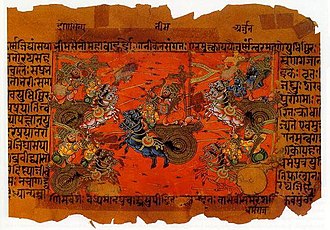
The Mahābhārata
The great epic of India — the war between the Pāṇḍavas and the Kauravas, cousins fighting for a kingdom — and, at about 100,000 couplets, the longest poem ever composed, containing the Bhagavad Gītā and almost the whole of Indian thought on dharma.
Abhinavagupta
The towering Kashmiri polymath (c. 950–1016) — the great systematiser of non-dual Kashmir Śaivism and the greatest theorist of Indian aesthetics, who taught that in the experience of art (rasa) the self tastes its own blissful consciousness.