

Contents · 6 sections · 5 min
Yājñavalkya in Five Ideas
the essentialsNeti neti
The Self cannot be grasped as any object. It is “not this, not this” (neti neti) — ungraspable, indestructible, unattached.
The unseen seer
You cannot see the seer of seeing, hear the hearer of hearing, think the thinker of thinking. The Self is the witness, never the witnessed.
Love for the Self
To Maitreyī — “It is not for the love of the husband that a husband is dear, but for the love of the Self.” All love points to the Self.
Dreamless sleep
In deep dreamless sleep the self, free of desire, is like a man in the embrace of his beloved who knows nothing within or without — a glimpse of liberation.
Karma
As a person acts, so does he become — the doer of good becomes good. One of the earliest statements of the doctrine of karma.
Yājñavalkya is the most brilliant and most vivid figure of the The Upaniṣads: a Brahmin sage of the kingdom of Videha (in modern Bihar), probably of the eighth or seventh century BCE, whose dialogues fill the central chapters of the Bṛhadāraṇyaka Upaniṣad. He is the first great philosopher of the Self (ātman) in Indian thought — the teacher who said that the Self is “the unseen seer, the unheard hearer, the unthought thinker, the unknown knower”, who could be described only as neti neti, “not this, not this”. He gave the earliest clear statement of the doctrine of Karma (“as a man acts, so he becomes”), described the states of dreaming and deep sleep with uncanny precision, and taught that all love is, at bottom, love of the Self. He is also the most human of the Upaniṣadic sages: confident to the point of arrogance, witty, impatient, and, at the end, a man who gives up everything to wander as a renunciant.
Life and tradition
Almost everything we know of Yājñavalkya comes from two texts: the Śatapatha Brāhmaṇa, the great ritual treatise of the White Yajur Veda, where he appears as an authority on the sacrifice, and its final part, the Bṛhadāraṇyaka Upaniṣad. Whether he was a single historical person or a name around which teachings collected is uncertain; but the dialogues present a consistent and vivid character.
Later tradition made him the founder of the White (Śukla) Yajur Veda. According to a Purāṇic legend, he quarrelled with his teacher Vaiśampāyana, who demanded that he give back all the Vedic knowledge he had learned; Yājñavalkya vomited it up, and his fellow students, taking the form of partridges (tittiri), ate it — hence the Taittirīya (“partridge”) branch of the Black Yajur Veda. Yājñavalkya then worshipped the sun, who revealed to him a new, “white” Yajur Veda. A law book, the Yājñavalkya Smṛti (c. 4th–5th century CE), one of the most important texts of Hindu law, is attributed to him, though it is centuries later. He also appears as a teacher of yoga in the Yoga-Yājñavalkya.
He had two wives: Kātyāyanī, described as having “a woman’s understanding”, and Maitreyī, “a discourser on Brahman”. His patron was Janaka, king of Videha, famous in tradition as a philosopher-king.
The great dialogues
The cows
The Bṛhadāraṇyaka’s third chapter opens with Janaka’s great sacrifice, to which the Brahmins of the Kuru and Pañcāla country come. The king sets aside a thousand cows with gold coins tied to their horns for “the most learned”. No one dares claim them, until Yājñavalkya tells his pupil to drive them home. The outraged Brahmins challenge him, and in a series of exchanges he answers them all: on ritual, on death and karma, on the inner self, on the “inner controller”, and — against the woman philosopher Gārgī Vācaknavī — on what the universe is “woven on”. See Bṛhadāraṇyaka Upaniṣad for the full debate. His last challenger, Śākalya, presses him too far and loses his head.
The unseen seer
To Uṣasta, who demands that he show the Self “as one points out a cow”, Yājñavalkya answers that the Self cannot be shown, because it is what does the showing:
You cannot see the seer of seeing, you cannot hear the hearer of hearing, you cannot think the thinker of thinking, you cannot know the knower of knowing. He is your self, which is within all. Everything else is subject to sorrow. (3.4.2)
This is one of the great insights of philosophy: the subject of experience can never appear as an object within experience. Immanuel Kant‘s “I think” that must accompany all representations, Wittgenstein’s eye that does not appear in its visual field, and Schopenhauer’s subject that “knows all and is known by none” are its distant relatives.
Neti neti
Because the Self can never be an object, it can only be described by denying every description:
This Self is not this, not this (neti neti). It is ungraspable, for it cannot be grasped; indestructible, for it cannot be destroyed; unattached, for it does not attach itself; unbound, it does not tremble, it is not hurt. (4.5.15)
Neti neti became the method of Advaita Vedānta: to find the Self, set aside everything that can be perceived or conceived — body, senses, mind, thoughts — until only the witness remains.
The inner controller
To Uddālaka, Yājñavalkya describes the Self as the inner controller (antaryāmin) of all things — “he who dwells in the earth, yet is other than the earth, whom the earth does not know, whose body the earth is, who controls the earth from within” — and so on through water, fire, sky, wind, sun, the quarters, the moon and stars, space, darkness, light, all beings, breath, speech, eye, ear, mind, skin, understanding and semen. “He is your Self, the inner controller, the immortal” (3.7). This passage became the foundation of Rāmānuja‘s theology of the world as God’s body.
Love and the Self
Before leaving home, Yājñavalkya teaches Maitreyī that “it is not for the love of the husband that a husband is dear, but for the love of the Self… It is the Self that should be seen, heard, reflected on and meditated upon” (2.4.5). The Self is like the ocean into which all waters flow, like a lump of salt that is salty through and through. And when one has become the Self, there is no duality: “By what should one know the knower?”
Dreams, sleep and death
To Janaka, Yājñavalkya teaches that “the self is his own light”. In dreams, the self creates its own world — chariots, roads, pleasures — “for he is a creator”. In deep sleep, it is like a falcon that folds its wings and glides to its nest, or a man in the embrace of his beloved who knows nothing within or without; there, “a father is not a father, a thief is not a thief”, and the self is beyond good and evil. At death the self moves to a new body “as a caterpillar draws itself from one blade of grass to the next”, shaped by its desires and actions — “as a man acts, so he becomes” — unless it is free of desire, in which case “being Brahman, he goes to Brahman” (4.3–4.4).
The renunciant
The Bṛhadāraṇyaka ends its story of Yājñavalkya with his departure: having taught Maitreyī, “Yājñavalkya went away.” Later tradition (the Jābāla Upaniṣad) has him teaching King Janaka about renunciation (saṃnyāsa). He is thus the model of the householder-philosopher who, at the end, abandons home and wealth to pursue the Self — the ideal that would become the fourth stage of life in Hindu tradition.
Legacy
Yājñavalkya’s teachings are the deepest source of Advaita Vedānta — Ādi Śaṅkara cites him constantly — and of the Upaniṣadic idea of the Self that the Buddha rejected (Anattā (No-Self)). Modern philosophers have compared his “unseen seer” with Kant’s transcendental subject and Husserl’s transcendental ego, and his analysis of dream and sleep with phenomenology of consciousness. The sharp, funny portrait of him at Janaka’s court — claiming the cows before anyone has answered, warning Gārgī that her head will fall off — preserves the oldest image in Indian literature of a philosopher at work.
Yājñavalkya in conversation
His single most quotable insight: “You cannot see the seer of seeing.” And his method for finding the Self: neti neti — not this, not this.
Yājñavalkya in two minutes
The boldest sage of the Upanishads, who taught that the Self (ātman) is the unseen seer, describable only as “neti neti” — not this, not this.
- Neti neti. The Self cannot be grasped as any object. It is “not this, not this” (neti neti) — ungraspable, indestructible, unattached.
- The unseen seer. You cannot see the seer of seeing, hear the hearer of hearing, think the thinker of thinking. The Self is the witness, never the witnessed.
- Love for the Self. To Maitreyī — “It is not for the love of the husband that a husband is dear, but for the love of the Self.” All love points to the Self.
- Dreamless sleep. In deep dreamless sleep the self, free of desire, is like a man in the embrace of his beloved who knows nothing within or without — a glimpse of liberation.
- Karma. As a person acts, so does he become — the doer of good becomes good. One of the earliest statements of the doctrine of karma.
“This Self is not this, not this. It is ungraspable, for it is not grasped; indestructible, for it is not destroyed; unattached, for it does not attach itself.” — Bṛhadāraṇyaka 4.5.15
Answering: — · Answered by: Gārgī Vācaknavī, Maitreyī, Ādi Śaṅkara
Curiosities
did you know?- He claimed King Janaka’s prize of a thousand cows before the debate had even begun.
Questions to Argue About
debate club →- Is the knower something that can never be known?
In Their Own Words
2 quotationsThis Self is not this, not this. It is ungraspable, for it is not grasped; indestructible, for it is not destroyed; unattached, for it does not attach itself.
स एष नेति नेत्यात्मा
Context & when to use it
For apophatic thought — what cannot be described, only negated (compare negative theology).
You cannot see the seer of seeing; you cannot hear the hearer of hearing; you cannot think the thinker of thinking; you cannot know the knower of knowing.
Context & when to use it
For the subject that cannot be an object — compare Kant’s transcendental “I” and Wittgenstein’s eye that does not see itself.
Sententiae
phrases in the originalNeti neti
Origin. Bṛhadāraṇyaka Upaniṣad 2.3.6 and Yājñavalkya’s teachings (4.2.4, 4.5.15). — Yājñavalkya, Bṛhadāraṇyaka Upaniṣad
For the via negativa — reaching the absolute by negating every description.
Explore Next
related by shared connectionsUddālaka Āruṇi
Upanishadic teacher who instructed his son Śvetaketu with salt in water and the seed of a banyan, ending each lesson — “tat tvam asi”, that thou art.

Gautama Buddha
The prince who left his palace to seek an end to suffering, awoke under the Bodhi tree, and taught the Four Noble Truths, the Middle Way and no-self (anattā).

Arthur Schopenhauer
The great pessimist, who said the thing-in-itself is blind, insatiable Will, that life swings like a pendulum between pain and boredom, and that art, compassion and renunciation are our only escape.
The Questions of King Milinda
A dialogue between the Indo-Greek king Menander and the Buddhist monk Nāgasena — the chariot argument for no-self, the flame of rebirth, and a Greek king’s sharp questions answered with Indian wit. A meeting of Greece and India in the 2nd century BCE.
Brahma Sūtras
Bādarāyaṇa’s 555 terse aphorisms systematizing the Upanishads — so condensed they are unreadable without the commentaries that founded the schools of Vedānta.
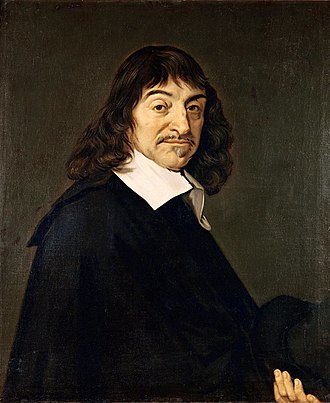
René Descartes
The father of modern philosophy, who doubted everything that could be doubted and found one thing that could not — that he himself was thinking.