
Contents · 6 sections · 11 min
Key Ideas
The Renaissance thirst for knowledge and power — and its limits.
Damnation and repentance — can Faustus repent, or will he not?
Hell as a state of mind — “Why, this is hell, nor am I out of it.”
The morality-play inheritance — Good and Bad Angels, the Seven Deadly Sins.
Infinite power, trivial uses — the comedy and pathos of Faustus’s middle years.
Doctor Faustus is the play in which Christopher Marlowe gave the English stage its most powerful image of the Renaissance mind at war with the limits of being human. Faustus, a celebrated scholar at the university of Wittenberg, has mastered every field of learning and found them all wanting. Longing for knowledge, wealth, power and pleasure beyond human bounds, he turns to black magic, summons the devil Mephistopheles, and signs a contract in his own blood: Lucifer will give him twenty-four years with a demon as his servant, after which Faustus’s body and soul are forfeit. He enjoys his power — mostly in tricks, travel and spectacle — while a Good Angel and an Old Man urge him to repent. He never does. In his final hour, waiting for midnight, he pleads in vain for time to stop, and is carried off to hell.
It is a tragedy of ambition and despair, a morality play with a hero who refuses its moral, and one of the most influential treatments of a legend that runs from the Middle Ages to Goethe and Thomas Mann.
At a glance
| Written | c. 1588–92 (date disputed) |
| Texts | The “A-text” (1604) and the longer, revised “B-text” (1616), with different comic scenes and a more orthodox ending |
| Source | The Historie of the damnable life, and deserved death of Doctor John Faustus (1592), the English translation of the German Faustbuch (1587) |
| Original star | Edward Alleyn of the Admiral’s Men, who played Faustus in a surplice with a cross |
| Legend | Stories that devils appeared on stage during performances, causing panic, circulated in Marlowe’s lifetime |
The story
A Chorus introduces Faustus: born of humble parents in Germany, he studied at Wittenberg and excelled in divinity, until, “swoll’n with cunning, of a self-conceit, / His waxen wings did mount above his reach” — like Icarus, he will fall — and he preferred “magic and necromancy… Nothing so sweet as magic is to him, / Which he prefers before his chiefest bliss.”
In his study, Faustus reviews the disciplines in turn and dismisses them. Logic only teaches one to dispute well — “Affords this art no greater miracle?” Medicine: he has cured thousands, but cannot make men live for ever. Law is “a mercenary drudge”. Divinity: he reads two verses from the Bible — “The reward of sin is death” and “If we say that we have no sin, we deceive ourselves” — and concludes, leaving out the promise of forgiveness that follows each, that all men must sin and die and be damned: “What doctrine call you this? Che serà, serà: / What will be, shall be! Divinity, adieu!” Magic alone promises “a world of profit and delight, / Of power, of honour, of omnipotence… A sound magician is a mighty god.” He dreams of what spirits will do for him: fetch gold from India and pearls from the ocean, read him strange philosophy, wall Germany with brass, raise armies, and make him emperor of the world.
A Good Angel urges him to lay the “damned book” aside; an Evil Angel urges him on. His friends Valdes and Cornelius, already magicians, teach him the rites.
At night in a grove, Faustus draws a magic circle and conjures. A devil appears so ugly that Faustus sends him back to return as a Franciscan friar — “That holy shape becomes a devil best.” Mephistopheles explains that he came not because of Faustus’s charms but because, hearing a man abjure God and the Scriptures, the devils fly in hope to win his soul. He tells of Lucifer’s fall through “aspiring pride and insolence”. Faustus asks how Mephistopheles is out of hell, and receives the play’s most chilling answer:
Why, this is hell, nor am I out of it. Think’st thou that I, who saw the face of God, And tasted the eternal joys of heaven, Am not tormented with ten thousand hells, In being deprived of everlasting bliss? O Faustus, leave these frivolous demands, Which strike a terror to my fainting soul.
Faustus scoffs: “Learn thou of Faustus manly fortitude, / And scorn those joys thou never shalt possess.” He sends Mephistopheles to offer Lucifer his soul for twenty-four years of service.
A comic scene follows, in which Faustus’s servant Wagner bullies a clown into service by threatening to turn him into a louse — parodying the master’s bargain.
Alone, Faustus wavers — “Now, Faustus, must thou needs be damned, / And canst thou not be saved?” — but steels himself. The angels appear again; the Evil Angel tempts him with wealth. Mephistopheles returns with Lucifer’s consent. Faustus must sign a deed in his own blood. He cuts his arm; the blood congeals, refusing to flow — “What might the staying of my blood portend? / Is it unwilling I should write this bill?” — and Mephistopheles fetches a chafer of fire to melt it. Faustus writes “Consummatum est” — “it is finished”, Christ’s last words on the cross, blasphemously reused — and sees on his arm the words Homo, fuge! — “Man, fly!” Mephistopheles distracts him with a show of devils bringing crowns and rich robes. The deed is read: in return for his soul and body after twenty-four years, Faustus shall be a spirit in form and substance, and Mephistopheles his servant, invisible or visible as he wishes, bringing whatever he desires.
Faustus immediately asks where hell is. Mephistopheles answers: “Hell hath no limits, nor is circumscribed / In one self place; for where we are is hell, / And where hell is, there must we ever be.” Faustus thinks hell “a fable”. He asks for a wife; Mephistopheles, since marriage is a sacrament, offers a devil dressed as a woman, and promises him courtesans instead. He gives Faustus books of spells and of the planets and plants.
Faustus soon repents and despairs — “When I behold the heavens, then I repent, / And curse thee, wicked Mephistopheles, / Because thou hast deprived me of those joys.” The Good Angel says it is never too late; the Evil Angel says God cannot pity him; Faustus’s heart is hardened: “I cannot repent.” He disputes astronomy with Mephistopheles, who answers only what Faustus already knows; when Faustus asks who made the world, Mephistopheles refuses — it is against their kingdom. Faustus turns to Christ; at once Lucifer, Beelzebub and Mephistopheles appear and threaten him, and he promises never to look to heaven again. To divert him Lucifer presents a pageant of the Seven Deadly Sins — Pride, Covetousness, Wrath, Envy, Gluttony, Sloth and Lechery — each introducing itself grotesquely. “O, this feeds my soul!” says Faustus.
The Chorus tells how Faustus rode in a chariot drawn by dragons to the top of Mount Olympus to learn the secrets of astronomy, and then set out to see the world. In Rome, invisible, he plays tricks on the Pope at a banquet — snatching his dishes and wine, boxing his ear — while the friars sing a dirge cursing the unseen intruder. (The B-text expands this into a long anti-Catholic episode.) Meanwhile, in a farce, two ostlers, Robin and Rafe, steal one of Faustus’s conjuring books and accidentally summon Mephistopheles, who turns them into an ape and a dog.
Faustus’s fame spreads. At the court of the Emperor Charles V, he conjures the shades of Alexander the Great and his paramour, and plants horns on the head of a sceptical knight who mocked him. He sells a horse to a horse-courser, warning him never to ride it into water; when the man does, it turns into a bundle of hay; when he comes to complain, he pulls off Faustus’s leg (a false one) and runs away in terror. At the court of the Duke of Vanholt, Faustus fetches grapes out of season, in January, for the pregnant Duchess. The great scholar’s infinite power has dwindled into conjuring tricks.
As his time runs out, Faustus makes a will, leaving his goods to Wagner. At a last gathering, his scholar friends ask to see Helen of Greece, the most beautiful woman who ever lived. Mephistopheles brings her, and they marvel. An Old Man enters and pleads with Faustus to repent, promising mercy — “I see an angel hovers o’er thy head, / And with a vial full of precious grace / Offers to pour the same into thy soul.” Faustus is moved, but Mephistopheles threatens to tear his flesh for his disobedience, and Faustus, terrified, renews his vow in blood and asks Mephistopheles to torment the Old Man. He asks for Helen as his paramour, to drive out all thought of repentance:
Was this the face that launched a thousand ships, And burnt the topless towers of Ilium? Sweet Helen, make me immortal with a kiss. Her lips suck forth my soul: see where it flies! Come, Helen, come, give me my soul again. Here will I dwell, for heaven be in these lips, And all is dross that is not Helena… O, thou art fairer than the evening air Clad in the beauty of a thousand stars.
Kissing a demon in Helen’s shape, Faustus commits the sin of demoniality, uniting his body with a spirit of hell — and so, many critics argue, seals his damnation. The Old Man, tormented by devils, resists them by faith: “Satan begins to sift me with his pride: / As in this furnace God shall try my faith… Hence, hell! for hence I fly unto my God.”
On the last night, Faustus confesses to his scholar friends: “for the vain pleasure of four-and-twenty years hath Faustus lost eternal joy and felicity.” They urge him to pray; he says he cannot: “I would lift up my hands, but see, they hold them, they hold them!” They leave to pray for him. The clock strikes eleven, and Faustus speaks his last soliloquy:
Ah Faustus, Now hast thou but one bare hour to live, And then thou must be damned perpetually! Stand still, you ever-moving spheres of heaven, That time may cease, and midnight never come; Fair Nature’s eye, rise, rise again, and make Perpetual day; or let this hour be but A year, a month, a week, a natural day, That Faustus may repent and save his soul! O lente, lente currite noctis equi! The stars move still, time runs, the clock will strike, The devil will come, and Faustus must be damned. O, I’ll leap up to my God! Who pulls me down? See, see where Christ’s blood streams in the firmament! One drop would save my soul, half a drop: ah, my Christ!
(The Latin line — “O run slowly, slowly, horses of the night” — is from Ovid’s Amores, where a lover begs the night not to end; Faustus misapplies a lover’s plea.) He begs mountains and hills to fall on him, the earth to gape, the stars to draw him up into a cloud. The clock strikes the half hour. He begs God to limit his punishment — “Let Faustus live in hell a thousand years, / A hundred thousand, and at last be saved!” — and envies the beasts whose souls dissolve into elements. He curses his parents, then himself and Lucifer. The clock strikes twelve. Thunder and lightning. “My God, my God, look not so fierce on me! / Adders and serpents, let me breathe a while! / Ugly hell, gape not! come not, Lucifer! / I’ll burn my books! — Ah, Mephistopheles!” The devils carry him off.
The Chorus closes: “Cut is the branch that might have grown full straight, / And burnèd is Apollo’s laurel bough, / That sometime grew within this learnèd man. / Faustus is gone: regard his hellish fall, / Whose fiendful fortune may exhort the wise / Only to wonder at unlawful things, / Whose deepness doth entice such forward wits / To practise more than heavenly power permits.” In the B-text, the scholars find his body torn limb from limb.
Themes
Knowledge and power. Faustus is the Renaissance humanist pushed to the edge: dissatisfied with the limits of inherited learning, hungry for direct power over nature. The play both thrills to this aspiration and dramatises its catastrophe. Ironically, once he has the power, Faustus learns nothing new — Mephistopheles tells him only what every student knows — and spends his gift on pranks and shows.
Damnation and free will. Can Faustus repent? The angels and the Old Man insist it is never too late, and the play repeatedly offers him the chance; every time he chooses (or is frightened into) despair. Some critics read the play as orthodox Christian tragedy — Faustus damns himself by pride and despair. Others, noting the Calvinist doctrine of predestination debated fiercely in Marlowe’s Cambridge, see a man who cannot repent because he is reprobate, damned from the beginning, so that the play becomes a protest against a cruel theology. Faustus’s misreading of Scripture in the first scene — omitting the promises of grace — suggests that his despair is his own interpretation.
Hell. Mephistopheles’s lines — “Why, this is hell, nor am I out of it” and “where we are is hell” — anticipate Milton’s Satan (“Which way I fly is hell; myself am hell”) and make hell an inner state of separation from God.
Form. The play mixes the medieval morality tradition — personified angels and sins, a soul fought over by good and evil — with Renaissance tragedy of an individual will. Its comic scenes, often criticised, parody the main action: servants with stolen books conjuring devils for petty ends mirror Faustus himself.
Afterlife
The Faust legend continued in puppet plays in Germany, which inspired Goethe’s Faust (1808, 1832), in which Faust is saved; Gounod’s opera Faust (1859); Berlioz’s The Damnation of Faust; Thomas Mann’s novel Doctor Faustus (1947), in which a composer’s pact becomes an allegory of Germany’s surrender to Nazism; and Mikhail Bulgakov’s The Master and Margarita. Notable productions include Orson Welles’s (1937) and Richard Burton’s (1966 film, with Elizabeth Taylor as Helen).
In conversation
- A Faustian bargain — selling one’s integrity for worldly gain.
- “Why, this is hell, nor am I out of it” — hell as a state of loss, carried within.
- “The face that launched a thousand ships” — Helen; a beauty that sets great events in motion.
Doctor Faustus in two minutes
The man who wanted to know everything sells his soul for it — and spends his power on tricks.
Marlowe’s tragedy (c. 1588–92) of the Wittenberg scholar who, bored with all human learning, sells his soul to the devil for twenty-four years of power and pleasure — and in his last hour cannot repent: “See, see where Christ’s blood streams in the firmament!”
- The Renaissance thirst for knowledge and power — and its limits.
- Damnation and repentance — can Faustus repent, or will he not?
- Hell as a state of mind — “Why, this is hell, nor am I out of it.”
- The morality-play inheritance — Good and Bad Angels, the Seven Deadly Sins.
- Infinite power, trivial uses — the comedy and pathos of Faustus’s middle years.
Explore Next
related by shared connections
Frankenstein
Mary Shelley’s novel (1818): the student Victor Frankenstein discovers the secret of life, builds a man from corpses and abandons him in horror; the creature, eloquent and rejected by all, takes revenge — the founding novel of science fiction and the great myth of creation without responsibility.

The English Renaissance
English literature from about 1500 to 1660 — the age of Tudor humanism, the sonnet, the public theatre and the King James Bible — from More’s Utopia and Spenser’s Faerie Queene to Marlowe, Shakespeare and Jonson, the metaphysical poetry of Donne and Herbert, and Milton.

The Divine Comedy
Dante’s journey through Hell, Purgatory and Paradise — the summa of medieval thought in a hundred cantos, and one of the greatest poems ever written.
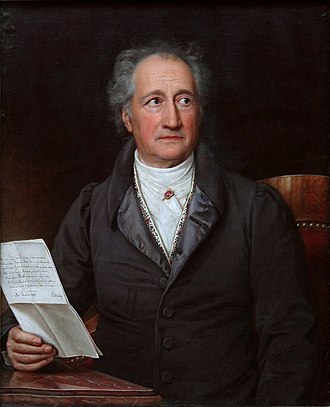
Johann Wolfgang von Goethe
Germany’s greatest writer — poet, novelist, dramatist, scientist and statesman — whose Faust is the modern myth of the striving soul, and whose life was itself treated as a work of art.

Paradise Lost
Milton’s epic (1667, revised 1674) of the rebellion of Satan and the Fall of Adam and Eve, written blind after the defeat of the English Revolution “to justify the ways of God to men” — the greatest long poem in English, whose magnificent Satan the Romantics took for its hero.
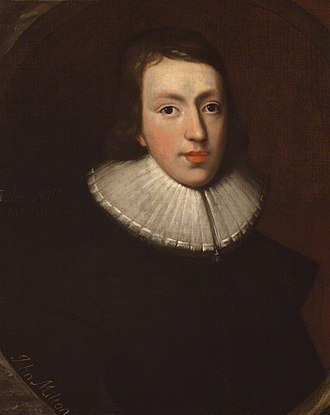
John Milton
English poet, polemicist and revolutionary whose Paradise Lost — written blind, after the defeat of his cause — retells the Fall of Man to “justify the ways of God to men”, and gave literature its most magnificent rebel, Satan.