
Contents · 6 sections · 8 min
Marlowe in Four Ideas
the essentialsThe overreacher
His heroes want everything — the world, infinite knowledge, infinite wealth — and are destroyed by limits they refuse to accept.
The mighty line
He turned blank verse from a stiff academic exercise into a thundering, flexible dramatic instrument, opening the way for Shakespeare.
Aspiring minds
“Nature… doth teach us all to have aspiring minds” — the Renaissance appetite for power and knowledge, at once glorious and damned.
The outsider-hero
A shepherd-conqueror, a Jewish merchant, a homosexual king, a damned scholar — Marlowe put outsiders at the centre of the stage.
Christopher Marlowe was the most brilliant English dramatist before William Shakespeare and, in the few years of his career, the greatest. Born the same year as Shakespeare, he was dead at twenty-nine — stabbed above the eye in a house in Deptford in May 1593, in murky circumstances involving government spies. In some six years he transformed the English stage. His blank verse — “Marlowe’s mighty line”, Ben Jonson called it — turned unrhymed pentameter into a soaring, thunderous instrument; his heroes — the shepherd-conqueror Tamburlaine, the Jewish merchant Barabas, the doomed scholar Faustus — are “overreachers” of boundless desire who defy every limit of morality, religion and nature. Doctor Faustus, the tragedy of a scholar who sells his soul to the devil, is one of the great plays of the world.
Life
Marlowe was baptised in Canterbury on 26 February 1564, the son of a shoemaker, John Marlowe. He won a scholarship to the King’s School, Canterbury, and in 1580 another — intended for boys who would become clergymen — to Corpus Christi College, Cambridge, where he took his BA in 1584. In these years he translated Ovid’s erotic Amores and the first book of Lucan’s Pharsalia, and probably wrote his first play, Dido, Queen of Carthage.
His MA was nearly refused in 1587: there were rumours that he intended to go over to the Catholic seminary at Reims, where English exiles trained priests to return as missionaries. The Privy Council intervened with an extraordinary letter stating that he had “done her Majesty good service” in “matters touching the benefit of his country”, and should not be defamed by those “ignorant in th’ affaires he went about”. This is the main evidence that Marlowe worked for Sir Francis Walsingham’s secret service, probably infiltrating Catholic exiles abroad.
He went to London and immediately conquered the stage. Tamburlaine the Great (c. 1587), performed by the Admiral’s Men with the actor Edward Alleyn, was a sensation. Its prologue announced a new kind of drama: “From jigging veins of rhyming mother-wits, / And such conceits as clownage keeps in pay, / We’ll lead you to the stately tent of war, / Where you shall hear the Scythian Tamburlaine / Threatening the world with high astounding terms.” Tamburlaine, a Scythian shepherd, rises by sheer will to conquer the Persian, Turkish and Egyptian empires, drawn in a chariot by captive kings (“Holla, ye pampered jades of Asia!”), keeping the Turkish emperor in a cage, slaughtering virgins, burning the Koran. He is unbeaten by any human enemy and dies only of sickness, having never been defeated. His speech on “aspiring minds” is the manifesto of Marlovian ambition:
Nature that framed us of four elements, Warring within our breasts for regiment, Doth teach us all to have aspiring minds: Our souls, whose faculties can comprehend The wondrous architecture of the world… Will us to wear ourselves and never rest, Until we reach the ripest fruit of all, That perfect bliss and sole felicity, The sweet fruition of an earthly crown.
A second part followed. Then came Doctor Faustus (c. 1588–92); The Jew of Malta (c. 1589), whose hero Barabas, a rich merchant robbed by the Christian governor of Malta, becomes a gleefully inventive villain — poisoning a convent of nuns — and dies in a boiling cauldron of his own devising, a model for Shakespeare’s Shylock; Edward II (c. 1592), the subtlest of his plays, a history of a king destroyed by his infatuation with his favourite Piers Gaveston and by his barons, ending with a horrific murder; and The Massacre at Paris, on the St Bartholomew’s Day Massacre of 1572. He also wrote the erotic narrative poem Hero and Leander (“Who ever loved, that loved not at first sight?”) and the lyric “The Passionate Shepherd to His Love” (“Come live with me and be my love”), answered by Sir Walter Ralegh in “The Nymph’s Reply”.
Marlowe’s life was violent and dangerous. In 1589 he was involved in a street fight in which a man was killed (he was acquitted). In 1592 he was arrested in the Netherlands for counterfeiting coins. He shared a room with the playwright Thomas Kyd, author of The Spanish Tragedy. In May 1593, when Kyd was arrested in a hunt for the authors of anti-immigrant libels, heretical papers were found in his room; under torture he said they were Marlowe’s. Marlowe was summoned before the Privy Council and ordered to report daily. An informer, Richard Baines, delivered a note listing Marlowe’s alleged blasphemies: that the Old Testament was false, that “Moses was but a juggler”, that Christ was a bastard and St John his bedfellow, that religion was invented to keep men in awe, and that “all they that love not tobacco and boys are fools”.
On 30 May 1593 Marlowe spent the day at a house in Deptford belonging to the widow Eleanor Bull, with three men: Ingram Frizer, Nicholas Skeres and Robert Poley — all associated with Walsingham’s network. According to the coroner’s report, discovered by the scholar Leslie Hotson in 1925, after supper Marlowe and Frizer quarrelled over the bill (“the reckoning”); Marlowe seized Frizer’s dagger and wounded him; in the struggle Frizer stabbed Marlowe above the right eye, killing him instantly. Frizer was pardoned within a month. Whether it was a brawl, an assassination to prevent damaging testimony, or something else has been debated ever since.
Doctor Faustus
The Tragical History of the Life and Death of Doctor Faustus is based on a German chapbook about a real or legendary sixteenth-century magician, Johann Faust, translated into English as The English Faust Book. It survives in two different texts (the “A-text” of 1604 and the longer “B-text” of 1616), both with comic scenes probably partly by collaborators.
Faustus, a brilliant scholar of Wittenberg who has mastered logic, medicine, law and divinity, finds them all unsatisfying and turns to magic: “A sound magician is a mighty god.” He conjures the devil Mephistopheles and makes a pact, signed in his own blood (which congeals as he writes, a warning he ignores): in exchange for twenty-four years in which Mephistopheles will serve him and give him whatever he desires, he gives his soul to Lucifer. A Good Angel and a Bad Angel compete for him throughout. Mephistopheles himself warns Faustus that hell is not a place but a state: “Why, this is hell, nor am I out of it. / Think’st thou that I, who saw the face of God, / And tasted the eternal joys of heaven, / Am not tormented with ten thousand hells / In being deprived of everlasting bliss?” Faustus, mocking, does not listen.
With his power Faustus learns astronomy, sees the Seven Deadly Sins parade before him, flies around the world, plays tricks on the Pope in Rome, conjures Alexander the Great for the Emperor, fetches grapes out of season for a duchess, and swindles a horse-dealer — trivial uses, critics have noted, of infinite power. Near the end he has Mephistopheles summon Helen of Troy:
Was this the face that launched a thousand ships, And burnt the topless towers of Ilium? Sweet Helen, make me immortal with a kiss… Her lips suck forth my soul; see where it flies!
The Old Man begs him to repent; Faustus wavers, but is threatened by Mephistopheles and does not. On his last night, in the play’s greatest speech, he waits for midnight, when the devils will come for him:
Ah Faustus, Now hast thou but one bare hour to live, And then thou must be damned perpetually! Stand still, you ever-moving spheres of heaven, That time may cease, and midnight never come… The stars move still, time runs, the clock will strike, The devil will come, and Faustus must be damned. O, I’ll leap up to my God! Who pulls me down? See, see where Christ’s blood streams in the firmament! One drop would save my soul, half a drop: ah, my Christ!
As the clock strikes, he cries “I’ll burn my books!” and is carried off to hell. The Chorus ends: “Cut is the branch that might have grown full straight, / And burned is Apollo’s laurel bough, / That sometime grew within this learned man… Regard his hellish fall.”
The play stands at the crossroads of the medieval morality play — with its angels, devils and Seven Deadly Sins — and the Renaissance celebration of human aspiration. Is it an orthodox warning against pride and forbidden knowledge, or a sympathetic tragedy of the questing mind trapped by a theology of damnation? Faustus’s inability to repent — is he unable or unwilling? — reflects the Calvinist anxieties of the age about predestination. The story passed to Goethe’s Faust (see Faust) and Thomas Mann’s Doctor Faustus, and “Faustian bargain” became proverbial.
The overreacher
The critic Harry Levin called Marlowe’s heroes overreachers. Tamburlaine reaches for the crown of the world, Barabas for “infinite riches in a little room”, Faustus for infinite knowledge and power, Edward II for love against the order of the realm. They are men of enormous appetites, magnificent rhetoric and transgressive energy, and they challenge the moral and cosmic order of the Elizabethan world. Whether Marlowe celebrates or condemns them is the question his plays leave open. His own reputation — as atheist, sodomite, spy and brawler — made him, for his contemporaries, the very type of the dangerous Renaissance intellectual.
Legacy
Marlowe’s influence on Shakespeare was profound: Richard III and the Henry VI plays use his style; Richard II answers Edward II; Shylock answers Barabas; Shakespeare quotes Marlowe in As You Like It (“Dead shepherd, now I find thy saw of might, / ‘Who ever loved that loved not at first sight?’”) and alludes to his death (“a great reckoning in a little room”). Recent scholarship has confirmed that the two collaborated: the New Oxford Shakespeare (2016) credits Marlowe as co-author of the Henry VI plays. The “Marlovian theory” that he faked his death and wrote Shakespeare’s plays has no serious support.
In conversation
- A Faustian bargain — trading one’s soul (one’s integrity) for power, knowledge or pleasure.
- “The face that launched a thousand ships” — Helen of Troy; any beauty that causes great events.
- “Infinite riches in a little room” — Barabas on his jewels; anything precious compressed into small space.
Christopher Marlowe in two minutes
The shoemaker’s son, Cambridge scholar, government spy and reputed atheist who made blank verse thunder — “Marlowe’s mighty line” — in Tamburlaine, The Jew of Malta, Edward II and Doctor Faustus, and was stabbed to death in a Deptford house at twenty-nine.
- The overreacher. His heroes want everything — the world, infinite knowledge, infinite wealth — and are destroyed by limits they refuse to accept.
- The mighty line. He turned blank verse from a stiff academic exercise into a thundering, flexible dramatic instrument, opening the way for Shakespeare.
- Aspiring minds. “Nature… doth teach us all to have aspiring minds” — the Renaissance appetite for power and knowledge, at once glorious and damned.
- The outsider-hero. A shepherd-conqueror, a Jewish merchant, a homosexual king, a damned scholar — Marlowe put outsiders at the centre of the stage.
Answering: — · Answered by: William Shakespeare
Curiosities
did you know?- He was accused of saying that Christ and St John were lovers, that Moses was a juggler, and that ‘all they that love not tobacco and boys are fools’.
- Cambridge nearly refused him his MA in 1587 until the Privy Council wrote that he had done the queen ‘good service’ — almost certainly as a spy.
- He was killed by Ingram Frizer in a house in Deptford, supposedly in a quarrel over ‘the reckoning’ — the bill — in the presence of two other government agents.
- Shakespeare’s As You Like It quotes his ‘Hero and Leander’ and recalls his death as ‘a great reckoning in a little room’.
- Some have argued, without good evidence, that Marlowe faked his death and wrote Shakespeare’s plays.
Questions to Argue About
debate club →- Is Faustus damned by God or by himself?
- Are Marlowe’s overreachers heroes or warnings?
- Was Marlowe killed in a brawl — or assassinated?
Explore Next
related by shared connections
Faust
Goethe’s two-part dramatic poem of the scholar who wagers his soul with Mephistopheles that no moment of pleasure will ever satisfy him — the defining myth of modern restless striving.
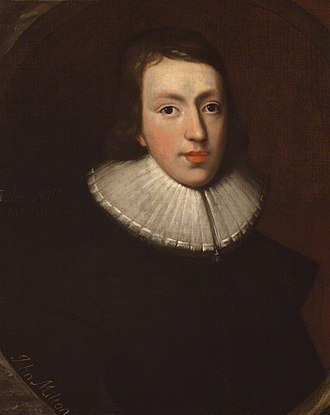
John Milton
English poet, polemicist and revolutionary whose Paradise Lost — written blind, after the defeat of his cause — retells the Fall of Man to “justify the ways of God to men”, and gave literature its most magnificent rebel, Satan.

Othello
Shakespeare’s tragedy of jealousy (c. 1603–04): Othello, a Black general in the service of Venice, secretly marries the young Desdemona; his ensign Iago, out of hatred he never fully explains, persuades him that she is unfaithful, and Othello kills her — then learns the truth.

The Tempest
Shakespeare’s last solo play (c. 1610–11): Prospero, a deposed duke and magician, raises a storm to bring his enemies to his island, where his spirit Ariel and his slave Caliban serve him — and at the end he forgives, frees them and breaks his staff, “our revels now are ended”.

The Grand Inquisitor
Ivan Karamazov’s prose-poem — Christ returns to sixteenth-century Seville, and the aged Cardinal Inquisitor imprisons him, explaining that humanity cannot bear the freedom He offered.

The Road of Nihilism
How “nothing matters” became an idea, a movement, a diagnosis, and a test — from Jacobi to Camus.