
Contents · 9 sections · 13 min
Key Ideas
Free will — humans were made “sufficient to have stood, though free to fall”.
Satan — the heroic rebel, eloquent and self-destroying (“Myself am Hell”).
Obedience and knowledge — the forbidden tree and the limits of inquiry.
Marriage and the relation of Adam and Eve — “He for God only, she for God in him.”
The fortunate fall — from sin comes redemption; “a paradise within thee, happier far.”
Paradise Lost is the great epic poem of the English language — the story of the creation of the world, the rebellion of Satan and his angels against God, and the temptation and Fall of Adam and Eve, told in twelve books of majestic blank verse by John Milton, who composed it blind, in disgrace and danger after the restoration of the monarchy he had fought to abolish. Milton announces his aim in the opening lines: to tell “Of man’s first disobedience, and the fruit / Of that forbidden tree, whose mortal taste / Brought death into the world, and all our woe, / With loss of Eden”, and to “assert eternal providence, / And justify the ways of God to men.”
It is a poem of cosmic scope — Heaven, Hell, Chaos and the new-made Earth — and of intimate human drama: a marriage, a temptation, a quarrel, a reconciliation. Its first two books, in which the defeated rebel angels rouse themselves in the burning lake of Hell and debate what to do, contain some of the most magnificent poetry in English; its portrait of Satan — proud, eloquent, defiant, wounded, self-deceiving — is so compelling that William Blake declared Milton “of the Devil’s party without knowing it”. The question of whether the poem succeeds in justifying God, or whether it reveals a tyrant, has been argued for three and a half centuries.
At a glance
| Composed | c. 1658–1665, dictated to amanuenses |
| Published | 1667 in ten books; second edition 1674 in twelve, with prose “Arguments” summarising each book |
| Form | Epic in unrhymed iambic pentameter (blank verse) — Milton added a note defending the absence of rhyme as “the jingling sound of like endings” |
| Payment | £5 on signing, £5 more after each of the first three impressions sold 1,300 copies — £10 in all during his lifetime |
| Models | Homer’s Iliad and Odyssey, Virgil’s Aeneid, Genesis, Spenser, Dante |
| Sequel | Paradise Regained (1671), on Christ’s temptation in the wilderness |
Background
Milton had dreamed since youth of writing a great epic in English — at first on King Arthur. He spent twenty years instead on political prose in the service of the English Revolution, defending the execution of Charles I and serving as Latin Secretary to Cromwell’s Council of State. By 1652 he was totally blind. When the monarchy was restored in 1660, he was arrested and his books burned; he escaped execution, perhaps through the intervention of friends like Andrew Marvell. Defeated, poor, blind, his cause lost, he dictated Paradise Lost in the early mornings — to his daughters, nephews and hired secretaries — composing up to forty lines at night and, as he put it, waiting to be “milked”.
The choice of subject was itself a statement: not a national hero but the origin of the human condition; not “wars, hitherto the only argument / Heroic deemed”, but “the better fortitude / Of patience and heroic martyrdom”. The poem’s theology is Protestant and, in places, heterodox (in his private De Doctrina Christiana Milton denied the Trinity and held that matter is good and God-derived). Its politics — a rebellion against a monarch — is a minefield: the republican Milton gives Satan the rhetoric of liberty, and gives God the role of king.
The story
After invoking the “Heavenly Muse” who inspired Moses — and the Holy Spirit, who “from the first / Wast present, and with mighty wings outspread / Dove-like sat’st brooding on the vast abyss” — the poem begins in medias res, in the middle of things. Satan and his rebel angels lie stunned on a burning lake in Hell, where they have fallen for nine days after their defeat in Heaven: “A dungeon horrible, on all sides round / As one great furnace flamed, yet from those flames / No light, but rather darkness visible”. Satan, huge as Leviathan, rouses himself and his lieutenant Beelzebub: “What though the field be lost? / All is not lost; the unconquerable will, / And study of revenge, immortal hate, / And courage never to submit or yield”. Surveying his new realm, he declares: “The mind is its own place, and in itself / Can make a heaven of hell, a hell of heaven… Better to reign in hell, than serve in heaven.” He summons his legions, catalogued as the future pagan gods (Moloch, Chemos, Baal, Astarte, Dagon, Mammon, Belial), and they build a palace, Pandemonium (“all the demons” — Milton’s coinage), in an hour.
In council, the fallen angels debate. Moloch, fiercest of spirits, urges open war; Belial, graceful and hollow, counsels ignoble ease; Mammon proposes to build an empire in Hell; Beelzebub, prompted by Satan, proposes a subtler revenge — to attack God’s new creation, Man, rumoured to have been made in a new world. Satan volunteers for the perilous journey alone. At the gates of Hell he meets two monstrous figures: Sin, a woman above and a serpent below, who sprang from his head when he first conceived rebellion, and Death, a shapeless shadow, their incestuous offspring. Sin opens the gates; Satan plunges into Chaos, the warring elements “of neither sea, nor shore, nor air, nor fire”, and struggles through to the light of the created universe.
Milton invokes Light (“Hail holy Light, offspring of Heaven first-born”), lamenting his own blindness. In Heaven, God the Father sees Satan approaching the world and foretells Man’s fall, explaining that he made Man free: “I made him just and right, / Sufficient to have stood, though free to fall… Freely they stood who stood, and fell who fell.” His foreknowledge does not cause the Fall. Man, deceived by another, will find grace; but justice demands that someone die for him. The Son offers himself, and the angels hymn him. Satan, disguised as a young cherub, asks the archangel Uriel, guardian of the sun, the way to Earth.
Satan alights on Mount Niphates and, gazing at the sun, is torn by doubt and remorse in a great soliloquy: “Me miserable! which way shall I fly / Infinite wrath, and infinite despair? / Which way I fly is hell; myself am hell”. He considers repentance and rejects it: “Evil be thou my good.” He leaps the wall of Eden and, sitting like a cormorant on the Tree of Life, sees Adam and Eve: “Two of far nobler shape, erect and tall… For contemplation he and valour formed, / For softness she and sweet attractive grace; / He for God only, she for God in him.” He watches their innocent love with envy and learns from their talk that they are forbidden only one thing — the Tree of Knowledge. Eve recalls her first waking, when she fell in love with her own reflection in a pool, until a voice led her to Adam. At night the angel guards find Satan “squat like a toad, close at the ear of Eve”, whispering a dream; touched by Ithuriel’s spear, he starts up in his own shape and is driven out of Eden.
Eve tells Adam of her disturbing dream, in which an angelic figure persuaded her to eat the fruit and she flew up to the clouds. God sends the archangel Raphael to warn Adam of his danger and remind him of his free will. Raphael dines with them (angels, Milton insists, really eat) and begins the story of Satan’s rebellion: how God proclaimed his Son as head of the angels, and Satan, envious, led a third of the angels north, persuading them that they were “self-begot”, until the angel Abdiel alone stood up against him.
Raphael describes the War in Heaven: two days of battle in which the rebel angels, wounded but immortal, invent cannon and gunpowder; the loyal angels tear up mountains and hurl them. On the third day the Son rides out in the chariot of paternal deity and drives the rebels over the wall of Heaven to fall nine days into Chaos and Hell.
At Adam’s request, Raphael tells the Creation: God sends the Son to create a new world to replace the lost angels, and in six days, following Genesis, the world, its creatures and Man are made.
Adam asks about the movements of the heavens; Raphael gently advises him to “be lowly wise” and not to speculate too much. Adam tells his own story — his first waking, his naming of the animals, his loneliness and request for a companion, the creation of Eve from his rib, his passion for her, which, he admits, almost overwhelms his reason: “All higher knowledge in her presence falls / Degraded.” Raphael warns him, with a frown, not to subject himself to passion. Raphael departs.
The great book of the Fall. Milton announces that he must now change his notes “to tragic”. Satan returns to Eden as a mist and enters a sleeping serpent. In the morning, Eve proposes that she and Adam work apart to get more done. Adam objects that they will be safer together; Eve, hurt that he doubts her firmness, insists that virtue untested is no virtue. Adam yields: “Go; for thy stay, not free, absents thee more.” The serpent finds her alone among the roses and flatters her as a goddess. He tells her that he gained speech and reason by eating the fruit of a certain tree, and leads her to it. She hesitates; he argues brilliantly that God forbade the fruit to keep them low, that it gave him life and knowledge, not death, that a just God cannot punish them for seeking knowledge, and that they shall be as gods. It is noon; she is hungry.
So saying, her rash hand in evil hour Forth reaching to the fruit, she plucked, she ate: Earth felt the wound, and Nature from her seat Sighing through all her works gave signs of woe, That all was lost.
Eve eats greedily, feels exalted, worships the tree, and resolves to share the fruit with Adam — partly in love, partly from fear that if she dies he will be given another Eve. Adam, meeting her with a garland he has woven, sees what she has done; the garland drops from his hand, “and all the faded roses shed”. He is horrified — and immediately decides to die with her: “How can I live without thee, how forgo / Thy sweet converse and love so dearly joined, / To live again in these wild woods forlorn?… Flesh of flesh, / Bone of my bone thou art, and from thy state / Mine never shall be parted, bliss or woe.” He eats, “not deceived, / But fondly overcome with female charm.” They become drunk with the fruit, burn with lust, make love, and wake ashamed, covering themselves with leaves, and fall into mutual accusation: “Thus they in mutual accusation spent / The fruitless hours, but neither self-condemning, / And of their vain contest appeared no end.”
The Son descends to judge them. Sin and Death build a great bridge from Hell to Earth. Satan returns triumphant to Pandemonium to announce his victory — and, instead of applause, hears a universal hiss: he and all his angels are turned into serpents, and they chew bitter ashes from illusory fruit trees. On Earth, the angels alter the heavens and seasons; animals turn on one another. Adam laments in despair: “O miserable of happy!” — wishing he had never been made — and when Eve comes to comfort him, he rejects her savagely: “Out of my sight, thou serpent!” Eve, weeping, throws herself at his feet and asks for his forgiveness and offers to take all the punishment on herself. Her humility moves him; they are reconciled; she suggests suicide or childlessness to end the curse; Adam reminds her of the promise that her seed will bruise the serpent’s head. They pray in repentance.
The Son intercedes; God accepts their prayers but decrees that they must leave Paradise. The archangel Michael is sent to expel them, and first leads Adam to a hilltop to show him the future of his descendants: Cain’s murder of Abel, the diseases death will bring, the corruption of humankind, the Flood.
Michael narrates the rest of history: Nimrod’s tyranny and Babel, Abraham, Moses and the Law, the kings of Israel, the coming of the Messiah, the Crucifixion and Resurrection, the spread and corruption of the Church, and the Last Judgment when the world will be renewed. Adam rejoices that from his sin so much good will come — the fortunate fall: “O goodness infinite, goodness immense! / That all this good of evil shall produce… full of doubt I stand, / Whether I should repent me now of sin / By me done and occasioned, or rejoice / Much more, that much more good thereof shall spring.” Michael tells him that he need not regret Paradise: if he adds deeds, faith, virtue, patience, temperance and love, “then wilt thou not be loath / To leave this Paradise, but shalt possess / A paradise within thee, happier far.” Eve wakes from a dream of comfort, and they are led out. The poem ends:
Some natural tears they dropped, but wiped them soon; The world was all before them, where to choose Their place of rest, and Providence their guide: They hand in hand with wandering steps and slow, Through Eden took their solitary way.
Satan
No character in English poetry has provoked more argument. In the first books Satan is magnificent — a fallen archangel of tragic grandeur, eloquent leader, defiant rebel against what he calls “the tyranny of Heaven”, heroic traveller through Chaos. Blake wrote in The Marriage of Heaven and Hell (1790): “The reason Milton wrote in fetters when he wrote of Angels & God, and at liberty when of Devils & Hell, is because he was a true Poet and of the Devil’s party without knowing it.” Shelley thought Satan morally superior to God. Byron’s heroes descend from him. The Romantic reading made Satan a Promethean rebel against tyranny.
Others insist that Milton deliberately makes Satan attractive in order to show the seductiveness of evil — and then degrades him. C. S. Lewis, in A Preface to Paradise Lost (1942), traced Satan’s decline “from hero to general, from general to politician, from politician to secret service agent, and thence to a thing that peers in at bedroom or bathroom windows, and thence to a toad, and finally to a snake”. His speeches are full of lies and self-contradiction; his soliloquy on Niphates reveals the hell within him. Stanley Fish’s Surprised by Sin (1967) argued that the poem deliberately seduces the reader into sympathy with Satan, then makes us recognise our own fallen nature in that sympathy.
Themes
Free will. The poem’s defence of God rests on human freedom: God made angels and humans able to fall, because only free obedience and love have value — “Not free, what proof could they have given sincere / Of true allegiance, constant faith or love?” God’s foreknowledge does not cause the Fall. Critics from William Empson (Milton’s God, 1961) onward have found this God legalistic and cruel; others find the argument profound.
Obedience and knowledge. Why is the fruit forbidden? Milton, the champion of free inquiry in Areopagitica, makes the prohibition a pure test of obedience — a “sole pledge” of loyalty. The serpent’s arguments for knowledge are seductive because they echo values Milton himself held.
Adam and Eve. Milton’s portrayal of the first marriage is one of the poem’s glories: a relationship of love, conversation, mutual delight and erotic joy (Milton insists that they made love before the Fall). It is also hierarchical: “He for God only, she for God in him.” Feminist critics have debated whether Milton is a misogynist or a surprisingly sympathetic portrayer of Eve, whose independence, eloquence and repentance are among the poem’s most powerful moments; Eve’s initiative in reconciliation in Book X makes her the first to imitate the Son’s self-sacrifice.
The fortunate fall. The Latin felix culpa, “happy fault” (from the Easter liturgy), names the paradox that the Fall made possible the greater good of redemption. Adam’s last rejoicing and the “paradise within” suggest that inner virtue may be better than the outward Eden.
Politics. A poem by a defeated republican about a rebellion against a heavenly king is inevitably political. Is Satan’s revolt a parody of false liberty — a rebellion against a rightful, uniquely worthy king, unlike earthly tyrants — or does the poem’s sympathy for him leak Milton’s own revolutionary spirit?
Style
Milton’s blank verse is grand, sonorous and musical, built on long, intricately constructed sentences that wind through many lines (enjambment), Latinate syntax and vocabulary (“darkness visible”, “adventurous song”, “unconquerable will”), and epic similes that open out into whole scenes — Satan’s spear compared to the tallest pine “hewn on Norwegian hills, to be the mast / Of some great admiral”; the fallen angels lying on the lake “thick as autumnal leaves that strow the brooks / In Vallombrosa”. Its density of allusion — classical, biblical, scientific, geographical — makes it one of the most learned poems ever written. Milton coined or first used hundreds of words, including “pandemonium”, “terrific”, “sensuous”, “all hell broke loose” and “space” in its astronomical sense.
Reception
Dryden adapted it as an opera (The State of Innocence) and praised it as “one of the greatest, most noble, and most sublime poems which either this age or nation has produced”. Addison’s Spectator essays (1712) made it a classic. Samuel Johnson admired it but admitted: “None ever wished it longer than it is.” The Romantics revered and reinterpreted it; Frankenstein has the creature read it as true history and identify with both Adam and Satan. T. S. Eliot and F. R. Leavis attacked Milton’s “dislodgement” of English poetry from living speech; C. S. Lewis and Christopher Ricks defended him. Philip Pullman’s His Dark Materials (1995–2000) takes its title from Book II and retells the Fall as liberation.
In conversation
- “Better to reign in hell than serve in heaven” — Satan’s defiance; for any proud refusal to submit.
- “The mind is its own place” — our state of mind makes our heaven or hell.
- “Pandemonium” — Milton’s word for the capital of Hell; now any wild uproar.
- “The world was all before them” — for a fresh, uncertain beginning after a loss.
Paradise Lost in two minutes
The first disobedience — and whether a good God can be justified for allowing it.
Milton’s epic (1667, revised 1674) of the rebellion of Satan and the Fall of Adam and Eve, written blind after the defeat of the English Revolution “to justify the ways of God to men” — the greatest long poem in English, whose magnificent Satan the Romantics took for its hero.
- Free will — humans were made “sufficient to have stood, though free to fall”.
- Satan — the heroic rebel, eloquent and self-destroying (“Myself am Hell”).
- Obedience and knowledge — the forbidden tree and the limits of inquiry.
- Marriage and the relation of Adam and Eve — “He for God only, she for God in him.”
- The fortunate fall — from sin comes redemption; “a paradise within thee, happier far.”
Explore Next
related by shared connections
Frankenstein
Mary Shelley’s novel (1818): the student Victor Frankenstein discovers the secret of life, builds a man from corpses and abandons him in horror; the creature, eloquent and rejected by all, takes revenge — the founding novel of science fiction and the great myth of creation without responsibility.

William Blake
London engraver, painter, poet and visionary who printed his own illuminated books — Songs of Innocence and of Experience, The Marriage of Heaven and Hell, Jerusalem — attacking the “mind-forged manacles” of reason, Church, state and industry in the name of imagination, energy and the divine humanity.

The Divine Comedy
Dante’s journey through Hell, Purgatory and Paradise — the summa of medieval thought in a hundred cantos, and one of the greatest poems ever written.

Mary Shelley
The daughter of Mary Wollstonecraft and William Godwin, wife of Percy Bysshe Shelley, who at eighteen began Frankenstein — the founding novel of science fiction and the great modern myth of a creator and his abandoned creature — and lived on as novelist, editor and keeper of the Romantic flame.
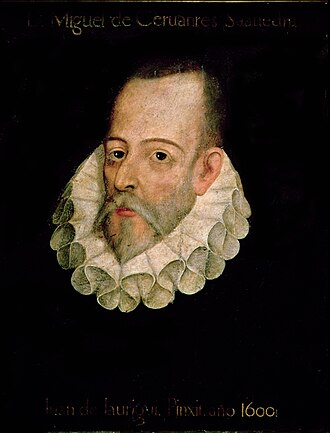
Miguel de Cervantes
Soldier, captive, tax collector and the father of the modern novel — whose Don Quixote made a deluded old knight and his earthy squire the most famous pair in literature.

The Grand Inquisitor
Ivan Karamazov’s prose-poem — Christ returns to sixteenth-century Seville, and the aged Cardinal Inquisitor imprisons him, explaining that humanity cannot bear the freedom He offered.