
Plato distrusted the image-making part of the soul and banished the poets from his ideal Republic. For most of the classical and medieval tradition, imagination (phantasia) was a lower faculty that stored and combined images, useful but dangerous, to be governed by reason. Shakespeare’s Theseus lumps together “the lunatic, the lover and the poet” as “of imagination all compact”.
The Romantics reversed this hierarchy. Coleridge distinguished the mechanical “fancy”, which merely recombines memories, from the creative imagination, “a repetition in the finite mind of the eternal act of creation”. Blake declared that “the Imagination is not a State: it is the Human Existence itself.” William Wordsworth called it “another name for absolute power / And clearest insight”, and in The Prelude felt it rise “from the mind’s abyss”. John Keats was “certain of nothing but of the holiness of the Heart’s affections and the truth of Imagination — What the imagination seizes as Beauty must be truth.”
Philosophers too came to see imagination as essential to knowledge: Immanuel Kant gave it a central role in synthesising experience, and David Hume thought it the faculty that fills the gaps between our impressions. Frankenstein shows its dark side — imagination as the “unhallowed” ambition that creates monsters.
Thinkers & Authors
7
William Blake
London engraver, painter, poet and visionary who printed his own illuminated books — Songs of Innocence and of Experience, The Marriage of Heaven and Hell, Jerusalem — attacking the “mind-forged manacles” of reason, Church, state and industry in the name of imagination, energy and the divine humanity.

William Wordsworth
The great poet of nature, memory and the growth of the mind — co-author with Coleridge of Lyrical Ballads (1798), which launched English Romanticism, and author of “Tintern Abbey”, the “Immortality Ode” and The Prelude, who taught that poetry is “the spontaneous overflow of powerful feelings”.

Samuel Taylor Coleridge
Poet, philosopher, critic and talker of genius — co-author with Wordsworth of Lyrical Ballads, author of The Rime of the Ancient Mariner, Kubla Khan, Christabel and Biographia Literaria — whose theory of the imagination shaped Romanticism, and whose life was haunted by opium, debt and unfinished work.

John Keats
The Romantic poet of beauty, sensation and mortality — a stable-keeper’s son and trained surgeon who, before dying of tuberculosis at twenty-five, wrote the great odes of 1819, “The Eve of St. Agnes”, “La Belle Dame sans Merci” and some of the finest letters in English.

W. B. Yeats
The Irish poet, dramatist, mystic and senator who moved from the dreamy Celtic Twilight to the hard, magnificent modern poems of “Easter, 1916”, “The Second Coming”, “Sailing to Byzantium” and “Among School Children” — the greatest poet writing in English in the twentieth century, and a Nobel laureate.

Jaishankar Prasad
Poet, dramatist, novelist and philosopher of Banaras, the first of the four pillars of Chhāyāvād — author of the epic Kāmāyanī, the lyric sequence Āṁsū, and historical plays like Skandagupta and Chandragupta that recreated India’s ancient glory.

Sumitranandan Pant
The poet of nature among the four pillars of Chhāyāvād — a child of the Kumaon Himalaya whose Pallav and Guñjan sang of clouds, mountains and beauty — who later turned to Marxist, then Aurobindonian visions of a new humanity, and was the first Hindi poet to win the Jnanpith Award.
Works
1
Schools & Movements
2
English Romanticism
The revolution in English poetry and feeling from about 1789 to 1832 — Blake, Wordsworth and Coleridge, then Byron, Shelley and Keats — which put imagination, nature, the self, childhood and freedom at the centre of literature, alongside Mary Shelley’s Frankenstein and the novels of Scott and Austen.
Chhāyāvād
The romantic movement of Hindi poetry (c. 1918–1936) — Jaishankar Prasad, Suryakant Tripathi “Nirala”, Sumitranandan Pant and Mahadevi Varma — which turned from didactic verse to the inner self, nature, love, mysticism and a new music of language, and made modern Hindi a language of lyric poetry.
Explore Next
related by shared connections
The Rime of the Ancient Mariner
Coleridge’s literary ballad (1798): an old sailor stops a wedding guest and tells how he shot an albatross, how his ship was becalmed and his shipmates died, how he blessed the water-snakes and was saved — and how he must wander the earth telling his tale.
John Milton
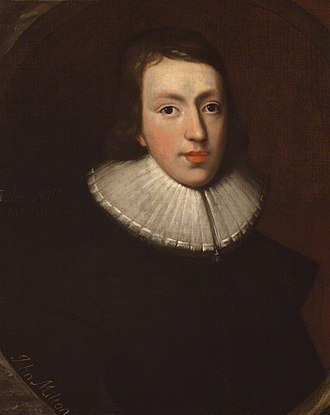
English poet, polemicist and revolutionary whose Paradise Lost — written blind, after the defeat of his cause — retells the Fall of Man to “justify the ways of God to men”, and gave literature its most magnificent rebel, Satan.

Kāmāyanī
Jaishankar Prasad’s epic (1936): after the great Flood, Manu, the last of the gods, is loved by Shraddhā (faith) and later seduced by Iḍā (intellect), builds a kingdom of reason that ends in rebellion and ruin, and is led by Shraddhā to the Himalayas and the bliss of harmony — the allegory of the human mind and the greatest poem of modern Hindi.

William Shakespeare
The playwright and poet of Stratford whose 37-odd plays and 154 sonnets gave English its richest store of quotation and gave philosophy Hamlet, Lear and Macbeth.

Harivansh Rai Bachchan
The Hindi poet whose Madhushālā (“The House of Wine”, 1935) — a tavern, a wine-bearer and a cup as an allegory of life — became the most popular poem in modern Hindi; also a translator of Shakespeare and the Rubaiyat, a Cambridge scholar of Yeats, and a great autobiographer.
Mahadevi Varma
The “modern Mīrā” — the fourth pillar of Chhāyāvād, poet of mystical longing for an unseen beloved in Nīhār, Rashmi, Nīrajā, Sāndhyagīt and Dīpśikhā; pioneering feminist essayist of Śṛṅkhalā kī Kaṛiyāṁ; memoirist of the poor and of animals; principal of a women’s college in Allahabad for decades.