


Contents · 6 sections · 8 min
Coleridge in Five Ideas
the essentialsImagination and fancy
The primary imagination is “a repetition in the finite mind of the eternal act of creation”; fancy merely rearranges memories.
Willing suspension of disbelief
Poetry asks the reader for “that willing suspension of disbelief for the moment, which constitutes poetic faith.”
Organic form
A great work grows from within like a plant, its form shaped by its own living principle, not imposed by external rules.
The one life
“Ah! the one Life within us and abroad” — all living things share a single divine life, and to bless them is to be healed.
Reason and understanding
Adapting Kant, he distinguished the “understanding” (practical, discursive) from “reason” (intuitive grasp of spiritual truths).
Samuel Taylor Coleridge was one of the founders of English Romanticism, a poet of strange and haunting power, the most important English literary critic of the nineteenth century, and a philosopher who brought German idealism into English thought. With William Wordsworth he published Lyrical Ballads (1798), opening with his own The Rime of the Ancient Mariner; he wrote the visionary fragment Kubla Khan, the eerie Christabel and the intimate “conversation poems” (“Frost at Midnight”, “This Lime-Tree Bower My Prison”); and in Biographia Literaria (1817) he gave the classic Romantic account of the imagination. He was also, by the testimony of everyone who met him, the most dazzling talker of his age. His life was a tragedy of gifts unfulfilled — crippled by opium addiction, an unhappy marriage, ill health, debt and self-reproach, he left vast projects unfinished — and yet what he did achieve changed English poetry and criticism.
Life
Childhood and Cambridge
Coleridge was born on 21 October 1772 at Ottery St Mary in Devon, the youngest of ten children of the Rev. John Coleridge, the vicar and headmaster of the local grammar school, a learned, absent-minded man. Samuel was a precocious, dreamy child who read The Arabian Nights and was afraid of the dark. His father died when he was eight, and he was sent to Christ’s Hospital, the charity school in London, where he lived for nine years, lonely and homesick, and formed a lifelong friendship with Charles Lamb, who later described him holding forth on philosophy and reciting Homer in Greek to amazed passers-by.
At Jesus College, Cambridge (1791–94), he became a radical, a Unitarian and a supporter of the French Revolution, ran into debt, and in despair over debts and an unrequited love fled and enlisted in the 15th Light Dragoons under the absurd name “Silas Tomkyn Comberbache”; he could not ride and was soon bought out by his brothers. He left Cambridge without a degree.
Pantisocracy and marriage
In 1794 he met Robert Southey at Oxford, and the two young idealists devised Pantisocracy — “equal rule by all” — a scheme to found a utopian commune of twelve families on the banks of the Susquehanna River in Pennsylvania, where property would be held in common. To prepare, they married two sisters, Edith and Sara Fricker — Coleridge with misgivings. The scheme collapsed; Coleridge and Southey quarrelled. Coleridge lectured on politics and religion in Bristol, published a short-lived radical journal, The Watchman, and a first book of poems.
The annus mirabilis
In 1795 he met Wordsworth, and in 1797 he and Sara moved to Nether Stowey in Somerset, near Wordsworth and his sister Dorothy at Alfoxden. The friendship that followed was the most creative period of both men’s lives. Walking the Quantock Hills, they planned Lyrical Ballads. In the autumn of 1797 Coleridge wrote The Rime of the Ancient Mariner; in the same period Kubla Khan, the first part of Christabel, “Frost at Midnight” and “France: An Ode”. “This Lime-Tree Bower My Prison” was written when he was kept home by a scalded foot while Lamb and the Wordsworths walked.
Lyrical Ballads appeared anonymously in September 1798. That month Coleridge, Wordsworth and Dorothy went to Germany; Coleridge studied at the university of Göttingen, learned German, and immersed himself in the philosophy of Kant, Fichte and Schelling.
The Lakes, opium and dejection
In 1800 Coleridge followed the Wordsworths to the Lake District, settling at Greta Hall in Keswick. He had fallen in love with Sara Hutchinson, the sister of Wordsworth’s future wife — an unconsummated love that tormented him for years. His marriage was miserable. He had begun taking laudanum (a tincture of opium) for rheumatic pains and toothache, and became addicted. In 1802 he wrote “Dejection: An Ode”, a lament for the loss of his “shaping spirit of Imagination”: “I may not hope from outward forms to win / The passion and the life, whose fountains are within… O Lady! we receive but what we give, / And in our life alone does Nature live.”
He sought health in Malta (1804–06), as secretary to the governor, returning more ill and more addicted. He separated from his wife. He founded and wrote a journal, The Friend (1809–10), and lived with the Wordsworths at Allan Bank; in 1810 a hurtful remark of Wordsworth’s (“he has been an absolute nuisance in my family”), reported to him by a meddling friend, broke their friendship; they were only partly reconciled. In London he gave celebrated lectures on Shakespeare and Milton (1811–12) that founded modern Shakespeare criticism. His play Remorse was a success at Drury Lane (1813).
Highgate
By 1816 his addiction was so severe that he placed himself in the care of a young surgeon, James Gillman, at Highgate, north of London, where he lived for the rest of his life, his opium rationed. There he finally published Christabel, Kubla Khan and “The Pains of Sleep” (1816, at Byron’s urging), Biographia Literaria and Sibylline Leaves (1817), and later his religious and political works, Aids to Reflection (1825) and On the Constitution of the Church and State (1830). He became the “Sage of Highgate”, visited by young admirers — Keats met him once on Hampstead Heath — who listened to his endless monologues; Carlyle described him as “sitting on the brow of Highgate Hill… looking down on London and its smoke-tumult, like a sage escaped from the inanity of life’s battle.” He died on 25 July 1834.
Poetry
The Rime of the Ancient Mariner (1798) — see The Rime of the Ancient Mariner — is a literary ballad of a sailor who kills an albatross and suffers a supernatural punishment, a voyage into the strangeness of sin, isolation and grace.
Kubla Khan (written 1797 or 1798, published 1816) is the most famous fragment in English. Coleridge’s preface explains that, having taken “an anodyne” (opium) and fallen asleep while reading Purchas his Pilgrimage about the palace of the Mongol emperor Kublai Khan, he composed in a dream two or three hundred lines; waking, he began to write them down, but was “called out by a person on business from Porlock”, and on returning found the vision had passed away. What remains — fifty-four lines — describes the “stately pleasure-dome” at Xanadu, “Where Alph, the sacred river, ran / Through caverns measureless to man / Down to a sunless sea”, the “deep romantic chasm”, the “mighty fountain” bursting forth, and “Ancestral voices prophesying war”. It ends with the poet’s dream of recreating the dome in song, and the vision of the inspired poet whom all should fear: “Beware! Beware! / His flashing eyes, his floating hair! / Weave a circle round him thrice, / And close your eyes with holy dread, / For he on honey-dew hath fed, / And drunk the milk of Paradise.” The “person from Porlock” has become proverbial for any interruption of creative work.
Christabel (1797–1800, unfinished) is a Gothic narrative poem in which the innocent Christabel, praying in a moonlit wood, finds the mysterious, beautiful Geraldine, takes her home and shares her bed — and sees on Geraldine’s bosom something terrible (“A sight to dream of, not to tell!”). Geraldine casts a spell, and seems to be a serpentine, vampiric being. Coleridge never finished it.
The conversation poems, in blank verse, address a friend in a quiet, meditative voice, moving from a particular scene to a reflection and back. In “Frost at Midnight” (1798), sitting by the fire while his baby son Hartley sleeps, he remembers his own lonely schooldays in the city and blesses the child, who will grow up among lakes and mountains: “Therefore all seasons shall be sweet to thee… Whether the eave-drops fall / Or if the secret ministry of frost / Shall hang them up in silent icicles, / Quietly shining to the quiet Moon.” In “The Eolian Harp” he imagines all of nature as “organic Harps diversely framed” played by “one intellectual breeze”, and speaks of “the one Life within us and abroad”.
Criticism and philosophy
Biographia Literaria (1817), “biographical sketches of my literary life and opinions”, is a sprawling, digressive book, part autobiography, part philosophy (some of it plagiarised from Schelling), and part the greatest work of English Romantic criticism. In chapter XIII he defines the imagination:
The IMAGINATION then, I consider either as primary, or secondary. The primary IMAGINATION I hold to be the living Power and prime Agent of all human Perception, and as a repetition in the finite mind of the eternal act of creation in the infinite I AM. The secondary I consider as an echo of the former… It dissolves, diffuses, dissipates, in order to re-create… It is essentially vital, even as all objects (as objects) are essentially fixed and dead. FANCY, on the contrary, has no other counters to play with, but fixities and definites… [it] must receive all its materials ready made from the law of association.
In chapter XIV he describes the plan of Lyrical Ballads — his task was to give supernatural subjects “a human interest and a semblance of truth sufficient to procure for these shadows of imagination that willing suspension of disbelief for the moment, which constitutes poetic faith.” The second volume contains a searching, admiring critique of Wordsworth’s theories and practice.
His Shakespeare lectures introduced German critical ideas — organic form, the unity of a play’s conception — and psychological analysis of character. He described Iago’s soliloquies as “the motive-hunting of a motiveless malignity” and Hamlet as a man of “great, enormous, intellectual activity, and a proportionate aversion to real action consequent upon it” (“I have a smack of Hamlet myself, if I may say so”).
In his later prose he developed a Christian philosophy drawing on Kant and Plato, distinguishing the understanding (the faculty of judging according to sense) from reason (the organ of supersensuous truth), and a theory of the state and a national “clerisy” of educated men (Church and State), which deeply influenced Victorian thought — John Stuart Mill paired him with Bentham as one of “the two great seminal minds of England in their age”. He coined or popularised many words: “psychological”, “intensify”, “esemplastic”, “bisexual” (of the mind), and “suspension of disbelief”.
Legacy
Coleridge’s reputation has grown steadily. His poems are among the most famous in English; his criticism shaped the New Critics’ idea of organic unity; his religious thought influenced the Broad Church and F. D. Maurice. His notebooks, published in the twentieth century, reveal a mind of endless curiosity and self-analysis. His life — the brilliant, procrastinating, guilt-ridden genius — has fascinated biographers from Richard Holmes onward.
In conversation
- “Willing suspension of disbelief” — what we give a story in order to enjoy it.
- A person from Porlock — an interruption that destroys a moment of inspiration.
- “Water, water, every where, / Nor any drop to drink” and an albatross round one’s neck — from the Mariner: abundance that cannot help, and a burden of guilt.
Samuel Taylor Coleridge in two minutes
Poet, philosopher, critic and talker of genius — co-author with Wordsworth of Lyrical Ballads, author of The Rime of the Ancient Mariner, Kubla Khan, Christabel and Biographia Literaria — whose theory of the imagination shaped Romanticism, and whose life was haunted by opium, debt and unfinished work.
- Imagination and fancy. The primary imagination is “a repetition in the finite mind of the eternal act of creation”; fancy merely rearranges memories.
- Willing suspension of disbelief. Poetry asks the reader for “that willing suspension of disbelief for the moment, which constitutes poetic faith.”
- Organic form. A great work grows from within like a plant, its form shaped by its own living principle, not imposed by external rules.
- The one life. “Ah! the one Life within us and abroad” — all living things share a single divine life, and to bless them is to be healed.
- Reason and understanding. Adapting Kant, he distinguished the “understanding” (practical, discursive) from “reason” (intuitive grasp of spiritual truths).
Answering: Immanuel Kant · Answered by: William Wordsworth
Curiosities
did you know?- At nineteen, in debt and in despair over a girl, he enlisted in the dragoons as ‘Silas Tomkyn Comberbache’; his brothers bought him out.
- He and Robert Southey planned ‘Pantisocracy’, an egalitarian commune on the banks of the Susquehanna in Pennsylvania; it never happened, but they married the Fricker sisters.
- He claimed Kubla Khan came to him complete in an opium dream of two to three hundred lines, interrupted by ‘a person on business from Porlock’.
- He was the subject of a government spy’s report in 1797, who heard him and Wordsworth talk of ‘Spy Nosy’ — Spinoza.
- Charles Lamb called him ‘an archangel a little damaged’.
Questions to Argue About
debate club →- Is imagination a way of knowing truth?
- Why did Coleridge leave so much unfinished?
- Is The Rime of the Ancient Mariner a moral fable or a nightmare without meaning?
Explore Next
related by shared connections
John Keats
The Romantic poet of beauty, sensation and mortality — a stable-keeper’s son and trained surgeon who, before dying of tuberculosis at twenty-five, wrote the great odes of 1819, “The Eve of St. Agnes”, “La Belle Dame sans Merci” and some of the finest letters in English.

Sumitranandan Pant
The poet of nature among the four pillars of Chhāyāvād — a child of the Kumaon Himalaya whose Pallav and Guñjan sang of clouds, mountains and beauty — who later turned to Marxist, then Aurobindonian visions of a new humanity, and was the first Hindi poet to win the Jnanpith Award.
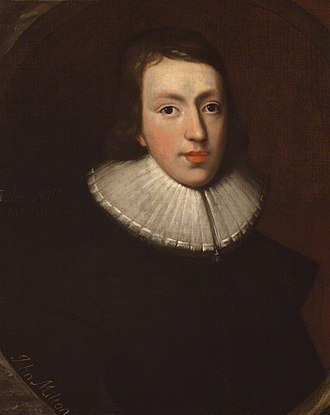
John Milton
English poet, polemicist and revolutionary whose Paradise Lost — written blind, after the defeat of his cause — retells the Fall of Man to “justify the ways of God to men”, and gave literature its most magnificent rebel, Satan.

Critique of Practical Reason
Kant’s second Critique — the moral law is a fact of reason, and through it we know we are free.

Critique of Pure Reason
Kant’s masterwork, asking what reason can know without experience — and answering that it can know the forms of all possible experience, but nothing beyond.

William Blake
London engraver, painter, poet and visionary who printed his own illuminated books — Songs of Innocence and of Experience, The Marriage of Heaven and Hell, Jerusalem — attacking the “mind-forged manacles” of reason, Church, state and industry in the name of imagination, energy and the divine humanity.