
Contents · 8 sections · 8 min
Core Theses
Poetry is “the spontaneous overflow of powerful feelings” (Wordsworth) — not imitation of models but expression of the self.
The imagination is a creative, almost divine power that shapes the world we perceive.
Nature is a living presence and a moral teacher; the city and industry corrupt.
The child, the peasant, the outcast and the rebel see truths that convention hides.
The French Revolution kindled hopes of human renewal — and their disappointment marked a generation.
English Romanticism was the movement that transformed English poetry, and much of European feeling, in the half-century around 1800. It is conventionally dated from 1789 — the year of the French Revolution and of William Blake’s Songs of Innocence — or from 1798, when William Wordsworth and Samuel Taylor Coleridge published Lyrical Ballads, to 1832, the year of the Great Reform Act and the death of Sir Walter Scott. It came in two generations: the first, born around 1770, of Blake, Wordsworth and Coleridge; the second, born around 1790, of Lord Byron, Percy Bysshe Shelley and John Keats, all of whom died young, abroad, within three years of each other (1821–24). Alongside the poets stood the novelists — Scott, inventing the historical novel; Jane Austen, quietly resisting Romantic excess; Mary Shelley, whose Frankenstein is the Romantic age’s most enduring myth.
The Romantics did not call themselves “Romantics” — the label was applied later, partly from the German critics Friedrich and August Wilhelm Schlegel. What united them was not a programme but a shared break with the Augustan values of reason, decorum, generality and social poise, and a shared faith in imagination, feeling, nature and the individual self.
The age of revolutions
Romanticism was born in a world turned upside down. The American Revolution (1776) and above all the French Revolution (1789) seemed to promise the regeneration of humanity. Wordsworth, who walked through France in 1790 and lived there in 1791–92, wrote: “Bliss was it in that dawn to be alive, / But to be young was very heaven!” Blake wore the red cap of liberty in the streets. Then came the Terror, the war between Britain and France (1793–1815), the rise of Napoleon, and in Britain a period of repression — the suspension of habeas corpus, treason trials, the Peterloo Massacre of 1819, when cavalry charged a peaceful crowd in Manchester. The first generation’s revolutionary hopes turned, in Wordsworth and Coleridge, into conservatism; the second generation, especially Shelley and Byron, kept the radical flame alive and despised their elders as turncoats.
At the same time the Industrial Revolution was transforming England: factories, mill towns, enclosure of common land, the flight from the countryside to cities of smoke and slums — Blake’s “dark Satanic mills”. The Romantic love of nature and of rural life was in part a protest against this new world.
Key ideas
Imagination. For the Augustans, imagination (“fancy”) was decorative, subordinate to judgement. For the Romantics it was the supreme human faculty — a creative power that does not merely copy the world but shapes and half-creates it, and through which we glimpse the infinite. Coleridge, steeped in German philosophy (Kant, Schelling), distinguished the mechanical “fancy”, which combines memories, from the “esemplastic” imagination, “the living Power and prime Agent of all human Perception… a repetition in the finite mind of the eternal act of creation in the infinite I AM.” Blake declared: “The Imagination is not a State: it is the Human Existence itself.”
Feeling and the self. In the Preface to Lyrical Ballads (1800) Wordsworth defined poetry as “the spontaneous overflow of powerful feelings”, which “takes its origin from emotion recollected in tranquillity”. The subject of poetry became the poet’s own mind and its growth — Wordsworth’s great autobiographical poem is called The Prelude, or Growth of a Poet’s Mind. Keats spoke of “the holiness of the Heart’s affections and the truth of Imagination”.
Nature. Nature was not a backdrop or a set of conventional images but a living presence, a moral teacher and a source of spiritual renewal. In “Tintern Abbey” Wordsworth feels “a presence that disturbs me with the joy / Of elevated thoughts; a sense sublime / Of something far more deeply interfused”. The sublime — the awe and terror inspired by mountains, storms, the sea, the Alps — fascinated the age.
The common, the childlike, the outcast. Wordsworth proposed to write about “incidents and situations from common life” in “a selection of language really used by men” — shepherds, beggars, a mad mother, an idiot boy. Childhood was seen as a state of vision: “The Child is father of the Man”; “trailing clouds of glory do we come / From God, who is our home.” Rebels and outsiders — Prometheus, Satan, Cain, the wandering Jew, Byron’s brooding heroes — became figures of heroic defiance.
Freedom. Politically and artistically, the Romantics prized liberty — the freeing of the poet from rules, of the oppressed from tyranny, of the mind from convention. Shelley called poets “the unacknowledged legislators of the world.”
The first generation
William Blake (1757–1827), engraver, painter, visionary and prophet, printed his own illuminated books by hand. His Songs of Innocence and of Experience (1789, 1794) pair simple poems showing “the two contrary states of the human soul” — the Lamb and the Tyger (“Tyger Tyger, burning bright, / In the forests of the night: / What immortal hand or eye, / Could frame thy fearful symmetry?”), the Chimney Sweeper, “London” with its “mind-forg’d manacles”. The Marriage of Heaven and Hell (1790) overturns conventional morality: “Energy is Eternal Delight”; “The road of excess leads to the palace of wisdom”; Milton “was a true Poet and of the Devil’s party without knowing it”. His later prophetic books (Milton, Jerusalem) build a private mythology. Ignored in his life, he is now seen as one of the greatest English artists.
William Wordsworth (1770–1850) and Samuel Taylor Coleridge (1772–1834) met in 1795 and spent an extraordinary year (1797–98) walking and talking in the Quantock Hills of Somerset, where they planned Lyrical Ballads (1798): Wordsworth would make the ordinary seem wonderful, Coleridge the supernatural seem real. Coleridge contributed The Rime of the Ancient Mariner, the hypnotic ballad of a sailor who kills an albatross and is punished with a curse of thirst and death-in-life (“Water, water, every where, / Nor any drop to drink”) until he blesses the water-snakes “unaware”. Wordsworth contributed “Tintern Abbey” and poems of rural life. Wordsworth went on to The Prelude (finished 1805, published 1850), the “Immortality Ode” and the Lucy poems; Coleridge, crippled by opium and self-doubt, wrote the fragment Kubla Khan (“In Xanadu did Kubla Khan / A stately pleasure-dome decree”) — interrupted, he said, by “a person on business from Porlock” — Christabel, the conversation poems (“Frost at Midnight”) and the Biographia Literaria (1817), the greatest work of English Romantic criticism. Wordsworth settled in the Lake District with his sister Dorothy, whose journals are a masterpiece in their own right; he became Poet Laureate in 1843. With Robert Southey they were called the Lake Poets.
The second generation
George Gordon, Lord Byron (1788–1824) was the most famous man in Europe — “mad, bad and dangerous to know”, in Lady Caroline Lamb’s phrase. Childe Harold’s Pilgrimage (1812) made him an overnight celebrity (“I awoke one morning and found myself famous”) and created the Byronic hero: proud, moody, passionate, guilt-haunted, defiant. After scandal (his marriage collapsed amid rumours of incest with his half-sister) he left England for ever in 1816. His masterpiece Don Juan (1819–24), unfinished at sixteen cantos, is a sprawling comic epic in ottava rima, digressive, cynical, hilarious and humane. He died of fever at Missolonghi in 1824, helping the Greeks fight for independence from the Ottoman Empire, and became a Greek national hero.
Percy Bysshe Shelley (1792–1822), expelled from Oxford for The Necessity of Atheism, was the radical idealist of the movement: a vegetarian, a free-lover, a political revolutionary. “Ozymandias” (1818) — “Look on my works, ye Mighty, and despair!” — mocks tyranny’s vanity; The Mask of Anarchy, written after Peterloo, calls the people to “Rise like Lions after slumber / In unvanquishable number… Ye are many — they are few”; “Ode to the West Wind” pleads “Be thou me, impetuous one!”; Prometheus Unbound (1820) is a lyrical drama of humanity’s liberation; A Defence of Poetry ends with the poets as “the unacknowledged legislators of the world”. He drowned in a storm off the Italian coast at twenty-nine. His wife was Mary Wollstonecraft Godwin — Mary Shelley.
John Keats (1795–1821), a London stable-keeper’s son who trained as a surgeon, wrote in about four years a body of work that many think the greatest of any English poet after Shakespeare: Endymion (“A thing of beauty is a joy for ever”), the sonnet “On First Looking into Chapman’s Homer”, the narrative poems The Eve of St. Agnes and Lamia, the ballad “La Belle Dame sans Merci”, and in a single miraculous spring and autumn of 1819 the great odes — to a Nightingale, on a Grecian Urn (“‘Beauty is truth, truth beauty,’ — that is all / Ye know on earth, and all ye need to know”), on Melancholy, To Autumn. His letters, full of ideas like “negative capability”, are among the finest in the language. He died of tuberculosis in Rome at twenty-five. See John Keats.
Prose and the novel
The age’s novelists took different paths. Sir Walter Scott (1771–1832) first won fame with verse romances, then, anonymously, with Waverley (1814) and the long series of historical novels that followed (Rob Roy, Ivanhoe, The Heart of Midlothian), which taught all Europe to imagine the past as a living world of social forces. Jane Austen (1775–1817) wrote comedies of courtship in the country gentry, whose irony and clear sight stand against Romantic excess yet whose heroines’ inner lives are deeply Romantic in their seriousness. The Gothic novel flourished (Ann Radcliffe, The Mysteries of Udolpho; Matthew Lewis, The Monk) and was parodied in Austen’s Northanger Abbey. Mary Shelley’s Frankenstein (1818), begun in a ghost-story contest with Byron and Percy Shelley at the Villa Diodati on Lake Geneva in the cold, dark summer of 1816, fused the Gothic with Romantic myth and modern science. Mary Wollstonecraft’s A Vindication of the Rights of Woman (1792), William Godwin’s Political Justice, the essays of Charles Lamb, William Hazlitt and Thomas De Quincey (Confessions of an English Opium-Eater, 1821) complete the picture.
Legacy
Romanticism shaped everything after it: the Victorian cult of nature and feeling, the image of the poet as a tortured genius, the idea of art as self-expression, the protest of culture against industrial society, the environmental movement, the modern celebrity. The modernists reacted against it — T. S. Eliot called for an “escape from personality” — but much of their work is Romanticism by other means.
In conversation
- “Emotion recollected in tranquillity” — Wordsworth’s formula for how poetry is made.
- A Byronic hero — the brooding, defiant, magnetic outsider (from Heathcliff to Batman).
- “Unacknowledged legislators of the world” — Shelley’s claim for poets and artists.
English Romanticism in two minutes
The revolution in English poetry and feeling from about 1789 to 1832 — Blake, Wordsworth and Coleridge, then Byron, Shelley and Keats — which put imagination, nature, the self, childhood and freedom at the centre of literature, alongside Mary Shelley’s Frankenstein and the novels of Scott and Austen.
- Poetry is “the spontaneous overflow of powerful feelings” (Wordsworth) — not imitation of models but expression of the self.
- The imagination is a creative, almost divine power that shapes the world we perceive.
- Nature is a living presence and a moral teacher; the city and industry corrupt.
- The child, the peasant, the outcast and the rebel see truths that convention hides.
- The French Revolution kindled hopes of human renewal — and their disappointment marked a generation.
Members
6
William Blake
London engraver, painter, poet and visionary who printed his own illuminated books — Songs of Innocence and of Experience, The Marriage of Heaven and Hell, Jerusalem — attacking the “mind-forged manacles” of reason, Church, state and industry in the name of imagination, energy and the divine humanity.

William Wordsworth
The great poet of nature, memory and the growth of the mind — co-author with Coleridge of Lyrical Ballads (1798), which launched English Romanticism, and author of “Tintern Abbey”, the “Immortality Ode” and The Prelude, who taught that poetry is “the spontaneous overflow of powerful feelings”.

Samuel Taylor Coleridge
Poet, philosopher, critic and talker of genius — co-author with Wordsworth of Lyrical Ballads, author of The Rime of the Ancient Mariner, Kubla Khan, Christabel and Biographia Literaria — whose theory of the imagination shaped Romanticism, and whose life was haunted by opium, debt and unfinished work.

Jane Austen
The novelist of “three or four families in a country village” — a clergyman’s daughter whose six comedies of courtship, money and moral growth (Pride and Prejudice, Emma, Persuasion) perfected the English novel with irony, free indirect style and an unerring eye for self-deception.

John Keats
The Romantic poet of beauty, sensation and mortality — a stable-keeper’s son and trained surgeon who, before dying of tuberculosis at twenty-five, wrote the great odes of 1819, “The Eve of St. Agnes”, “La Belle Dame sans Merci” and some of the finest letters in English.

Mary Shelley
The daughter of Mary Wollstonecraft and William Godwin, wife of Percy Bysshe Shelley, who at eighteen began Frankenstein — the founding novel of science fiction and the great modern myth of a creator and his abandoned creature — and lived on as novelist, editor and keeper of the Romantic flame.
Explore Next
related by shared connections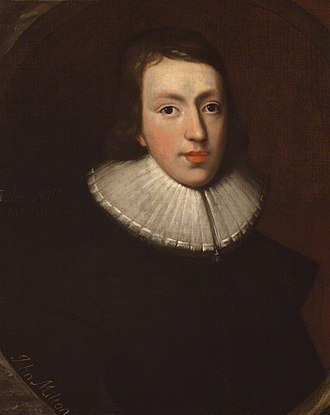
John Milton
English poet, polemicist and revolutionary whose Paradise Lost — written blind, after the defeat of his cause — retells the Fall of Man to “justify the ways of God to men”, and gave literature its most magnificent rebel, Satan.

Jean-Jacques Rousseau
The Genevan philosopher of nature, freedom and feeling — “Man is born free, and everywhere he is in chains” — whose Social Contract inspired revolutionaries and whose Confessions invented modern autobiography.

Charlotte Brontë
The eldest Brontë sister to survive childhood, a Yorkshire parson’s daughter who, as “Currer Bell”, published Jane Eyre (1847) — the passionate first-person story of a plain, poor governess who demands to be loved as an equal — and then Shirley and Villette.

Sumitranandan Pant
The poet of nature among the four pillars of Chhāyāvād — a child of the Kumaon Himalaya whose Pallav and Guñjan sang of clouds, mountains and beauty — who later turned to Marxist, then Aurobindonian visions of a new humanity, and was the first Hindi poet to win the Jnanpith Award.

Pride and Prejudice
Jane Austen’s most famous novel (1813): witty Elizabeth Bennet, one of five daughters with no fortune, misjudges the proud and wealthy Mr Darcy — and he her — until a letter, a visit to Pemberley and a family scandal teach them both to see clearly.

Virginia Woolf
Novelist, essayist, publisher and the presiding genius of the Bloomsbury Group, whose Mrs Dalloway, To the Lighthouse, Orlando and The Waves remade the novel around consciousness and time, and whose A Room of One’s Own became a founding text of feminist criticism.