



Contents · 8 sections · 4 min
Quine in Five Ideas
the essentialsTwo dogmas
There is no sharp line between analytic truths, true by meaning, and synthetic truths, true by fact; and no statement is confirmed or refuted in isolation.
The web of belief
Our beliefs face “the tribunal of sense experience not individually but only as a corporate body”; any belief can be revised if we adjust enough elsewhere.
To be is to be the value of a variable
A theory is committed to the existence of whatever its quantifiers must range over for it to be true.
Gavagai
A linguist hearing a native say “gavagai” as a rabbit runs by cannot determine whether it means “rabbit”, “undetached rabbit part” or “rabbithood” — translation is indeterminate.
Naturalised epistemology
There is no first philosophy outside science; the theory of knowledge becomes a chapter of psychology.
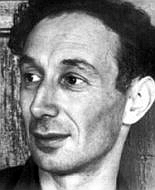
Willard Van Orman Quine was an American philosopher and logician who taught at Harvard for more than half a century and was the leading figure of analytic philosophy (Analytic Philosophy) in the United States. His essay “Two Dogmas of Empiricism” (1951) — perhaps the most influential philosophical paper of the century — attacked the distinction between analytic and synthetic truths and the idea that statements can be tested one by one, replacing them with a holistic picture of knowledge as a web of belief. Word and Object (1960) argued for the indeterminacy of translation; “On What There Is” (1948) gave a criterion for what a theory says exists; and “Epistemology Naturalized” (1969) proposed that philosophy has no vantage point outside science.
Life
Quine was born on 25 June 1908 in Akron, Ohio. He studied mathematics at Oberlin College and wrote his doctorate at Harvard (1932) on Russell and Whitehead’s Principia Mathematica, under Whitehead’s supervision, in two years. A travelling fellowship took him in 1932–33 to Vienna, Prague and Warsaw, where he attended the Vienna Circle, met Rudolf Carnap — “my greatest teacher” — and the Polish logicians Tarski and Leśniewski. Back at Harvard, he taught from 1936 to 1978, interrupted by naval intelligence service in the Second World War. He wrote textbooks of logic (Methods of Logic, 1950) and set theory, and travelled obsessively. He died in Boston on 25 December 2000.
Two dogmas of empiricism
Logical empiricism, the philosophy of the Vienna Circle and of Carnap, rested on two assumptions which Quine called dogmas:
- The analytic–synthetic distinction. Some truths, like “all bachelors are unmarried”, are true by virtue of meaning alone (analytic); others, like “all bachelors are untidy”, are true by virtue of the facts (synthetic). Logic and mathematics were held to be analytic, and so to make no claims about the world.
- Reductionism. Each meaningful statement can be translated into, or confirmed by, a definite range of possible experiences.
Quine argued that the first distinction cannot be made clear. To say a statement is analytic if it is true by meaning, or if it can be turned into a logical truth by substituting synonyms, requires a notion of synonymy; but synonymy can only be explained in terms of analyticity or necessity — a circle. No non-circular account exists.
Against reductionism he proposed holism: “our statements about the external world face the tribunal of sense experience not individually but only as a corporate body”. When an experiment conflicts with our expectations, logic tells us only that something in our total theory must be changed, not what. We can hold on to any statement “come what may”, if we make drastic enough adjustments elsewhere; and no statement — not even the laws of logic — is immune to revision. (Quantum mechanics had led some to propose changing logic.) Our knowledge is “a man-made fabric which impinges on experience only along the edges”, with mathematics and logic near the centre, observation near the periphery; the differences are differences of degree. This doctrine, related to the earlier view of the physicist Pierre Duhem, is now called the Duhem–Quine thesis.
Ontology
In “On What There Is” (1948) Quine addressed the ancient puzzle of non-being — how we can say “Pegasus does not exist” without seeming to refer to Pegasus. Following Russell‘s theory of descriptions, he showed that names can be eliminated in favour of predicates and quantifiers, so that “Pegasus does not exist” becomes “nothing pegasizes”. He proposed a criterion of ontological commitment: “to be is to be the value of a variable”. A theory is committed to those entities over which its quantifiers must range for it to be true. Which theory we should accept is a matter, as in science, of simplicity and explanatory power. Quine’s own taste was for “desert landscapes”: physical objects and, reluctantly, the sets needed for mathematics; he rejected meanings, propositions, possible worlds and properties as obscure.
Indeterminacy of translation
In Word and Object (1960) Quine imagined a linguist doing “radical translation” of a wholly unknown language. A native says “Gavagai” when a rabbit scurries by. The linguist conjectures that it means “Rabbit!” But the same observable behaviour would fit “undetached rabbit part”, “temporal stage of a rabbit” or “rabbithood manifested here”: no amount of evidence about when natives assent and dissent could decide among them. Quine concluded that there is no fact of the matter about which translation is correct — translation, and meaning itself, is indeterminate. Reference is “inscrutable”; ontology is relative to a background language. Meaning is not a hidden mental entity but a matter of dispositions to verbal behaviour.
Naturalised epistemology
Since there is no “first philosophy” prior to science, Quine argued in “Epistemology Naturalized” (1969), the traditional project of justifying science from the ground up, as René Descartes attempted, should be abandoned. Instead, epistemology should study, as a part of psychology, how human beings, from the “meagre input” of stimulations of their sensory surfaces, produce the “torrential output” of their theories of the world. He adopted Otto Neurath’s image: we are like sailors who must rebuild their ship on the open sea, plank by plank, never able to dismantle it in dry dock and rebuild it from the best materials.
Legacy
Quine’s holism and naturalism reshaped analytic philosophy; his scepticism about meaning provoked the work of Donald Davidson, his student, and the opposition of Paul Grice, Peter Strawson, Noam Chomsky and Saul Kripke, whose revival of necessity and essence went directly against him.
In conversation
- “Two Dogmas” — no sharp line between truths of meaning and truths of fact.
- Gavagai — the indeterminacy of translation.
- Neurath’s boat — rebuilding knowledge while afloat.
W. V. O. Quine in two minutes
The Harvard logician who attacked the “two dogmas of empiricism”, argued that our beliefs face experience as a web, that translation is indeterminate and that philosophy is continuous with science — the most influential American philosopher of the twentieth century.
- Two dogmas. There is no sharp line between analytic truths, true by meaning, and synthetic truths, true by fact; and no statement is confirmed or refuted in isolation.
- The web of belief. Our beliefs face “the tribunal of sense experience not individually but only as a corporate body”; any belief can be revised if we adjust enough elsewhere.
- To be is to be the value of a variable. A theory is committed to the existence of whatever its quantifiers must range over for it to be true.
- Gavagai. A linguist hearing a native say “gavagai” as a rabbit runs by cannot determine whether it means “rabbit”, “undetached rabbit part” or “rabbithood” — translation is indeterminate.
- Naturalised epistemology. There is no first philosophy outside science; the theory of knowledge becomes a chapter of psychology.
Answering: Immanuel Kant, Bertrand Russell · Answered by: A. J. Ayer, Saul Kripke
Curiosities
did you know?- He visited 118 countries and kept a careful list; travel was his great hobby.
- He compiled an alphabetical dictionary of philosophical terms, Quiddities (1987), full of puns.
- He famously preferred ‘desert landscapes’ in ontology — as few kinds of entities as possible.
- Neurath’s image, which Quine adopted: we are like sailors who must rebuild their ship on the open sea, plank by plank, never able to put into dry dock.
Questions to Argue About
debate club →- Is there any belief that experience could never force us to give up?
- Can we ever know what someone else’s words mean?
Explore Next
related by shared connections
Gottlob Frege
The German mathematician who invented modern logic in the Begriffsschrift (1879), tried to show that arithmetic is pure logic, and distinguished the sense of an expression from its reference — the founder of analytic philosophy and the philosophy of language.

J. L. Austin
The Oxford philosopher of ordinary language, whose How to Do Things with Words (1962) showed that to say something is often to do something — to promise, bet, christen, apologise — and founded speech-act theory; a master of patient linguistic fieldwork, mocking the grand claims of sense-data theorists.

G. E. Moore
The Cambridge philosopher who, with Russell, led the revolt against idealism; whose Principia Ethica named the “naturalistic fallacy” and inspired the Bloomsbury Group; and who answered scepticism by holding up his hands — “here is one hand, and here is another”.

Tractatus Logico-Philosophicus
Wittgenstein’s only book published in his lifetime (1921): seven numbered propositions on the world, the picture theory of meaning, logic as tautology, and the limits of language — ending “Whereof one cannot speak, thereof one must be silent.”

David Hume
The great Scottish sceptic who showed that causation, the self, and induction cannot be justified by reason — and that reason is, and ought only to be, the slave of the passions.

Ludwig Wittgenstein
The Viennese-Cambridge philosopher who twice transformed philosophy — first by mapping the limits of what language can say (Tractatus), then by showing that meaning is use in the countless “language games” of ordinary life (Philosophical Investigations).