Contents · 8 sections · 7 min
Core Theses
Philosophical problems are to be solved — or dissolved — by the careful analysis of concepts and language.
Modern formal logic, not the grammar of ordinary sentences, reveals the true structure of thought.
Clarity and argument matter more than system; a philosophical claim should be stated so that it can be shown false.
Philosophy is continuous with, or answerable to, the natural sciences.
Analytic philosophy is the dominant tradition of philosophy in the English-speaking world, and increasingly in Scandinavia, the Netherlands, Germany and elsewhere, from the early twentieth century to the present. It is less a doctrine than a style: a commitment to clarity, to explicit argument, to the use of logic, and to the conviction that many of the deepest problems of philosophy arise from — and can be clarified by attending to — the logic of our language. Its founders were a German mathematician, Gottlob Frege, who invented modern logic; two Cambridge rebels, Bertrand Russell and G. E. Moore, who overthrew the reigning British Hegelianism; and an Austrian engineer turned philosopher, Ludwig Wittgenstein, who twice reinvented the subject. Its history runs through the Vienna Circle and logical positivism, Oxford “ordinary language” philosophy, W. V. O. Quine‘s naturalism, and — after about 1960 — a great revival of metaphysics, ethics and political philosophy led by figures such as Saul Kripke, John Rawls, Elizabeth Anscombe and Derek Parfit.
Origins: logic and the revolt against idealism
At the end of the nineteenth century, the leading philosophers in Britain were idealists — F. H. Bradley, Bernard Bosanquet, J. M. E. McTaggart — who held, in the wake of Georg Wilhelm Friedrich Hegel, that reality is a single spiritual whole and that ordinary things, relations, space and time are mere “appearances”. Two young Cambridge philosophers who had been taught this doctrine turned against it. In 1903 Moore published “The Refutation of Idealism” and Principia Ethica; the same year Russell published The Principles of Mathematics. Russell later recalled the liberation: “we believed that grass is green, that the sun and stars would exist if no one was aware of them”. Against the idealist claim that all relations are “internal” to a single whole, they insisted that the world is many things, really related, and that philosophy proceeds by analysis — breaking complex propositions into their simple constituents.
Meanwhile in Jena, Frege had already created the instrument the new philosophy would use. His Begriffsschrift (“Concept-Script”, 1879) invented quantificational logic — the logic of “all” and “some” with variables — which replaced the syllogistic logic of Aristotle after two thousand years. Frege’s aim was to show that arithmetic is a branch of logic (logicism); along the way he asked what it is for a sentence to have meaning, and distinguished the sense of an expression from its reference. Russell discovered a contradiction in Frege’s system in 1902 — the paradox of the set of all sets that are not members of themselves — and spent the next decade, with A. N. Whitehead, rebuilding logicism in the three volumes of Principia Mathematica (1910–13).
Russell’s theory of descriptions (1905), which analysed “The present King of France is bald” as a claim that there is exactly one present King of France and that he is bald — and so simply false, not about a non-existent object — became, in F. P. Ramsey’s phrase, “a paradigm of philosophy”. It showed how the grammatical form of a sentence can mislead us about its logical form, and that a philosophical puzzle can be dissolved by revealing the real structure underneath.
The Tractatus and the Vienna Circle
Wittgenstein came to Cambridge in 1911 to study with Russell, and within two years was teaching his teacher. His Tractatus Logico-Philosophicus (1921) argued that the world is the totality of facts; that a meaningful proposition is a logical picture of a possible fact; that the propositions of logic are tautologies that say nothing; and that ethics, aesthetics, the meaning of life and philosophy itself lie beyond the limits of what can be said. “Whereof one cannot speak, thereof one must be silent.”
In Vienna, a group of scientists and philosophers gathered around Moritz Schlick from 1924 — Rudolf Carnap, Otto Neurath, Herbert Feigl, Friedrich Waismann, Kurt Gödel attended — read the Tractatus line by line and turned it into a programme. The Vienna Circle’s manifesto, The Scientific Conception of the World (1929), proclaimed logical positivism (or logical empiricism): the meaning of a statement is its method of verification; statements that can be verified neither by logic nor by experience — the claims of metaphysics, theology and much of ethics — are not false but meaningless. Carnap’s essay “The Elimination of Metaphysics through Logical Analysis of Language” (1932) took as its example Martin Heidegger‘s sentence “The Nothing itself nothings”, and so drew the battle line between analytic and continental philosophy that has lasted ever since. In Britain, the young A. J. Ayer’s Language, Truth and Logic (1936) made the doctrine famous: moral judgments, he said, merely express feelings — “stealing money is wrong” means roughly “stealing money!!” spoken in a tone of disapproval.
The Circle was broken by Nazism. Schlick was murdered by a former student in 1936; Carnap, Feigl, Reichenbach and others emigrated to the United States, where logical empiricism shaped American philosophy of science for a generation.
Ordinary language and the later Wittgenstein
Wittgenstein himself returned to Cambridge in 1929 and gradually abandoned the Tractatus. In the Philosophical Investigations (published posthumously in 1953) he argued that language has no single essence; that “the meaning of a word is its use in the language”; that our words are tools in countless “language-games” embedded in “forms of life”; and that philosophical problems arise “when language goes on holiday”. Philosophy’s task is not to build theories but to assemble reminders of how we actually use words, so as to “show the fly the way out of the fly-bottle”.
At Oxford after 1945, ordinary language philosophy — Gilbert Ryle, J. L. Austin, P. F. Strawson, H. L. A. Hart — took a parallel path. Ryle’s The Concept of Mind (1949) attacked the Cartesian “dogma of the Ghost in the Machine” as a “category mistake”. Austin’s How to Do Things with Words (1962) showed that many utterances are not descriptions but actions — “I promise”, “I do”, “I name this ship” — and founded speech-act theory. Strawson’s “On Referring” (1950) challenged Russell’s theory of descriptions, and his Individuals (1959) revived “descriptive metaphysics” in the manner of Immanuel Kant.
Quine and naturalism
The decisive American voice was Quine. In “Two Dogmas of Empiricism” (1951) he attacked the distinction between analytic truths (true by meaning, like “all bachelors are unmarried”) and synthetic truths (true by the facts), on which logical positivism rested; and he attacked reductionism, the idea that each statement can be confirmed or refuted on its own. “Our statements about the external world face the tribunal of sense experience not individually but only as a corporate body.” Knowledge is a web; any belief can be revised, even logic, if we make adjustments elsewhere. Quine’s naturalism — philosophy as continuous with science, epistemology as a chapter of psychology — and his austere ontology (“to be is to be the value of a bound variable”) set the agenda for decades.
The return of the great questions
After 1960, analytic philosophy, which had once declared metaphysics and normative ethics meaningless, returned to them with formidable technical resources.
- Ethics. Anscombe’s “Modern Moral Philosophy” (1958) argued that the notions of moral “obligation” and “ought” were survivals of a divine-law ethics no longer believed, and urged a return to Aristotle‘s virtues; with Philippa Foot (who invented the trolley problem in 1967) and Iris Murdoch, she launched the revival of virtue ethics. Peter Singer’s Animal Liberation (1975) and Parfit’s Reasons and Persons (1984) carried utilitarian reasoning into practical and population ethics.
- Political philosophy. Rawls’s A Theory of Justice (1971) revived the social contract tradition of John Locke, Jean-Jacques Rousseau and Kant; Robert Nozick’s Anarchy, State, and Utopia (1974) answered it from the libertarian right.
- Metaphysics. Kripke’s Naming and Necessity (1970 lectures, 1980 book) revived talk of necessity and essence, arguing that names are “rigid designators” and that there are necessary truths known only through experience (“water is H₂O”). David Lewis defended the reality of possible worlds.
- Mind. After behaviourism and the identity theory, functionalism (Hilary Putnam, Jerry Fodor) treated the mind as a kind of computation; Thomas Nagel’s “What Is It Like to Be a Bat?” (1974) and Frank Jackson’s “Mary’s Room” (1982) pressed the problem of consciousness, which David Chalmers named “the hard problem” (1995).
- Religion. Alvin Plantinga and Richard Swinburne brought analytic rigour to the philosophy of religion, reviving versions of the ontological and cosmological arguments.
Style and its critics
Analytic philosophy prizes clarity, precision and argument; its typical form is the journal article that states a thesis, considers objections and replies. Its critics — from the continental tradition, from the later Wittgenstein himself, and from within — have charged it with scholasticism, with forgetting history, with a narrow focus on language and science, and with ignoring the questions of how to live that drew people to philosophy in the first place. Its defenders reply that clarity is a moral as well as an intellectual virtue: as Russell put it, philosophy should be pursued “not for the sake of any definite answers… but rather for the sake of the questions themselves”.
In conversation
- “Whereof one cannot speak, thereof one must be silent” — the Tractatus’s limit of sense, and its later repudiation.
- The analytic–continental divide — Carnap against Heidegger’s “Nothing”.
- Analysis as therapy or as science — Wittgenstein’s fly-bottle versus Quine’s continuity with physics.
Analytic Philosophy in two minutes
The tradition founded by Frege, Russell, Moore and Wittgenstein around 1900, which made logic and the analysis of language the method of philosophy — and which, after the Vienna Circle and Quine, returned to ethics, politics, metaphysics and mind with new rigour.
- Philosophical problems are to be solved — or dissolved — by the careful analysis of concepts and language.
- Modern formal logic, not the grammar of ordinary sentences, reveals the true structure of thought.
- Clarity and argument matter more than system; a philosophical claim should be stated so that it can be shown false.
- Philosophy is continuous with, or answerable to, the natural sciences.
Members
14
Gottlob Frege
The German mathematician who invented modern logic in the Begriffsschrift (1879), tried to show that arithmetic is pure logic, and distinguished the sense of an expression from its reference — the founder of analytic philosophy and the philosophy of language.

Bertrand Russell
The British logician, philosopher and public intellectual who co-wrote Principia Mathematica, invented the theory of descriptions, founded analytic philosophy with Moore, went to prison for pacifism, won the Nobel Prize in Literature, and campaigned against nuclear weapons into his nineties.

G. E. Moore
The Cambridge philosopher who, with Russell, led the revolt against idealism; whose Principia Ethica named the “naturalistic fallacy” and inspired the Bloomsbury Group; and who answered scepticism by holding up his hands — “here is one hand, and here is another”.

Gilbert Ryle
The Oxford philosopher whose The Concept of Mind (1949) demolished “the dogma of the Ghost in the Machine” — Descartes’s myth of an inner mental theatre — as a category mistake, and analysed mind in terms of dispositions and skills (“knowing how” versus “knowing that”).

W. V. O. Quine
The Harvard logician who attacked the “two dogmas of empiricism”, argued that our beliefs face experience as a web, that translation is indeterminate and that philosophy is continuous with science — the most influential American philosopher of the twentieth century.
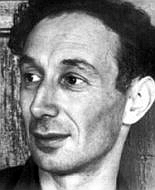
A. J. Ayer
The Oxford philosopher whose Language, Truth and Logic (1936), written at twenty-four, brought the Vienna Circle’s logical positivism to the English-speaking world: a statement is meaningful only if analytic or empirically verifiable, so metaphysics, theology and ethics are nonsense — moral judgments are expressions of feeling.

J. L. Austin
The Oxford philosopher of ordinary language, whose How to Do Things with Words (1962) showed that to say something is often to do something — to promise, bet, christen, apologise — and founded speech-act theory; a master of patient linguistic fieldwork, mocking the grand claims of sense-data theorists.

Elizabeth Anscombe
The Oxford and Cambridge philosopher, Wittgenstein’s student and translator, who founded the modern philosophy of action in Intention, launched the revival of virtue ethics with “Modern Moral Philosophy”, and publicly opposed Oxford’s honorary degree for President Truman over Hiroshima.

Iris Murdoch
The Irish-born Oxford philosopher and novelist (Under the Net, The Bell, The Sea, the Sea) who in The Sovereignty of Good argued that morality is a matter of attention, vision and love, that the Good is a transcendent reality we approach by unselfing, and that the fashionable existentialism misses the inner life.

Philippa Foot
The Oxford moral philosopher who invented the trolley problem (1967), argued that morality is a system of hypothetical imperatives with no categorical force unless we care, then returned to Aristotle in Natural Goodness (2001): virtues are what a living thing of a given kind needs to flourish.

John Rawls
The Harvard philosopher whose A Theory of Justice (1971) revived political philosophy: principles of justice are those free and equal people would choose behind a “veil of ignorance”, and inequalities are just only if they benefit the least advantaged.

Robert Nozick
The Harvard philosopher whose Anarchy, State, and Utopia (1974) answered Rawls with a libertarian theory of justice as entitlement — only a minimal state is justified; taxation of earnings is on a par with forced labour — and who also wrote on knowledge (tracking), personal identity and the experience machine.

Saul Kripke
The American logician and philosopher who as a teenager gave modal logic its semantics, and whose Naming and Necessity (1970) overturned descriptive theories of names, revived essences, and argued that some necessary truths are known only by experience.

Derek Parfit
The Oxford philosopher whose Reasons and Persons (1984) argued, through teleporters and split brains, that personal identity is “not what matters”, discovered the “Repugnant Conclusion” of population ethics, and who spent his last decades arguing that morality is objective in On What Matters.
Explore Next
related by shared connections
Ludwig Wittgenstein
The Viennese-Cambridge philosopher who twice transformed philosophy — first by mapping the limits of what language can say (Tractatus), then by showing that meaning is use in the countless “language games” of ordinary life (Philosophical Investigations).

Philosophical Investigations
Wittgenstein’s posthumous masterpiece (1953), which repudiated the Tractatus: meaning is use; language is a motley of “language-games” woven into “forms of life”; there can be no private language; and philosophy is a therapy for the bewitchment of our intelligence by language.

David Hume
The great Scottish sceptic who showed that causation, the self, and induction cannot be justified by reason — and that reason is, and ought only to be, the slave of the passions.

Immanuel Kant
The philosopher who tried to end the war between rationalism and empiricism by asking what the mind itself contributes to experience — the “Copernican revolution” in philosophy.

John Stuart Mill
The Victorian philosopher of liberty who, raised as a utilitarian prodigy, suffered a breakdown at twenty, rescued himself with poetry, and wrote On Liberty, Utilitarianism and The Subjection of Women — the classic defences of individual freedom, higher pleasures and the equality of the sexes.

John Locke
Father of British empiricism and of liberalism — the mind begins as a blank slate, and government rests on the consent of the governed.