


Contents · 7 sections · 5 min
Kripke in Five Ideas
the essentialsPossible-worlds semantics
A statement is necessarily true if it is true in every possible world accessible from this one, possibly true if true in some.
Rigid designators
A proper name picks out the same object in every possible world in which it exists; “Nixon” could have lost the election, but he could not have been someone else.
The causal picture of reference
A name refers not through descriptions in the speaker’s head but through a chain of communication going back to an initial “baptism”.
The necessary a posteriori
“Water is H₂O” and “Hesperus is Phosphorus” are necessary if true, yet were discovered by empirical inquiry.
Kripkenstein
His reading of Wittgenstein’s rule-following argument — nothing in my past behaviour or mind fixes that by “plus” I meant addition rather than “quus”.
Saul Aaron Kripke was an American philosopher and logician whose work, beginning when he was a teenager, reshaped modal logic, the philosophy of language and metaphysics. While still in high school and as a Harvard undergraduate he developed a semantics for modal logic — the logic of necessity and possibility — based on “possible worlds”, which became standard. His three lectures Naming and Necessity, given at Princeton in 1970, overturned the theory of names held by Frege and Russell, introduced the notion of a rigid designator, proposed a causal picture of reference, revived talk of essences, and argued that some truths are both necessary and knowable only a posteriori. His 1982 book on Wittgenstein‘s rule-following argument created a famous sceptical puzzle about meaning. He was a leading figure of later analytic philosophy (Analytic Philosophy).
Life
Kripke was born on 13 November 1940 in Bay Shore, New York, and grew up in Omaha, Nebraska, where his father was a rabbi. A prodigy, he taught himself ancient Hebrew at six, read Shakespeare by nine, and mastered algebra and geometry before finishing elementary school. His first paper on modal logic, “A Completeness Theorem in Modal Logic”, was published in the Journal of Symbolic Logic in 1959, when he was eighteen. He took his only degree, a BA in mathematics, at Harvard (1962), and taught at Harvard, Rockefeller University (1968–76) and Princeton (1977–98), then at the Graduate Center of the City University of New York, which established the Saul Kripke Center. He published relatively little; much of his work circulated in transcripts of lectures. He died in Plainsboro, New Jersey, on 15 September 2022.
Possible worlds
Modal logic, the logic of “necessarily” and “possibly”, had been developed formally by C. I. Lewis in the 1910s, but its many systems lacked a clear semantics — an account of what makes their statements true. Kripke supplied one. A model consists of a set of possible worlds together with a relation of accessibility between them; a statement is necessarily true at a world if it is true at every world accessible from it, and possibly true if true at some accessible world. Different conditions on the accessibility relation (reflexive, transitive, symmetric) correspond to different systems of modal logic. This “Kripke semantics” (developed in parallel by others, including Stig Kanger and Jaakko Hintikka) became the standard framework for modal, temporal, epistemic and deontic logic and is widely used in computer science.
Naming and Necessity
How does a name like “Aristotle” refer to a man who lived 2,300 years ago? The standard view, deriving from Frege and Russell and refined by John Searle, was descriptivist: a name is shorthand for a description, or a cluster of descriptions, that the speaker associates with it — “the teacher of Alexander”, “the author of the Nicomachean Ethics” — and refers to whatever satisfies them.
Kripke attacked this with arguments of devastating simplicity:
- The modal argument. Aristotle might not have taught Alexander; it is not necessary that Aristotle was the teacher of Alexander. But if “Aristotle” meant “the teacher of Alexander”, then “Aristotle was the teacher of Alexander” would be necessarily true. So the name does not mean the description. Names are rigid designators: they refer to the same object in every possible world in which it exists. Descriptions usually are not: “the president of the United States in 1970” picks out Nixon in our world, but other people in other possible worlds.
- The epistemic and semantic arguments. Most speakers who use the name “Gödel” may associate it only with “the man who proved the incompleteness of arithmetic”. Suppose that in fact a man named Schmidt had proved it, and Gödel had stolen his work. Then, on the descriptivist theory, “Gödel” would refer to Schmidt. But clearly it would still refer to Gödel; we would just have been wrong about him. Many speakers associate with “Feynman” only “a famous physicist” — a description that fits no one uniquely — yet refer successfully.
In place of descriptivism Kripke sketched a causal picture: a name is introduced in an initial “baptism”, by ostension or by fixing the reference with a description, and then passed from speaker to speaker in a chain of communication, each intending to use it with the same reference as the person from whom they learned it. Reference is a social and historical fact, not something in the individual mind.
The necessary a posteriori
Since Immanuel Kant, philosophers had tended to identify three distinctions: necessary versus contingent (metaphysics), a priori versus a posteriori (epistemology) and analytic versus synthetic (semantics). Kripke pulled them apart. “Hesperus is Phosphorus” — the evening star is the morning star — was discovered by astronomers; it is a posteriori. But since both names rigidly designate Venus, it is true in every possible world in which Venus exists: it is necessary. Likewise, theoretical identities of science — “water is H₂O”, “heat is the motion of molecules”, “gold has atomic number 79” — are necessary a posteriori truths: discovered empirically, but holding in every possible world. Conversely, “the standard metre stick is one metre long” may be known a priori by someone who fixes the reference of “metre” with that stick, yet it is contingent.
The lectures also revived essentialism: a particular wooden table could not have been made of ice; Elizabeth II could not have been born of different parents. Origin and constitution may be essential to an object. And Kripke used the argument against the mind–brain identity theory: if pain were identical to the firing of C-fibres, the identity would be necessary, yet it seems possible for there to be pain without C-fibre firing; unlike the case of heat, the apparent possibility cannot be explained away.
Kripkenstein
In Wittgenstein on Rules and Private Language (1982) Kripke presented a sceptical paradox he found in the Philosophical Investigations. Suppose I have computed only sums with numbers below 57. A sceptic asks: how do I know that by “plus” I have meant addition, rather than “quus”, which gives the same answers as addition for numbers below 57 but gives 5 for all others? Nothing in my past behaviour, my mental images or my dispositions seems to determine that I meant plus rather than quus. Kripke’s Wittgenstein concludes that there is no fact that constitutes my meaning one thing rather than another, and offers a “sceptical solution”: meaning attributions are justified by agreement within a community. Whether this was Wittgenstein’s view is disputed — the hybrid is called “Kripkenstein” — but the puzzle became one of the central problems of philosophy of language and mind.
In conversation
- Rigid designators — names that pick out the same thing in every possible world.
- “Water is H₂O” — a necessary truth discovered by science.
- Plus and quus — the paradox of rule-following.
Saul Kripke in two minutes
The American logician and philosopher who as a teenager gave modal logic its semantics, and whose Naming and Necessity (1970) overturned descriptive theories of names, revived essences, and argued that some necessary truths are known only by experience.
- Possible-worlds semantics. A statement is necessarily true if it is true in every possible world accessible from this one, possibly true if true in some.
- Rigid designators. A proper name picks out the same object in every possible world in which it exists; “Nixon” could have lost the election, but he could not have been someone else.
- The causal picture of reference. A name refers not through descriptions in the speaker’s head but through a chain of communication going back to an initial “baptism”.
- The necessary a posteriori. “Water is H₂O” and “Hesperus is Phosphorus” are necessary if true, yet were discovered by empirical inquiry.
- Kripkenstein. His reading of Wittgenstein’s rule-following argument — nothing in my past behaviour or mind fixes that by “plus” I meant addition rather than “quus”.
Answering: Immanuel Kant, Gottlob Frege, Bertrand Russell, Ludwig Wittgenstein, W. V. O. Quine, J. L. Austin · Answered by: —
Curiosities
did you know?- He published his completeness theorem for modal logic in 1959, while still a teenager.
- Naming and Necessity was delivered without notes as three lectures at Princeton in January 1970 and transcribed from tape.
- Legend has it that, as a high-school student, he received a letter from Harvard’s mathematics department offering him a job, and replied that his mother said he should finish high school first.
Questions to Argue About
debate club →- Could you have been someone else?
- Can a truth be necessary and still be discovered by experience?
Explore Next
related by shared connections
Tractatus Logico-Philosophicus
Wittgenstein’s only book published in his lifetime (1921): seven numbered propositions on the world, the picture theory of meaning, logic as tautology, and the limits of language — ending “Whereof one cannot speak, thereof one must be silent.”
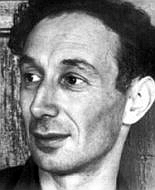
A. J. Ayer
The Oxford philosopher whose Language, Truth and Logic (1936), written at twenty-four, brought the Vienna Circle’s logical positivism to the English-speaking world: a statement is meaningful only if analytic or empirically verifiable, so metaphysics, theology and ethics are nonsense — moral judgments are expressions of feeling.

G. E. Moore
The Cambridge philosopher who, with Russell, led the revolt against idealism; whose Principia Ethica named the “naturalistic fallacy” and inspired the Bloomsbury Group; and who answered scepticism by holding up his hands — “here is one hand, and here is another”.

British Empiricism
The view that all knowledge comes from experience — the mind begins as a blank slate on which the senses write.

What Can We Know?
The relay race of epistemology — from Plato’s Cave to Kant’s categories, via Descartes’ demon and Hume’s billiard balls.

Gilbert Ryle
The Oxford philosopher whose The Concept of Mind (1949) demolished “the dogma of the Ghost in the Machine” — Descartes’s myth of an inner mental theatre — as a category mistake, and analysed mind in terms of dispositions and skills (“knowing how” versus “knowing that”).