
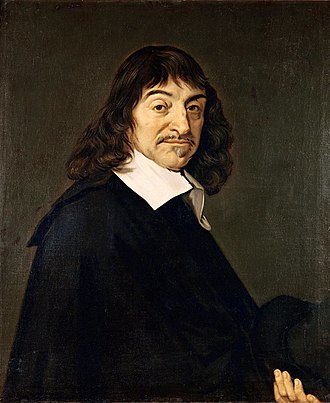


Merleau-Ponty in Six Ideas
the essentialsThe lived body
The body is not an object among objects but the subject’s way of being in the world; perception is bodily through and through.
Motor intentionality
Skilled action is not thought followed by movement; the body “understands” and reaches toward the world without representation.
Against empiricism and intellectualism
Perception is neither a mosaic of sensations nor a judgment of the mind; it is an original, pre-reflective grasp of meaning.
The primacy of perception
The perceived world is the foundation of science, art and thought, and must not be explained away by them.
Ambiguity
Human existence is neither pure consciousness nor mere thing; freedom is always situated, and meaning is never complete.
Flesh
In the late work, the body and the world share one “flesh” — a reversible touching/touched, seeing/seen that makes perception possible.
Maurice Merleau-Ponty was, with Husserl and Heidegger, one of the three great founders of phenomenology (Phenomenology), and the one who made the body its centre. His masterpiece, the Phenomenology of Perception (1945), is a book of some five hundred pages in which he argues, through an extended reading of psychology, neurology and everyday experience, that the classical picture of the human being — a mind or consciousness that looks out on a world of objects through a body that is itself one of those objects — is wrong in all its parts. We do not stand at a distance from the world, he claims; we are in it by way of a lived body that already understands, reaches for and gives shape to things before any thought has begun. Perception is not a mental representation of an outer reality, nor a mosaic of sensations organised by judgment, but a primordial contact with the world, from within a situation, that no reflection can ever completely clarify. From this beginning he draws consequences for our understanding of space, time, other people, language, freedom and history, and — in the unfinished late work — for ontology itself.
He was born in 1908 in Rochefort-sur-Mer on the Atlantic coast and raised in Paris by his mother after his father died, when he was five. A brilliant student at the École Normale Supérieure, where he was a classmate and friend of Sartre and Simone de Beauvoir, he passed the agrégation in philosophy in 1930 and taught in schools in Beauvais, Chartres and Paris, and from 1935 at the École Normale. He was drawn early to the new sciences of behaviour and mind — Gestalt psychology, neurology, the study of brain-damaged soldiers — and in 1939, after reading Husserl’s manuscripts in Leuven, where the Archives had just been established, he decided that phenomenology, rightly understood, could be made to speak to them. After service in the French army in 1939–40 he joined a resistance group in Paris, “Socialisme et Liberté”, with Sartre, and in the war years he wrote his two theses, The Structure of Behavior (1942) and the Phenomenology of Perception (1945). After the Liberation he became a leading intellectual of the Left, political editor of Les Temps modernes (founded with Sartre and Beauvoir in 1945), professor at Lyon (1945–48), at the Sorbonne (1949–52), and finally, at forty-four, the youngest ever holder of a chair in philosophy at the Collège de France. He broke with Sartre in 1953 over the Korean War and the Soviet Union, which Merleau-Ponty could no longer defend; his book Adventures of the Dialectic (1955) is a critique of Sartre’s “ultra-Bolshevism”. He died suddenly, at his desk, on 3 May 1961, with a volume of Descartes before him, leaving unfinished the book that was to be called The Visible and the Invisible.
The argument of the Phenomenology of Perception begins with a double rejection. The first target is empiricism, the view that perception consists of sensations — atoms of colour, sound or touch, produced by stimuli on the sense organs — from which the world is built up by association. Against this he draws on Gestalt psychology: what we perceive is never a mosaic of isolated qualities, but always a figure on a ground, a structured whole with meaning; there is no “pure” sensation, no red patch that we first perceive and then recognise as a tomato; we see a tomato. Even the simplest perceptual datum has a “field”: a grey patch looks different on a white surface than on a black one, a line looks bent or straight depending on its context, and the apparent size of the moon on the horizon depends on the scene. The second target is intellectualism, the view, shared by Descartes, Kant and the neo-Kantians, that since perceptual qualities are not given as atoms, the mind must organise them by judgment: to see a cube, I must infer from the visible faces a cube that I do not see. But this, Merleau-Ponty objects, is as false to experience as empiricism is. I do not judge that the object has a hidden side; the hidden side is already present to me as hidden, as part of the way the object stands before me. The mind in perception is not a spectator and constructor, but an embodied presence in a world that already makes sense to it. Both the empiricist and the intellectualist, he writes, share a prejudice: they assume that the world is an array of objects fully determinate in themselves, and ask how a subject, thinking or sensing, can come to know them. The task is to go back to experience before this distinction, to the “perceptual faith” in which the world is simply there for us.
The key to the account is the body. In the classical view the body is a thing: a physical organism, with organs, nerves and muscles, in causal relation with other things and with the mind that inhabits it. Merleau-Ponty distinguishes this “objective body” from the lived body (le corps propre, “one’s own body”), which is not an object for me, but my way of being in the world, my “point of view upon the world”, the “vehicle of being in the world”. It is never fully an object of my perception, since it is the very thing with which I perceive; I cannot get around to the other side of it, or walk away from it. When I touch my left hand with my right, the touched hand can become the toucher in turn — a “reversibility” that no object has — and my body is thus both sensible and sentient. Merleau-Ponty draws on cases of brain damage and illusions to show that the body has its own kind of understanding. A patient, “Schneider”, who suffered a brain injury in the First World War, could not point to a part of his body when asked, or follow a verbal command to make a movement, or perform “abstract” movements like pointing to the ceiling with eyes closed — yet he could quickly and accurately swat a mosquito on his arm, or take out his handkerchief and blow his nose, or do the concrete tasks of his job as a wallet-maker. The difference, Merleau-Ponty argues, is not between thought and reflex, as the intellectualist and the empiricist would have it, but between two kinds of intentionality: the motor intentionality of habitual action, in which the body is directly directed to the situation, and the “categorial attitude”, in which one stands back from a situation and treats it as a set of objects and possibilities. Schneider had lost the capacity for the second but not the first. This is a general point. When a typist’s fingers find the keys, when an organist learns a new organ in an hour, when I walk through a doorway without calculating my width, the body is not carrying out a plan formed in the mind. It is “knowing” in a way that is more primitive than representation, and it “understands” the world as a field of possibilities for action, which he calls the intentional arc that projects around us our past, our future and our human environment.
From the body he derives an account of space: not the homogeneous container of geometry, but the oriented space of the lived body, with an “up” and “down”, a “near” and “far”, a “reachable” and “unreachable”, which is oriented around me and which I cannot abstract from. Even the apparent distance of an object, he argues, is not calculated but felt as the grip my body has on it. Of time, he argues similarly that it is not a series of nows but a field in which I am always in the process of passing from a retained past to an anticipated future. Of others, he argues against the solipsist who asks how I can know that other minds exist: I perceive others in their bodies, in their gestures and their expressions, not as external objects inferred to have inner lives, but as other embodied subjects inhabiting the same world. A baby smiles back at a smile, long before it has any idea of its own face; a child understands anger in a face directly. There is an original “intercorporeality”, a communication between bodies that precedes the distinction of self and other. Of speech, he distinguishes an “empirical” speech, in which established meanings are used, from a “primordial” speech, in which new meaning first emerges, as in the writer or painter; the word is not a sign of an interior thought, but a gesture, whose sense is taken up by the hearer as one takes up a gesture, by sharing the situation. Language and thought are not related as clothing and body: thought completes itself in speech.
The most politically powerful chapter of the book, and the last, is on freedom. Sartre‘s Being and Nothingness (1943) had described consciousness as absolute freedom: nothing in my situation determines how I will respond, since I can always give it a different meaning. Merleau-Ponty argued that this was too stark. I am not free in the sense of being able to make anything of any situation; I am always a particular embodied person with a history, a language, a class, a sex, a culture, a temperament, which give my situation certain meanings that I did not choose and cannot simply abolish. Yet I am not determined by them either. Between the two he proposes situated freedom: “I am a psychological and historical structure. Along with existence, I received a way of existing, or a style. All my actions and thoughts are related to this structure… Yet I am not a thing, and I cannot be reduced to a product of circumstances. The weight of the world, the ‘facticity’ of my history, does not forbid that I may choose to take up my situation in new ways.” Freedom is exercised in the dialogue between the self and its situation, and is never complete, but is real. A worker who becomes class-conscious does not choose out of nothing, but out of a situation that gradually acquires, for him, a new meaning. Merleau-Ponty’s political writings of the 1940s — Humanism and Terror (1947), a defence of the Marxist standpoint that was already uneasy about the Moscow trials — turn on this idea: history has a meaning, but it is not predetermined; it is ambiguous, open to the actions of men and women who live it.
The word that best sums up Merleau-Ponty’s philosophy is ambiguity. Human existence is ambiguous, he says, neither a pure consciousness nor a mere thing, neither wholly free nor wholly determined, neither wholly transparent to itself nor wholly opaque. Meaning, in perception as in history, is never completely determinate: it is always open to reinterpretation, always dependent on a perspective, and always incomplete. He loved the phenomena of art, in which this ambiguity is made visible. In the essay “Cézanne’s Doubt” he finds in the painter’s struggle with Mont Sainte-Victoire the attempt to capture “the lived perspective” of perception before the intellect has imposed its geometry on it; in “Eye and Mind”, his last published work, he describes how a painter “lends his body to the world” and how the world “passes through him” to become painting.
The late work, much of it known only from working notes, goes beyond the Phenomenology of Perception. Merleau-Ponty had come to think that the earlier book, with its vocabulary of consciousness and the cogito, was still too close to the philosophy of the subject. In The Visible and the Invisible he sought to describe perception as an event of Being itself, in which the perceiver and the perceived belong to the same fabric, which he called the flesh (la chair). The flesh is not matter, mind or substance, but an “element” like water, air or fire, a general medium of being in which the seer and the seen, the toucher and the touched, are two sides of one reversible process. When I see a tree, the tree also in some way “looks at me”: it is visible only because I am a visible being, a body in the world of visible things, with a perspective, and that is how my seeing is possible. The “chiasm” or crossing between the visible and the invisible, between self and other, between body and world, is the new theme. Some interpreters, notably Claude Lefort, who edited the posthumous text, see in it a new ontology in dialogue with Heidegger’s late philosophy; others find it obscure.
Merleau-Ponty’s influence has been wide. His account of embodied skill underpins Hubert Dreyfus’s critique of artificial intelligence and the “enactive” and “embodied” approaches to cognitive science of Francisco Varela, Evan Thompson and Alva Noë. His descriptions of the body shaped feminist phenomenology (Iris Marion Young’s “Throwing Like a Girl”) and the phenomenology of disability and illness. His idea of intercorporeality informs developmental psychology; his theory of expression, linguistics and semiotics; and his political philosophy, the French reflection on democracy and totalitarianism. Merleau-Ponty makes the strongest claim on anyone who reads him: that the most ordinary experiences — reaching for a glass, tying a shoe, hearing a melody, meeting a gaze — are philosophically inexhaustible, and that to describe them properly is to learn what it is to be a conscious, embodied creature at home and not at home in the world.
Before the Phenomenology of Perception there was The Structure of Behavior (1942), his first book, which pursued the same quarrel at the level of science. In it Merleau-Ponty examined the successive attempts of physiology and psychology to explain behaviour — the reflex arc of Pavlov and Sherrington, the behaviourism of Watson, the Gestalt theory of Köhler, Koffka and Goldstein — and argued that each, pushed to its limit, shows that behaviour cannot be understood as a sum of local causes. An animal does not respond to a stimulus as a stone responds to a push: it responds to the meaning the situation has for it, to the whole structure that the situation presents. A dog does not react to a pattern of light and sound atoms, but to a threat, a prey, a master. Kurt Goldstein’s work on brain-injured soldiers showed that when the brain is damaged, the whole organism reorganises itself and its world; the patient does not simply lose a function but shifts to a new way of being, a narrower world. Here Merleau-Ponty found the concept of “form” or “structure” (Gestalt) that would organise his thinking: a whole that is not the sum of its parts, in which each part gets its character from its place in the whole. Physical systems, living organisms and human beings differ in the kinds of structures they realise — physical, vital, human — and consciousness is not a separate substance added to the organism but the highest level of its organisation. The book ends with a challenge to the choice between a materialist reduction and a spiritualist dualism, a challenge the Phenomenology of Perception would take up in earnest.
The Phenomenology has a famous Preface, in which Merleau-Ponty explains what phenomenology is and why it cannot be completed. Against the naïve realism of science and the transcendental idealism of Kant and the early Husserl, he insists that the phenomenological reduction, the bracketing of the natural attitude, cannot be total: “the most important lesson which the reduction teaches us is the impossibility of a complete reduction”. We can never stand outside the world to view it from nowhere, because we are always already in it, through a body, a language, a history. Reflection is not the retreat to a pure consciousness that constitutes the world, but a “radical reflection” that includes its own situation — it realises its dependence on an unreflective life that it can never fully capture. The goal of phenomenology is, accordingly, not to give a complete and final explanation, but to describe, again and again, the experience that precedes all explanation, in a task that is “as unfinished as the world”. “Philosophy is learning to see the world anew.” He compares the philosopher to the painter Cézanne, who worked in front of the same mountain for decades, and who said, “I am the subjective consciousness of this landscape, as my canvas is its objective consciousness.”
The long chapters on perceived things and the perceived world give some of the finest descriptions in the phenomenological literature. A cube is seen from one side, and yet it is seen as a cube: its hidden faces are given not as inferences or images but as “co-present”, the way a person present in a room is present even when I am looking in another direction. Things have a “motor significance”: the shape of a hill is a way it will feel to climb; the colour of a room has a warmth that is already a bodily attitude. Colours have a sort of “motor value”: red tends to expand, blue to withdraw; they are experienced as an invitation to a certain bodily comportment, before they are known as qualities. The phenomenon of constancy — we see a white sheet as white in shadow, a coin as round when seen at an angle — shows that perception is not a matter of registering local stimuli, but of grasping the thing in its context, in a “perceptual field” where light, shadow, depth and background belong together. Depth, he argues, is not a third dimension added by inference to a two-dimensional retinal image, but is the dimension in which things are “in front of” and “behind” each other for a body that can approach and withdraw. All this grounds his claim of the primacy of perception: the perceived world is the ground of all our experience, including science, which is a refinement and abstraction from it. “Science has not and never will have, by its nature, the same significance qua form of being as the world which we perceive, for the simple reason that it is a rationalised or explicit version of that world.”
The problem of other people and the problem of objectivity received particularly careful treatment. If everything I know about the world comes through my perspective, how can I think of a world that is the same for everyone, a world of science? Merleau-Ponty’s answer is that perspectival perception already points beyond itself: to see a house from one side is to see it as something that has other sides, and that others can see; “the object is the object for everyone”. Intersubjectivity is built into perception, not added to it. Likewise, the claim that I am “only” my body has not the reductive sense that I am a collection of physical processes; it means that the body is the site at which meaning, the world and other people become available to me. In the famous passage on the “phantom limb”, he explains why an amputee continues to feel the missing arm: neither a purely physiological nor a purely psychological account will do. The phantom is the persistence of a habitual way of being in the world, of the body’s “intentional arc” directed toward a world in which the arm was a means of action, which the amputee has not yet accepted losing. The body, he writes, is “our general medium for having a world”.
In his last decade Merleau-Ponty turned to politics, history and art with increasing intensity. Humanism and Terror (1947) was an analysis of the Moscow Trials that tried to find a rationale for Soviet communism in a philosophy of history; but by 1950, confronting the Soviet camps and the Korean War, he lost his confidence, and in Adventures of the Dialectic (1955) he concluded that Marxism, as a philosophy of history with a guaranteed end, had failed, and that the Left must pursue a “new liberalism” that preserved the revolutionary aspiration without the myth of an inevitable future. This was his break with Sartre, who accused him of abandoning the cause. A short course at the Sorbonne on child psychology and pedagogy (1949–52), a study of language and Saussure, a series of lectures at the Collège de France on nature (1956–60), and the essays collected in Signs (1960) and Sense and Non-Sense (1948) complete the picture of a philosopher who tried, with unfailing intelligence, to find a middle way between the great oppositions of his time: subject and object, mind and body, freedom and necessity, individual and history, reason and unreason.
His untimely death left The Visible and the Invisible a sheaf of chapters and working notes. The surviving pages suggest a project of daunting ambition: to re-found philosophy on the ontology of the flesh, and to show how the same fabric of Being is the source of perception, language, history and thought. Some of the most beautiful passages describe the “reversibility” of touch and vision: “my body is made of the same flesh as the world”, so that “the world is wholly inside me, and I am wholly outside myself”. Others — “the invisible is the secret counterpart of the visible” — gesture at an ontology of depth, latency and absence. Readers have disagreed about whether this late turn continues or abandons the earlier work, and whether it amounts to a new metaphysics or a more radical phenomenology. But its legacy is clear. The philosophy of embodiment that Merleau-Ponty began, and that has grown from his work in cognitive science, feminism, dance studies, architecture and the philosophy of technology, is one of the most fertile inheritances of twentieth-century thought.
In conversation
- Schneider and the mosquito — the body that can act but cannot “think” a movement.
- The touching hand touched — reversibility, and the beginning of “flesh”.
- “I am my body” — against Descartes’s ghost in the machine.
Maurice Merleau-Ponty in two minutes
The French phenomenologist of the body, whose Phenomenology of Perception (1945) argued that we do not have a body but are one — that perception, motor skill, space, time, other people and freedom are all understood from the “lived body” — and who spent his last years exploring the “flesh” of the world.
- The lived body. The body is not an object among objects but the subject’s way of being in the world; perception is bodily through and through.
- Motor intentionality. Skilled action is not thought followed by movement; the body “understands” and reaches toward the world without representation.
- Against empiricism and intellectualism. Perception is neither a mosaic of sensations nor a judgment of the mind; it is an original, pre-reflective grasp of meaning.
- The primacy of perception. The perceived world is the foundation of science, art and thought, and must not be explained away by them.
- Ambiguity. Human existence is neither pure consciousness nor mere thing; freedom is always situated, and meaning is never complete.
- Flesh. In the late work, the body and the world share one “flesh” — a reversible touching/touched, seeing/seen that makes perception possible.
Answering: René Descartes, Immanuel Kant, Edmund Husserl, Martin Heidegger, Gabriel Marcel, Jean-Paul Sartre · Answered by: Simone de Beauvoir, Frantz Fanon
Curiosities
did you know?- He co-founded Les Temps modernes with Sartre and Beauvoir in 1945 and was its political editor until their break over communism in 1953.
- In 1952 he became the youngest person ever elected to a chair at the Collège de France.
- He died suddenly at 53, at his desk, with a volume of Descartes open in front of him.
- Husserl’s manuscripts at Leuven, which he visited in 1939, convinced him that Husserl’s late philosophy was more concrete than the early.
- Cézanne was his favourite painter: ‘Eye and Mind’ reads the artist as a phenomenologist of vision.
Questions to Argue About
debate club →- Do I have a body, or am I my body?
- How can a skilled musician play without thinking each note?
- Is freedom compatible with having a particular body, history and situation?
Explore Next
related by shared connections
Being and Time
Heidegger’s 1927 masterwork, which asks the forgotten question of the meaning of Being by analysing the one being who asks it — Dasein, the human being as being-in-the-world — through care, moods, anxiety, being-towards-death, conscience and temporality.

Emmanuel Levinas
The Lithuanian-French Jewish philosopher who, after surviving captivity and losing his family in the Holocaust, argued that ethics, not ontology, is first philosophy: the face of the other person makes an infinite demand that precedes all knowledge, freedom and being — “responsibility for the other”.

Karl Jaspers
The German psychiatrist turned philosopher of Existenz, who described “limit situations” (death, suffering, struggle, guilt), “the Encompassing” and “philosophical faith”, introduced the Axial Age, and in The Question of German Guilt (1946) distinguished criminal, political, moral and metaphysical guilt.

Wilhelm Dilthey
The Berlin philosopher who distinguished the natural sciences, which explain, from the human sciences (Geisteswissenschaften), which understand through lived experience, expression and history — the founder of modern hermeneutics and the philosophy of life (Lebensphilosophie).
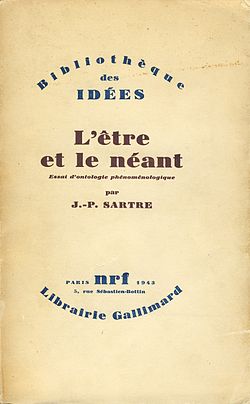
Being and Nothingness
Sartre’s 1943 phenomenological ontology: being-in-itself is full and opaque, being-for-itself is consciousness as a nothingness that must make itself; from this come freedom, anguish, bad faith, and the look of the other — “man is condemned to be free.”

Hannah Arendt
The German-Jewish political thinker who fled the Nazis and became the great analyst of totalitarianism, of the human condition — labour, work and action — and, at the Eichmann trial, of “the banality of evil”.