


Levinas in Six Ideas
the essentialsEthics as first philosophy
The relation to the other person is prior to knowledge and to being; philosophy has forgotten its origin in responsibility.
The face
In the face of the other I do not meet an object or an image but a vulnerable nakedness that commands, “Thou shalt not kill”.
Infinity against totality
The other exceeds every concept I can form of him; he breaks the closed system of the same in which Western philosophy comprehends everything.
Asymmetry
I am responsible for the other without reciprocity; “I am responsible for the other without waiting for reciprocity, were I to die for it.”
The il y a
Beneath being lies an anonymous, horrifying “there is” — the insomnia of existence without existents.
Substitution
Subjectivity is hostage to the other; I am answerable for him, even for his responsibility, and so “one for the other”.
Emmanuel Levinas was a Lithuanian-born French philosopher whose work, written in the shadow of the Holocaust, turned the order of Western philosophy upside down. Since the Greeks, he argued, philosophy had been ontology, the study of being, and its ideal had been knowledge — the grasping, comprehending, mastering of whatever is, by a subject who makes the world “his own”. Levinas, a student of Husserl and Heidegger and one of the first to introduce phenomenology in France, concluded that this tradition rests on a forgotten and more basic experience: the encounter with another human being, who cannot be grasped or comprehended, and whose very vulnerability makes an absolute, infinite demand on me. Ethics, the relation of responsibility to the other, he claimed, is not a branch of philosophy built on top of ontology but “first philosophy”, prior to knowledge, freedom and being. In Totality and Infinity (1961) and Otherwise than Being (1974), two of the most original and demanding books of the twentieth century, he developed this claim with a vocabulary of the face, the Other, infinity and substitution that has reshaped ethics, theology, political thought and literary theory.
His life tracks the catastrophe of twentieth-century Europe. He was born on 12 January 1906 in Kaunas (Kovno), Lithuania, then part of the Russian Empire, into an observant Jewish family of booksellers. His childhood was shaped by the Hebrew Bible and the Talmud, learned at home and in the Hebrew school, and by the great Russian literature of the nineteenth century, on which he was raised: Pushkin, Lermontov, Gogol, Tolstoy and above all Dostoevsky, whose Brothers Karamazov gave him the sentence he would quote all his life — “each of us is guilty before everyone, for everyone and for everything, and I more than the others”. The family fled the war to Kharkov, Ukraine, in 1915, and witnessed the Russian Revolution; they returned to independent Lithuania in 1920. In 1923 Levinas went to Strasbourg to study philosophy, where he fell under the spell of the French philosophers Maurice Pradines and Maurice Halbwachs, and became a friend of the future novelist and critic Maurice Blanchot. In 1928–29 he went to Freiburg to hear Husserl, who was then retiring, and Heidegger, who had just arrived; the encounter with Heidegger’s teaching was the decisive philosophical event of his life. His doctoral thesis, The Theory of Intuition in Husserl’s Phenomenology (1930), was one of the first books on Husserl in French, and with Gabrielle Peiffer he translated the Cartesian Meditations (1931), providing the French readers of Sartre, Merleau-Ponty and Ricœur with their introduction to phenomenology. In 1930 he became a French citizen.
In 1939 Levinas was mobilised as an interpreter of Russian and German; captured at Rennes in June 1940, he spent the whole of the war in a prisoner-of-war camp for Jewish soldiers — Stalag 11B at Fallingbostel, near Hanover — where, protected by his French uniform from the fate of civilian Jews, he did forced labour in the forest and began, in notebooks, the first of his philosophical works. His wife Raïssa and their daughter Simone were hidden in a convent near Orléans, where they were sheltered by nuns with Maurice Blanchot’s help; his parents-in-law were deported. His father and his two brothers were murdered in Lithuania in 1941, and his mother with them. For the rest of his life he dedicated his major book to the memory of those “who were closest among the six million assassinated by the National Socialists, and of the millions on millions of all confessions and all nations, victims of the same hatred of the other man, of the same anti-Semitism”. From 1946 until 1961 he directed the École normale israélite orientale in Paris, a school that trained teachers for Jewish schools in the Mediterranean world, and, in the weekly Talmud classes he gave, developed his Jewish philosophical writings. In 1961, with Totality and Infinity as his thèse d’état, he began an academic career, teaching at Poitiers, Nanterre and, from 1973 until his retirement in 1976, at the Sorbonne. He died in Paris on 25 December 1995.
The point of departure of Levinas’s philosophy is a diagnosis of the Western tradition from Parmenides to Heidegger. This tradition, he argues, is a philosophy of the Same. In knowledge, I take what is other than me — an object, an idea, another person — and make it mine by understanding it, by bringing it under a concept, by placing it in a context, by having it at my disposal. The knower “comprehends” what he knows, in the literal sense of taking it in. The whole movement of ontology, whether Greek or modern, reduces the other to the same: Socrates’ maieutics, according to which one learns only what one already knew; Hegel’s system, in which every otherness is eventually reconciled in the totality of Spirit; Heidegger’s Being and Time, in which every being is understood in the light of Being, and in which Dasein’s relation to others is a “being-with” that is a modification of its own being-in-the-world. The result is what Levinas calls totality: a closed system in which nothing can really be different from the whole. In politics, totality is the state that sacrifices individuals to a larger purpose; in war, it is the reduction of persons to roles in a battle for history. “The visage of being that shows itself in war is fixed in the concept of totality, which dominates Western philosophy.” The great catastrophes of the century were for him a philosophical event.
Against totality, Levinas sets infinity. The idea of infinity, as Descartes had noticed in the Third Meditation, is an idea that I cannot have invented, since it contains more than I can contain: the idea of the infinite is “put in me” by the infinite itself. Levinas finds the same structure in the relation to the other person, whom he calls the Other (Autrui). The Other is not an alter ego like me, to be understood by analogy with myself, as in Husserl’s fifth Cartesian Meditation; he is absolutely other, irreducible to any concept I might form of him, an exteriority that cannot be turned into a part of my world. The way this otherness shows itself is the face (le visage). The face is not the physical appearance of the other: if I notice the colour of his eyes, the shape of his nose, I am no longer in a relation with him as other, but treating him as an object. The face is “the way in which the other presents himself, exceeding the idea of the other in me”. It is the nakedness, the exposure, the defencelessness of the other, who looks at me from the position of poverty, as the stranger, the widow, the orphan — the three figures the Hebrew Bible repeatedly commands us to protect. And it speaks, not by saying anything in particular, but by its very presence, a command: “Thou shalt not kill”. “The face is what forbids us to kill.” This is not a moral law I know and then apply, but an event of the face itself: “The first word of the face is the ‘Thou shalt not kill’. It is an order. There is a commandment in the appearance of the face, as if a master spoke to me.” Levinas does not claim that no one kills — Cain killed Abel, and murder is possible — but that to kill someone is to try to negate the very infinity of the other, which resists the murderer with “the resistance of the infinite”.
This encounter with the face is an event that inverts the usual order of philosophy. Instead of beginning with the knowing, free, sovereign subject, who then enters into relations with other people (as in Descartes, Kant, Husserl and Sartre), Levinas begins from the relation. The subject is called into being, as a subject, by the demand of the other; my freedom does not precede responsibility, but is put in question by it. “Ethics” in his sense is not a set of rules but this originary “calling into question of my spontaneity by the presence of the Other”. Hence its priority: before I know or choose, I am responsible; “responsibility for the other is the first structure of subjectivity”. And this responsibility is asymmetrical: I am responsible for the other without expecting that he will be responsible for me. “The I has always one responsibility more than all the others.” In this he differs from Kant, for whom the moral law is universal and reciprocal; from the contract theory of Hobbes and Rawls, in which obligations are based on mutual advantage; and from Martin Buber, whose “I–Thou” relation is reciprocal. For Levinas the primary relation is not a meeting between equals but an elevation: the other is “higher” than I, and my response is a servitude that is the condition of my freedom. It is also infinite: the more I answer to my obligation, the more it increases — “the more I answer, the more I am responsible”.
Totality and Infinity (1961), subtitled “An Essay on Exteriority”, elaborates these claims in a series of dense phenomenological analyses. It describes the separated self who lives in enjoyment, in the elements of the world — bread, light, air — and who makes a home, a dwelling, in which he can welcome the stranger; the feminine as the figure of hospitality and tenderness, a passage that has provoked sustained feminist criticism; fecundity, in which a father, through a child who is both himself and other, is related to a future that is not his own; and eros, the strange relation to what always withdraws. It prepares the argument for a transcendent relation to the infinite in the human face. A recurring Levinasian figure is Abraham, who leaves his homeland for an unknown land, in contrast with Ulysses, whose journey is only a return home. The ethical relation also opens the dimension of the third party: when others besides the neighbour enter the scene, I must compare, judge, weigh, and so the order of justice, institutions, laws and politics arises. Justice is thus the demand of ethics extended to the plurality of persons; its origin is in the responsibility that the third party’s face makes on me, but it requires reason, calculation and equality.
In his second major book, Otherwise than Being, or Beyond Essence (1974), Levinas tries to say what he had said in the first more radically, because he came to feel that the earlier work still used the language of ontology, the language of “being” and “totality” that he wished to leave behind. Ethics is now described as substitution: the self is not a sovereign identity that, among other things, takes on obligations, but is constituted as “one-for-the-other”, a hostage of the other, answerable for his faults and sufferings, even for his persecution of me. “The subject is a hostage.” This extreme language is intended to describe a passivity more passive than any receptivity — an exposure to the other that precedes every decision. The language of the book itself is deliberately broken: the “Saying” (le Dire), the ethical exposure to the other in speech, is contrasted with the “Said” (le Dit), the thematised content of discourse, which always betrays it; the book tries to unsay what it says, to keep returning to an ethical meaning that no ontological vocabulary can capture. It is among the hardest books in the history of philosophy. The first reviewers wondered whether it was philosophy or prophecy.
Levinas also held that there is, behind the world of beings, an indeterminate, anonymous existence which he named the there is (il y a). In Existence and Existents (1947), he describes it through the experience of insomnia: the night in which one cannot sleep and “something” goes on, without any subject — the rustling of the void, the horror of being that cannot end. The il y a is a pure being without beings, a presence without anyone present, which is not a consoling Heideggerian “gift of Being” but a menace, the experience of the impossibility of death or of ceasing to be. In contrast to Heidegger, who made death the supreme test of authenticity, Levinas is struck by the death of the other, and by the possibility that the death of the other is the first death I face: “The death of the other is the first death.” Our relation to the other’s mortality, and the suffering of others, rather than our own end, is what first calls us into ethical being.
Parallel to his philosophical writings, Levinas wrote a series of Talmudic readings and essays on Judaism — Difficult Freedom (1963), Nine Talmudic Readings (1968) — which he carefully distinguished from his philosophy. Judaism, he thinks, is above all an ethics, a way of life in which the relation to God passes through the relation to the neighbour: “The Other is the way of access to God.” He writes of the Torah’s “ethical monotheism”, in which God is not a being among beings or the ground of being, but the infinite that “comes to mind” in the trace of the face. His religion is without theodicy: after Auschwitz, “the end of theodicy” means that we can no longer justify suffering as part of a divine plan, and the only thing left is the responsibility to alleviate the suffering of others. Atheism in this sense, he says, is the condition of a true relation to God.
Levinas’s work has been taken up in many fields. In philosophy, Jacques Derrida’s early essay “Violence and Metaphysics” (1964) took him to task for using the language of ontology and of the “infinitely other”, and Levinas’s later work answers that critique; Derrida’s own later work on hospitality, forgiveness and justice is deeply indebted to him. In theology, in Jewish thought (Franz Rosenzweig was his other great influence) and Christian ethics, in feminist philosophy (Luce Irigaray, Judith Butler), in postcolonial theory, in medical ethics, in the philosophy of education, in politics and international relations, the language of the face and of responsibility for the other has become standard. Critics have asked whether the asymmetry of ethical obligation can ground a politics, whether the Other can be the same as any person (including the cruel one), whether Levinas’s own comments on Israel and on Palestinians, in a 1982 interview after the massacres at Sabra and Shatila, are consistent with his philosophy, and whether his mode of writing, with its hyperbole and its refusal of argument, can count as philosophical. His defenders reply that no philosophy of the other could be anything but extreme, since it asks us to think what exceeds thought. In an age of massive violence, his claim that “the face” of the other forbids murder, and that “to be human is to be responsible”, has offered a vocabulary to those who want to say why indifference to the stranger is not simply a failure of prudence but a betrayal of what we are.
In conversation
- “Thou shalt not kill” — the first word of the face.
- Totality and infinity — the closed system versus the other who exceeds it.
- The hostage — subjectivity as substitution for the other.
Emmanuel Levinas in two minutes
The Lithuanian-French Jewish philosopher who, after surviving captivity and losing his family in the Holocaust, argued that ethics, not ontology, is first philosophy: the face of the other person makes an infinite demand that precedes all knowledge, freedom and being — “responsibility for the other”.
- Ethics as first philosophy. The relation to the other person is prior to knowledge and to being; philosophy has forgotten its origin in responsibility.
- The face. In the face of the other I do not meet an object or an image but a vulnerable nakedness that commands, “Thou shalt not kill”.
- Infinity against totality. The other exceeds every concept I can form of him; he breaks the closed system of the same in which Western philosophy comprehends everything.
- Asymmetry. I am responsible for the other without reciprocity; “I am responsible for the other without waiting for reciprocity, were I to die for it.”
- The il y a. Beneath being lies an anonymous, horrifying “there is” — the insomnia of existence without existents.
- Substitution. Subjectivity is hostage to the other; I am answerable for him, even for his responsibility, and so “one for the other”.
Answering: Georg Wilhelm Friedrich Hegel, Edmund Husserl, Martin Buber, Martin Heidegger, Gabriel Marcel · Answered by: Jean-Paul Sartre
Curiosities
did you know?- Born in Kovno (Kaunas), Lithuania, he grew up reading Pushkin, Gogol, Tolstoy and Dostoevsky alongside the Hebrew Bible.
- A French army officer and translator of Russian and German in 1939, he was captured in 1940 and spent five years in a prison camp for Jewish soldiers, Stalag XI-B near Hanover.
- His wife and daughter were hidden in a convent near Orléans with the help of his friend Maurice Blanchot; his parents and brothers in Lithuania were murdered in 1941.
- He wrote philosophical and Talmudic works separately, saying that he never wished to mix them.
- He directed the Ecole Normale Israélite Orientale in Paris from 1946 to 1961, before his university career.
Questions to Argue About
debate club →- Does my duty to the other begin before any contract or reason?
- Can philosophy be anything other than a philosophy of being?
Explore Next
related by shared connections
Maurice Merleau-Ponty
The French phenomenologist of the body, whose Phenomenology of Perception (1945) argued that we do not have a body but are one — that perception, motor skill, space, time, other people and freedom are all understood from the “lived body” — and who spent his last years exploring the “flesh” of the world.

Being and Time
Heidegger’s 1927 masterwork, which asks the forgotten question of the meaning of Being by analysing the one being who asks it — Dasein, the human being as being-in-the-world — through care, moods, anxiety, being-towards-death, conscience and temporality.

Simone de Beauvoir
French existentialist philosopher and novelist whose The Second Sex (1949) — “One is not born, but rather becomes, a woman” — founded modern feminist philosophy, and whose ethics of ambiguity argued that my freedom requires the freedom of others.

Nikolai Berdyaev
The Russian religious philosopher of freedom, expelled from Soviet Russia in 1922, who held that freedom precedes being, that God needs creative humanity, that evil comes from the ‘Ungrund’, and that history is a drama in which the Spirit confronts objectification — a Christian existentialist and critic of both communism and bourgeois capitalism.

Karl Jaspers
The German psychiatrist turned philosopher of Existenz, who described “limit situations” (death, suffering, struggle, guilt), “the Encompassing” and “philosophical faith”, introduced the Axial Age, and in The Question of German Guilt (1946) distinguished criminal, political, moral and metaphysical guilt.
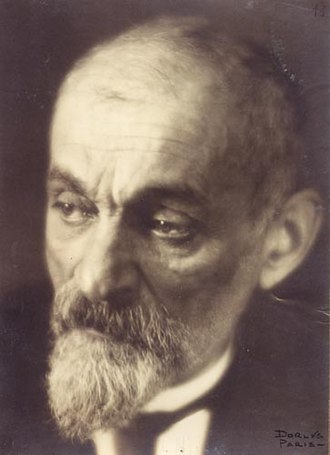
Lev Shestov
The Kiev-born Russian-Jewish existentialist (1866–1938) of All Things Are Possible, Athens and Jerusalem and Kierkegaard and the Existential Philosophy, who opposed the “tyranny of reason” and its necessities — logic, natural law, ethics — in the name of the freedom of faith: “with God all things are possible”.