
Contents · 5 sections · 4 min
"Nirala" in Four Ideas
the essentialsFree verse
“Just as human freedom lies in liberation from karma, so the freedom of poetry lies in liberation from metre.”
The suffering of the poor
Poems like “Breaking Stones” and “The Beggar” brought labourers and beggars into Hindi poetry with fierce compassion.
Śakti in despair
In Rām kī Śakti Pūjā, Rāma, about to lose the war, discovers that divine power must be won by self-sacrifice.
The rebel spirit
He defied convention in life and verse — caste, metre, decorum, money — and paid for it.
Suryakant Tripathi, known by his pen name Nirālā (“the unique one”), is one of the greatest and most original poets of modern Hindi — the most rebellious of the four pillars of Chhāyāvād and the poet who carried Hindi poetry beyond it. He freed Hindi from the bonds of fixed metre with Juhī kī Kalī (“The Jasmine Bud”), the first great free-verse poem in the language; wrote lyrics of mystical and romantic beauty, poems of fierce social compassion like “Toṛtī Patthar” (“Breaking Stones”) and “Bhikshuk” (“The Beggar”), the heartbreaking elegy Saroj Smṛti for his daughter, and Rām kī Śakti Pūjā (“Rāma’s Worship of Śakti”), one of the masterpieces of Hindi poetry; and in his last decades wrote satirical and experimental verse (Kukurmuttā) that anticipated modernism. His life — of poverty, bereavement, pride, generosity and, at the end, mental illness — made him a legend: Mahāprāṇ, “the great soul”.
Life
Nirala was born on 21 February 1896 (by tradition on Vasant Pañcamī) at Mahishadal in Midnapore district, Bengal, where his father, from a Brahmin family of Gaḍhākolā in Unnao district (Awadh), worked for the local raja. He grew up speaking Bengali, read Tagore and the Bengali classics, and was deeply influenced by the Vedānta of Ramakrishna and Vivekananda; he learned Sanskrit and English largely on his own. His mother died when he was a child; he was married young to Manohara Devi, who, he said, inspired him to write in Hindi.
In 1918 the influenza epidemic killed his wife, his father, his uncle, his elder brother and his brother’s wife within a short time; he was left responsible for a large family. He worked for the Ramakrishna Mission’s Hindi journal Samanvay in Calcutta and edited the satirical weekly Matvālā (from 1923), where his poems began to appear. Moving to Lucknow and then Allahabad, he lived by writing and translating, always poor, giving away what he earned. In 1935 his only daughter, Saroj, died aged nineteen after a long illness — an event he blamed on his poverty and his own failures — and he wrote Saroj Smṛti. From the 1940s he suffered episodes of mental illness and lived in increasing isolation and want in Daraganj, Allahabad, revered and cared for by admirers. He died on 15 October 1961.
Poetry
Juhī kī Kalī (written 1916, published 1922 in Matvālā) — “The Jasmine Bud” — is a sensuous free-verse poem in which the Malaya breeze returns to wake his beloved, a jasmine bud asleep on a creeper, who opens her eyes and smiles. Its irregular lines, free of rhyme and metre but shaped by the rhythm of the thought, scandalised the guardians of Hindi poetry. Nirala defended mukt chhand (free verse) in the preface to Parimal (1929): “Just as human freedom lies in liberation from karma, so the freedom of poetry lies in liberation from the rules of metre.”
His early collections — Anāmikā (1923, 1937), Parimal (1929), Gītikā (1936) — include lyrics of nature, love and mystical longing, and the invocation to Sarasvatī “Var de, vīṇāvādini var de” (“Grant the boon, O goddess of the vīṇā”), sung in schools across north India.
Social poems. Nirala was the first Chhāyāvādī to make the suffering poor the subject of great poetry. In “Toṛtī Patthar” (“Breaking Stones”, 1935), he sees a dark young woman breaking stones under a scorching sun on an Allahabad road, beside a row of shady trees and the mansions of the rich; she looks once at him, and at the sound of the sitar, then returns to her hammer: “Vah toṛtī patthar… dekhā maine use Ilāhābād ke path par” (“She was breaking stones… I saw her on the road in Allahabad”). “Bhikshuk” (“The Beggar”) shows a starving man, his belly stuck to his back, walking with a staff and two hungry children.
Saroj Smṛti (1935), a long elegy for his daughter, is one of the great elegies in any Indian language — personal, confessional, full of self-reproach, recalling her childhood and her marriage, mocking his own poverty and the hypocrisies of his Brahmin caste, and ending in grief: “Dukh hī jīvan kī kathā rahī, kyā kahū̃ āj jo nahīṃ kahī” (“Sorrow has been the story of my life; what shall I say today that I have not said?”).
Rām kī Śakti Pūjā (1936) is his masterpiece. On the night before the decisive battle of the Rāmāyaṇa, Rāma, despairing, sees that the goddess Śakti herself fights on Rāvaṇa’s side; Jāmbavān advises him to worship Śakti himself. Rāma performs the worship with 108 blue lotuses; at the end, the goddess secretly takes away the last lotus. Rāma, remembering that his mother called his eyes “lotus-eyes”, takes up an arrow to offer one of his own eyes — and the goddess appears, stays his hand, and blesses him: “Hogī jay, hogī jay, he puruṣottam navīn” (“Victory will be yours, victory, O new supreme man”) — and merges into his body. In dense, Sanskritised, thunderous verse, the poem makes Rāma a figure of human despair overcome by resolve and sacrifice — often read as an image of India’s struggle, and of Nirala’s own.
Later work. In Kukurmuttā (“The Mushroom”, 1942), a mushroom mocks the rose as a capitalist exploiter, in colloquial, satirical verse; Belā, Naye Patte, Archana and Āradhanā range from satire to devotion. He also wrote novels (Apsarā, Alkā, Nirupamā), the biographical sketches Kullī Bhāṭ and Billesur Bakriha, essays, and translations of Ramakrishna and Vivekananda.
Legacy
Nirala is regarded as the bridge between Chhāyāvād and modern Hindi poetry: his free verse, social realism and later experiments opened the way for the Progressive and Nayī Kavitā poets. His life of uncompromising integrity and suffering made him the archetypal poet in the Hindi imagination. “Var de, vīṇāvādini” is sung every Vasant Pañcamī.
In conversation
- “Vah toṛtī patthar” — “She was breaking stones”: the dignity and suffering of labour.
- Mukt chhand — free verse, which Nirala brought into Hindi.
- Rām kī Śakti Pūjā — strength won through sacrifice in the hour of despair.
Suryakant Tripathi "Nirala" in two minutes
The rebel genius of Hindi poetry — one of the four pillars of Chhāyāvād — who freed Hindi verse from metre, wrote “Juhī kī Kalī”, “Toṛtī Patthar”, the elegy Saroj Smṛti and the epic “Rām kī Śakti Pūjā”, lived in defiant poverty, and died in Allahabad, half-mad and wholly revered.
- Free verse. “Just as human freedom lies in liberation from karma, so the freedom of poetry lies in liberation from metre.”
- The suffering of the poor. Poems like “Breaking Stones” and “The Beggar” brought labourers and beggars into Hindi poetry with fierce compassion.
- Śakti in despair. In Rām kī Śakti Pūjā, Rāma, about to lose the war, discovers that divine power must be won by self-sacrifice.
- The rebel spirit. He defied convention in life and verse — caste, metre, decorum, money — and paid for it.
Curiosities
did you know?- His pen name Nirālā means ‘unique’, ‘strange’, ‘one of a kind’.
- ‘Juhī kī Kalī’, his first free-verse poem, was rejected by Mahāvīr Prasād Dvivedī’s Sarasvatī.
- He lost his wife Manohara Devi in the influenza epidemic of 1918 and his daughter Saroj, aged nineteen, in 1935.
- He gave away nearly everything he earned; friends told of him giving his only coat to a beggar in winter.
Questions to Argue About
debate club →- Is freedom in art the same as freedom in life?
- Can a poet who has lost everything still speak of hope?
Explore Next
related by shared connections
Mahadevi Varma
The “modern Mīrā” — the fourth pillar of Chhāyāvād, poet of mystical longing for an unseen beloved in Nīhār, Rashmi, Nīrajā, Sāndhyagīt and Dīpśikhā; pioneering feminist essayist of Śṛṅkhalā kī Kaṛiyāṁ; memoirist of the poor and of animals; principal of a women’s college in Allahabad for decades.

Rāmcaritmānas
Tulsīdās’s 16th-century retelling of the Rāmāyaṇa in Avadhī Hindi — 12,800 lines of devotional epic that made Rāma the God of North India, recited daily, staged every year as Rāmlīlā, and loved more than any other book in Hindi.

Sri Aurobindo
The revolutionary nationalist turned yogi and philosopher of Pondicherry, whose The Life Divine and Integral Yoga teach that evolution is spirit’s ascent through matter, life and mind toward a “supermind” that will divinise earthly life.

Yoga (darśana)
The classical school of Patañjali — Sāṃkhya’s dualism of consciousness and nature, plus a God and a practical method — defining yoga as “the stilling of the fluctuations of the mind” and mapping the eight limbs from ethics to absorption.
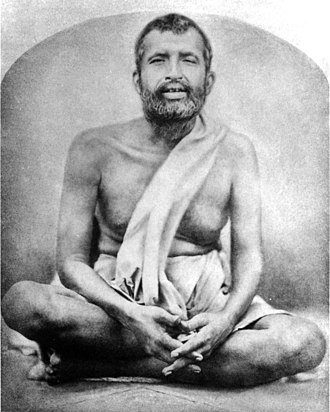
Ramakrishna Paramahamsa
The 19th-century Bengali mystic of the Dakshineswar Kālī temple who practised Hindu, Muslim and Christian paths and declared “as many faiths, so many paths” — the guru of Vivekananda and the fountainhead of modern Hindu universalism.

The Grand Inquisitor
Ivan Karamazov’s prose-poem — Christ returns to sixteenth-century Seville, and the aged Cardinal Inquisitor imprisons him, explaining that humanity cannot bear the freedom He offered.