

Contents · 6 sections · 5 min
Joyce in Five Ideas
the essentialsEpiphany
A sudden spiritual manifestation in an ordinary moment, gesture or phrase — the revelation of a thing’s essence.
Silence, exile and cunning
“I will not serve that in which I no longer believe… using for my defence the only arms I allow myself to use — silence, exile, and cunning.”
The mythic method
An ordinary Dublin day mapped onto Homer’s Odyssey — the heroic and the everyday shown as one.
Stream of consciousness
The unedited flow of thought, perception and memory, rendered directly, ending in Molly Bloom’s unpunctuated “yes”.
Paralysis
Dubliners portrays a city paralysed — morally, politically, religiously — and the struggle of its people to break free.
James Joyce is the central figure of literary modernism in English and, for many, the most important novelist of the twentieth century. Born in Dublin, he left Ireland at twenty-two and lived the rest of his life in exile — in Trieste, Zurich and Paris — yet wrote about nothing but Dublin. His collection of stories Dubliners (1914) portrays the city’s paralysis with scrupulous realism; his autobiographical novel A Portrait of the Artist as a Young Man (1916) traces the growth of Stephen Dedalus from infancy to his decision to leave Ireland and become an artist; Ulysses (1922), which follows two Dubliners, the advertising canvasser Leopold Bloom and Stephen Dedalus, through a single day, 16 June 1904, remade the novel with stream of consciousness, parody, and an elaborate parallel to Homer’s Odyssey; and Finnegans Wake (1939), written in a dream-language of puns in dozens of languages, pushed the experiment to its limit.
Life
Dublin
James Augustine Aloysius Joyce was born on 2 February 1882 in Rathgar, Dublin, the eldest surviving of ten children of John Stanislaus Joyce, a charming, improvident, hard-drinking tax collector and ardent supporter of the Irish nationalist leader Charles Stewart Parnell, and Mary Jane Murray, a devout Catholic. The family sank steadily into poverty, moving from house to house as John drank away their money. James was educated by the Jesuits, at Clongowes Wood College and Belvedere College, and at University College Dublin, where he studied modern languages, read Ibsen, Dante, Aquinas and Aristotle, lost his faith, and announced himself as an artist. In 1902 he went to Paris to study medicine, and was called back the next year by his mother’s death from cancer; he refused, at her deathbed, to kneel and pray — a refusal that haunts Stephen Dedalus in Ulysses.
On 16 June 1904 he first walked out with Nora Barnacle, a chambermaid from Galway — the day on which he later set Ulysses. In October 1904 they left Ireland together, unmarried (they married only in 1931).
Exile
They settled in Trieste, then an Austro-Hungarian port, where Joyce taught English at the Berlitz school and privately (one of his pupils was the novelist Italo Svevo). They had two children, Giorgio and Lucia. They lived in poverty, borrowing money and moving frequently. Dubliners, finished in 1905, was refused by publishers for nine years because of its frankness and its real names; one printer burned the sheets. It finally appeared in 1914. In the same year Ezra Pound arranged for the serialisation of A Portrait of the Artist as a Young Man in The Egoist magazine, whose editor, Harriet Shaw Weaver, became Joyce’s lifelong patron.
During the First World War the family moved to neutral Zurich, where Joyce began Ulysses. Its serialisation in the American Little Review (1918–20) led to the magazine’s prosecution for obscenity. In 1920 the Joyces moved to Paris, where Sylvia Beach, owner of the bookshop Shakespeare and Company, published Ulysses on Joyce’s fortieth birthday, 2 February 1922. It made him famous.
For the next seventeen years he worked on Work in Progress, which became Finnegans Wake (1939). He suffered from glaucoma and iritis, underwent many eye operations, and was nearly blind. His daughter Lucia, a gifted dancer, developed schizophrenia and was institutionalised; Joyce refused for years to accept her illness. When Germany invaded France in 1940, the family fled to Zurich, where Joyce died on 13 January 1941 after surgery for a perforated ulcer.
The works
Dubliners — fifteen stories in roughly chronological order of their characters’ ages, from childhood to maturity to public life — shows a city that Joyce described as “the centre of paralysis”. A boy is disillusioned at a bazaar (“Araby”); a young woman fails to escape with her lover to Buenos Aires, frozen at the dock (“Eveline”); a clerk beats his son after a night of humiliation (“Counterparts”). The stories turn on epiphanies — Joyce’s term for a sudden revelation of the essence of a thing or person in a trivial moment. The last and longest, “The Dead”, set at a Christmas party, ends with Gabriel Conroy learning that his wife Gretta was once loved by a boy, Michael Furey, who died for her, and watching snow falling “faintly through the universe and faintly falling, like the descent of their last end, upon all the living and the dead.” John Huston filmed it in 1987.
A Portrait of the Artist as a Young Man follows Stephen Dedalus (named after the mythical craftsman who made wings to escape the labyrinth) from his first childish memories (“Once upon a time and a very good time it was there was a moocow coming down along the road”) through school, sexual awakening, terror at a sermon on hell, a period of intense piety, a vision of a girl wading in the sea that confirms his vocation as an artist, and his aesthetic theorising, to his resolve to leave Ireland: “I will not serve that in which I no longer believe, whether it call itself my home, my fatherland, or my church: and I will try to express myself in some mode of life or art as freely as I can and as wholly as I can, using for my defence the only arms I allow myself to use — silence, exile, and cunning.” The novel ends: “Welcome, O life! I go to encounter for the millionth time the reality of experience and to forge in the smithy of my soul the uncreated conscience of my race.” Its style grows with Stephen, from baby talk to sophisticated prose.
Ulysses is described on its own page.
Finnegans Wake is a night book — a dream, perhaps, of a Dublin publican, Humphrey Chimpden Earwicker (HCE, “Here Comes Everybody”), his wife Anna Livia Plurabelle (ALP, also the river Liffey) and their children — written in a language of portmanteau words and puns drawing on some sixty languages, structured on Giambattista Vico’s cyclical theory of history. It begins in mid-sentence (“riverrun, past Eve and Adam’s, from swerve of shore to bend of bay”) and ends with an unfinished sentence that loops back to the beginning (“A way a lone a last a loved a long the”). Few have read it all; it has given physics the word “quark” (“Three quarks for Muster Mark!”).
Art
Joyce’s genius lay in his command of style — he could write in any manner and parodied dozens — and in his faith that ordinary life, rendered exactly, contained everything: myth, history, religion, comedy, tragedy. He invented or perfected the interior monologue; he used myth as structure; he made the novel a field of linguistic play. He was also a supremely comic writer, bawdy, punning and humane. His central themes — Ireland and exile, the artist and society, Catholicism, fathers and sons, love and betrayal, the body — are always grounded in the precise streets of Dublin.
Legacy
Ulysses is regularly named the greatest novel of the twentieth century. Joyce’s influence runs through Virginia Woolf, William Faulkner, Samuel Beckett (his assistant), Flann O’Brien, Vladimir Nabokov, Salman Rushdie and the postmodernists. Bloomsday (16 June) is celebrated every year in Dublin and around the world with readings, costumes and gorgonzola sandwiches. Richard Ellmann’s biography James Joyce (1959) is one of the great literary lives.
In conversation
- “Silence, exile, and cunning” — the artist’s weapons for freedom.
- An epiphany — in Joyce’s sense, a sudden revelation of meaning in an ordinary moment.
- Bloomsday — 16 June, the day of Ulysses.
James Joyce in two minutes
The Dublin exile who never wrote about anywhere but Dublin — author of Dubliners, A Portrait of the Artist as a Young Man, Ulysses and Finnegans Wake — who remade the novel with stream of consciousness, parody, myth and wordplay, and became the central figure of literary modernism.
- Epiphany. A sudden spiritual manifestation in an ordinary moment, gesture or phrase — the revelation of a thing’s essence.
- Silence, exile and cunning. “I will not serve that in which I no longer believe… using for my defence the only arms I allow myself to use — silence, exile, and cunning.”
- The mythic method. An ordinary Dublin day mapped onto Homer’s Odyssey — the heroic and the everyday shown as one.
- Stream of consciousness. The unedited flow of thought, perception and memory, rendered directly, ending in Molly Bloom’s unpunctuated “yes”.
- Paralysis. Dubliners portrays a city paralysed — morally, politically, religiously — and the struggle of its people to break free.
Answering: — · Answered by: Virginia Woolf, Samuel Beckett
Curiosities
did you know?- Ulysses takes place on 16 June 1904, the day of his first walk with Nora Barnacle — now celebrated worldwide as ‘Bloomsday’.
- He said he put in so many enigmas and puzzles ‘that it will keep the professors busy for centuries arguing over what I meant’.
- Ulysses was banned for obscenity in the US until a 1933 court ruling, and copies were smuggled and burned.
- He had more than twenty eye operations and wrote Finnegans Wake partly in huge letters with crayons.
- He claimed that if Dublin were destroyed it could be rebuilt from Ulysses.
Questions to Argue About
debate club →- Is Ulysses a great novel or an unreadable experiment?
- Must an artist leave home to write about it?
- What is the meaning of Molly Bloom’s ‘yes’?
Explore Next
related by shared connections
Mrs Dalloway
Virginia Woolf’s novel (1925): on a June day in 1923, Clarissa Dalloway, a London society hostess, prepares for her party, while Septimus Warren Smith, a shell-shocked veteran, is driven to suicide — two lives that never meet, told through the flowing consciousness of a whole city as Big Ben strikes the hours.

Dante Alighieri
The Florentine poet of the Divine Comedy — the journey through Hell, Purgatory and Paradise that summed up medieval thought and created the Italian language.

Qurratulain Hyder
“Ainee Apa”, the grande dame of Urdu fiction — novelist of time, history and the Indo-Muslim civilisation, whose Āg kā Daryā (River of Fire, 1959) follows four souls across 2,500 years of Indian history, from the age of the Buddha to Partition.
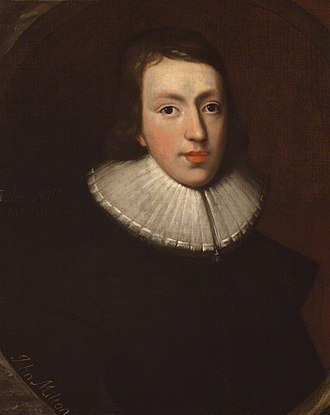
John Milton
English poet, polemicist and revolutionary whose Paradise Lost — written blind, after the defeat of his cause — retells the Fall of Man to “justify the ways of God to men”, and gave literature its most magnificent rebel, Satan.

George Eliot
Mary Ann Evans — translator of German theology, editor, scandalous partner of a married man, and the most intellectual of the great Victorian novelists — whose Adam Bede, The Mill on the Floss, Silas Marner and Middlemarch made the novel an instrument of moral sympathy and philosophical depth.
Mokṣa
Liberation — release from the cycle of rebirth and from all suffering, the highest goal of human life in the Hindu and Jain traditions (and, as nirvāṇa, in Buddhism). Every Indian school defines it differently, and the arguments over what it is, and how it is won, are the backbone of Indian philosophy.