
Contents · 6 sections · 7 min
Tennyson in Five Ideas
the essentialsGrief and doubt
In Memoriam moves through seventeen years of mourning and religious doubt toward a fragile faith — “’Tis better to have loved and lost / Than never to have loved at all.”
Nature red in tooth and claw
Geology and evolution revealed a nature careless of species and individuals; faith had to survive that knowledge.
To strive, to seek
“Ulysses” — the old hero setting out again “to strive, to seek, to find, and not to yield.”
The isolated artist
The Lady of Shalott, who sees the world only in a mirror and dies when she turns to look at it directly.
Music of verse
Unmatched control of sound and rhythm — Auden called him “the finest ear, perhaps, of any English poet”.
Alfred Tennyson was the most popular and representative poet of the Victorian age, Poet Laureate from 1850 until his death in 1892, and one of the supreme masters of the music of English verse. His great elegy In Memoriam A.H.H. (1850), written over seventeen years after the sudden death of his closest friend, records the struggle of a grieving mind with doubt in an age when geology and evolution seemed to make nature indifferent to human hopes, and became the Victorian era’s great poem of consolation — Queen Victoria said that, after her husband’s death, it was her comfort next to the Bible. His other poems — “The Lady of Shalott”, “The Lotos-Eaters”, “Ulysses”, “Tithonus”, “Break, Break, Break”, “Tears, Idle Tears”, “The Charge of the Light Brigade”, the monodrama Maud, the Arthurian Idylls of the King and “Crossing the Bar” — made his lines part of the language.
Life
Somersby
Tennyson was born on 6 August 1809 at Somersby, Lincolnshire, the fourth of twelve children of the Rev. George Clayton Tennyson, the rector, a learned, embittered man who had been disinherited in favour of his younger brother and who drank, raged and suffered fits of depression and epilepsy. The household was gloomy and unstable; several of the children suffered from mental illness, melancholy or addiction. The boys were educated largely by their father, and Alfred wrote poetry from childhood — an epic at twelve, a play at fourteen. The fens, the wolds and the sea at Mablethorpe shaped his imagination.
Cambridge and Hallam
At Trinity College, Cambridge (1827–31), shy, tall, dark and shabby, he was elected to the Apostles, a brilliant debating society, and formed an intense friendship with Arthur Henry Hallam, a dazzling young man thought destined for greatness, who became engaged to Tennyson’s sister Emily. Tennyson’s Poems, Chiefly Lyrical (1830) and Poems (1832, dated 1833), including “The Lady of Shalott”, “The Lotos-Eaters” and “Mariana”, were harshly reviewed. In September 1833 Hallam died suddenly of a brain haemorrhage in Vienna, aged twenty-two. Tennyson was shattered. For nearly ten years he published almost nothing, while writing the elegiac lyrics that would become In Memoriam, and poems like “Ulysses” — about the old hero’s resolve to sail beyond the sunset rather than rust at home — which he said expressed “the need of going forward and braving the struggle of life” after Hallam’s death:
Come, my friends, ‘Tis not too late to seek a newer world… Though much is taken, much abides; and though We are not now that strength which in old days Moved earth and heaven, that which we are, we are; One equal temper of heroic hearts, Made weak by time and fate, but strong in will To strive, to seek, to find, and not to yield.
These were years of poverty and depression; his engagement to Emily Sellwood was broken off for lack of money; he lost his small fortune in a wood-carving business. Poems (1842) established his reputation; Prime Minister Peel granted him a pension in 1845. The Princess (1847), a medley about a princess who founds a women’s university, contains the lyrics “Tears, Idle Tears” and “Now Sleeps the Crimson Petal”.
Laureate
1850 was his year. He published In Memoriam (anonymously), married Emily Sellwood at last, and succeeded Wordsworth as Poet Laureate. He wrote public poems on national events: the “Ode on the Death of the Duke of Wellington” (1852), and “The Charge of the Light Brigade” (1854), on the disastrous charge of British cavalry at Balaclava in the Crimean War, composed after reading a newspaper report of a “blunder”: “Theirs not to reason why, / Theirs but to do and die: / Into the valley of Death / Rode the six hundred.” Maud (1855), a “monodrama” of a young man’s love, madness and redemption through war, was attacked by critics but was his own favourite to read aloud. Idylls of the King (1859–85), twelve blank-verse poems on the rise and fall of King Arthur’s court, from Malory, made the Arthurian legend a Victorian moral epic of the decline of an ideal society through sin (Lancelot and Guinevere’s adultery).
He lived on the Isle of Wight at Farringford, then also at Aldworth in Sussex, famous, wealthy, visited by admirers (whom he hid from), photographed by Julia Margaret Cameron, friend of Victoria and Albert. In 1884 he was created Baron Tennyson. His late poems include “Crossing the Bar” (1889), which he asked to be printed at the end of all collections of his poems: “Sunset and evening star, / And one clear call for me! / And may there be no moaning of the bar, / When I put out to sea.” He died on 6 October 1892, with a volume of Shakespeare open at Cymbeline, and was buried in Westminster Abbey.
In Memoriam
In Memoriam A.H.H. consists of 133 sections (cantos) of varying length, written between 1833 and 1850, in a stanza now called the “In Memoriam stanza” — four lines of iambic tetrameter rhyming abba, whose enclosed rhyme gives a circling, brooding effect. It moves through three Christmases from despair, numbness and doubt toward acceptance and faith, ending with the marriage of Tennyson’s sister Cecilia and the hope of a future, more evolved humanity.
It is a poem of grief: the poet stands outside Hallam’s house in Wimpole Street before dawn — “Dark house, by which once more I stand / Here in the long unlovely street… He is not here; but far away / The noise of life begins again, / And ghastly through the drizzling rain / On the bald street breaks the blank day.” It contains the famous consolation: “I hold it true, whate’er befall; / I feel it, when I sorrow most; / ‘Tis better to have loved and lost / Than never to have loved at all.”
And it is a poem of doubt. Reading Lyell’s geology (and evolutionary speculations before Darwin), Tennyson saw a nature that destroys whole species without care: “‘So careful of the type?’ but no. / From scarpèd cliff and quarried stone / She cries, ‘A thousand types are gone: / I care for nothing, all shall go.’” Man, who “trusted God was love… Tho’ Nature, red in tooth and claw / With ravine, shriek’d against his creed” — must he too be “blown about the desert dust, / Or seal’d within the iron hills?” The poem’s faith is won not by argument but by feeling: “I have felt”; “There lives more faith in honest doubt, / Believe me, than in half the creeds.” In section 95, reading Hallam’s letters on a summer night, he has a mystical experience in which “The living soul was flash’d on mine”. The poem ends with the vision of “one far-off divine event, / To which the whole creation moves.”
Art
Tennyson’s greatest gift was sound: the control of vowel music, rhythm and cadence that makes lines like “The moan of doves in immemorial elms, / And murmuring of innumerable bees” or “The woods decay, the woods decay and fall” unforgettable. His mastery ranged from the Keatsian sensuousness of the early lyrics through the dramatic monologue (“Ulysses”, “Tithonus”) to public ode and Arthurian epic. His characteristic mood is melancholy — longing, loss, the past, time (“Tears, idle tears, I know not what they mean… the days that are no more”). W. H. Auden said he “had the finest ear, perhaps, of any English poet; he was also undoubtedly the stupidest”.
“The Lady of Shalott” (1832, revised 1842) tells of a lady under a curse who lives in a tower on an island near Camelot and may see the world only reflected in a mirror, weaving what she sees into a web. When she sees Sir Lancelot ride by singing “Tirra lirra”, she turns to look directly at Camelot; the mirror cracks, the curse falls on her, and she floats down the river in a boat to Camelot, dying as she sings. It has been read as an allegory of the artist’s isolation and of women’s confinement, and was painted again and again by the Pre-Raphaelites.
Reputation
Tennyson was the most famous poet in the world in his lifetime. After his death the modernists reacted against him as the embodiment of Victorian complacency and sentimentality; T. S. Eliot nonetheless called In Memoriam “the concentrated diary of a man confessing himself” and a great religious poem “not because of the quality of its faith, but because of the quality of its doubt.” He remains one of the most quoted poets in English.
In conversation
- “‘Tis better to have loved and lost / Than never to have loved at all” — the consolation for any lost love.
- “Nature, red in tooth and claw” — nature’s violence; ruthless competition.
- “To strive, to seek, to find, and not to yield” — the motto of perseverance.
- “Theirs not to reason why” — blind obedience to orders.
Alfred, Lord Tennyson in two minutes
Poet Laureate for forty-two years and the voice of Victorian England — author of In Memoriam, “Ulysses”, “The Lady of Shalott”, “The Charge of the Light Brigade” and Idylls of the King — whose music, melancholy and struggle between faith and doubt made him the most popular poet of his age.
- Grief and doubt. In Memoriam moves through seventeen years of mourning and religious doubt toward a fragile faith — “’Tis better to have loved and lost / Than never to have loved at all.”
- Nature red in tooth and claw. Geology and evolution revealed a nature careless of species and individuals; faith had to survive that knowledge.
- To strive, to seek. “Ulysses” — the old hero setting out again “to strive, to seek, to find, and not to yield.”
- The isolated artist. The Lady of Shalott, who sees the world only in a mirror and dies when she turns to look at it directly.
- Music of verse. Unmatched control of sound and rhythm — Auden called him “the finest ear, perhaps, of any English poet”.
Curiosities
did you know?- As a boy, hearing that Byron had died, he carved ‘Byron is dead’ on a sandstone rock — ‘a day when the whole world seemed to be darkened for me.’
- His father, a disinherited clergyman, became an alcoholic; several of his eleven siblings suffered mental illness, and Tennyson feared ‘the black blood of the Tennysons’.
- He lost his savings in a scheme to carve wooden furniture by machine.
- He was the first English writer raised to the peerage for his writing, in 1884.
- A wax cylinder recording of him reading ‘The Charge of the Light Brigade’ in 1890 survives.
Questions to Argue About
debate club →- Is it better to have loved and lost?
- Can faith survive scientific knowledge?
- Is Ulysses heroic, or selfish in abandoning his duties?
Explore Next
related by shared connections
Beowulf
The great Old English epic (c. 700–1000): the Geatish hero Beowulf kills the monster Grendel and Grendel’s mother in Denmark, and fifty years later, as an old king, dies killing a dragon — a heroic poem shadowed by the knowledge that all glory ends.

Emily Brontë
The most mysterious of the Brontë sisters — a solitary, fierce, visionary poet of the Yorkshire moors who, as “Ellis Bell”, wrote one novel, Wuthering Heights (1847), a wild tale of love, revenge and the elemental passions of Catherine and Heathcliff, and died at thirty.

The Odyssey
Homer’s epic of Odysseus’s ten-year journey home from Troy — monsters, witches, the underworld and a household besieged — the archetype of every adventure, every homecoming and every clever hero.
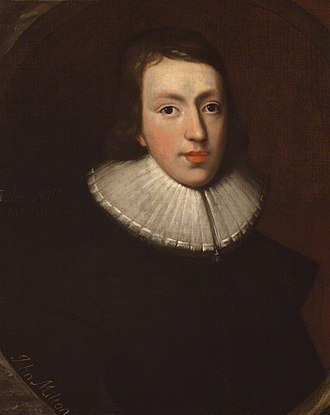
John Milton
English poet, polemicist and revolutionary whose Paradise Lost — written blind, after the defeat of his cause — retells the Fall of Man to “justify the ways of God to men”, and gave literature its most magnificent rebel, Satan.

Thomas Hardy
The stonemason’s son from Dorset who created “Wessex” in Far from the Madding Crowd, The Return of the Native, The Mayor of Casterbridge, Tess of the d’Urbervilles and Jude the Obscure — tragedies of chance, desire and an indifferent universe — then abandoned the novel and became one of the great poets of the twentieth century.

The Iliad
Homer’s epic of the wrath of Achilles in the tenth year of the Trojan War — the founding poem of Western literature, and its greatest poem of war, grief and mortality.